

Features
The Rise of “Game Survival” Narratives in Film and TV

There’s something magnetic about survival stories. Strip away comfort, place people inside a rigged contest, and human instincts flare; fear, greed, loyalty, betrayal. It’s an ancient drama repackaged in neon tracksuits or futuristic arenas.
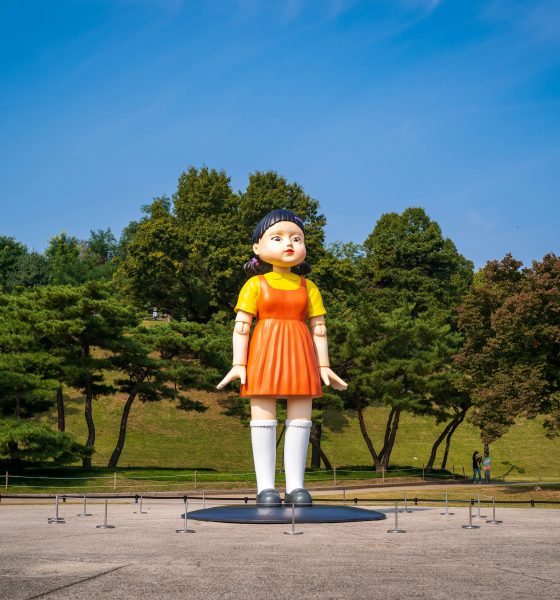
In the past few years, “game survival” narratives have surged across screens. Squid Game reminded studios that audiences are hooked on this formula. But the lineage runs deeper, from Battle Royale in Japan to Hollywood’s Hunger Games. The genre had been waiting for its cultural moment. That moment is now.
Why Survival Games Work on Screen
The premise is stark but universal. Characters compete. The consequences are dire; life, dignity, or freedom itself. Audiences don’t need an explanation to feel the tension.
In many ways, the genre mirrors risk-taking behaviour in real life. Consider the rise of the best online slot sites, where participants embrace uncertainty in search of reward. The difference is scale. Instead of losing money, fictional contestants lose their lives. Yet the psychology remains similar. We watch to see who adapts, who breaks, and who bends the rules.
Squid Game and the Global Reset
When Squid Game premiered on Netflix in 2021, it became more than a hit. It dominated conversation, drove cultural references, and spotlighted systemic inequality. Its success came from combining simple childhood games with terrifying stakes, wrapped in a bold visual style.
Studios responded quickly. Now, survival games are part of the global content race.
The lineage before Squid Game
Long before Squid Game, Battle Royale (2000) shocked audiences by forcing high schoolers into a lethal contest. The Hunger Games later pushed the concept into a Hollywood spectacle, appealing to mainstream audiences. Even reality TV flirted with themes of survival. Shows like Survivor or Fear Factor avoided death but shared the DNA of competition, elimination, and human strategy.
New Wave: From Streaming Hits to Indie Experiments
The genre has since branched into multiple directions. Netflix productions offer high-budget spectacles, while smaller indie films lean into paranoia and psychological tension. Its adaptability is what keeps the genre fresh—capable of being loud or intimate, fast-paced or cerebral.
Survival as social commentary
The sharpest survival games double as allegories. Squid Game critiqued financial desperation, Hunger Games revealed the cruelty of authoritarian spectacle, and smaller projects explore trust and systems of control. These layers of meaning elevate the genre from shock value to cultural relevance.
Extended Reflections
Another reason for the genre’s growth is its connection to how we consume entertainment today. In an era of short attention spans, survival games cut straight to the drama. The premise is immediate, the danger constant, and the stakes high enough to hold focus. Unlike sprawling fantasy or dense dramas, survival game stories are built on tension that never really lets go.
The influence also reaches gaming culture. Battle royale video games like Fortnite, PUBG, or Apex Legends exploded at the same time that survival stories surged on screen. It’s no coincidence. Players and viewers both crave the rush of elimination, the sense that one wrong move means the end. The loop is addictive, whether you’re holding a controller or watching from the couch.
There’s also a globalisation factor. Squid Game originated from South Korea but resonated with viewers worldwide. Alice in Borderland, straight from Japan, landed on Netflix and built an international following. These stories don’t need translation for the core tension to land. Play, survive, repeat. The rules are universal.
Another element worth noting is how these shows and films spark community discussion. People binge them, then flock online to argue about strategy. Who made the smartest move? Who should have survived longer? Which alliances would have worked in real life? That watercooler effect is gold for streamers, and it’s one more reason they’ll keep green-lighting survival game projects.
Finally, the genre scratches the cultural itch for fairness. Life rarely feels fair, but in these stories, the rules are clear, even if brutal. Everyone knows what they signed up for. There’s something oddly comforting about that clarity. Watching characters fight through it gives viewers a strange sense of justice… even if it comes at a bloody price.
The Best “Game Survival” Films and Shows
A quick guide for anyone curious about the genre’s highlights:
– Battle Royale (2000)
– The Hunger Games series (2012–2015)
– Squid Game (2021–present)
– Alice in Borderland (2020–2022)
– Escape Room (2019, 2021)
– Circle (2015)
– 3% (2016–2020)
– The Belko Experiment (2016)
The road ahead…
Expect more hybrids. Game survival concepts are now colliding with science fiction, satire, and even romance. Reality TV may also inch closer, blurring the boundary between fiction and competition.
Closing Thoughts
The rise of game survival narratives is more than a fleeting trend. These stories tap into our fascination with risk, power, and the darker aspects of human nature. Whether set in playgrounds or futuristic arenas, the mechanics remain constant. Someone plays, someone loses, and everyone watching wonders what choice they would have made.


-

 Featured Review4 weeks ago
The Running Man ★★★
-

 Movie Reviews4 days ago
Dracula: A Love Tale ★★★
-

 Featured Review3 weeks ago
Wicked: For Good ★★★★
-

 Featured Review3 weeks ago
Nuremberg ★★★★
-

 News1 week ago
Iris Prize Reveals Final 2025 Awards Winners In ‘Closing Credits’ Ceremony
-

 Features4 weeks ago
5 Movies That Defined How We See Gambling
-

 News3 weeks ago
Glasgow Film Festival Reveals First Titles For 2026 Edition
-

 Featured Review3 weeks ago
Keeper ★★★