

Movie Reviews
London Film Festival 2025 – The Chronology Of Water ★★★

Released: TBC (London Film Festival)
Director: Kristen Stewart
Starring: Imogen Poots, Thora Birch
It’s always fascinating when an actor decides to take a step back from being in front of the camera, and takes a seat in the director’s chair instead. If anything, work as an actor can really shape new visions and directions for films in this modern era. For Kristen Stewart, this has been a long time coming. Adapting Lidia Yuknavitch’s 2011 memoir, The Chronology of Water, Stewart has found herself leading in all three major positions – director, screenwriter and producer.
Split into five chapters, the film is narrated by Lidia – played by Imogen Poots – as she retells her personal journey dealing with childhood trauma, navigating grief and addiction. The way Poots voices these memories is almost like poetry which is visualised through close-ups that are so vividly emotive and at times gut-wrenching.
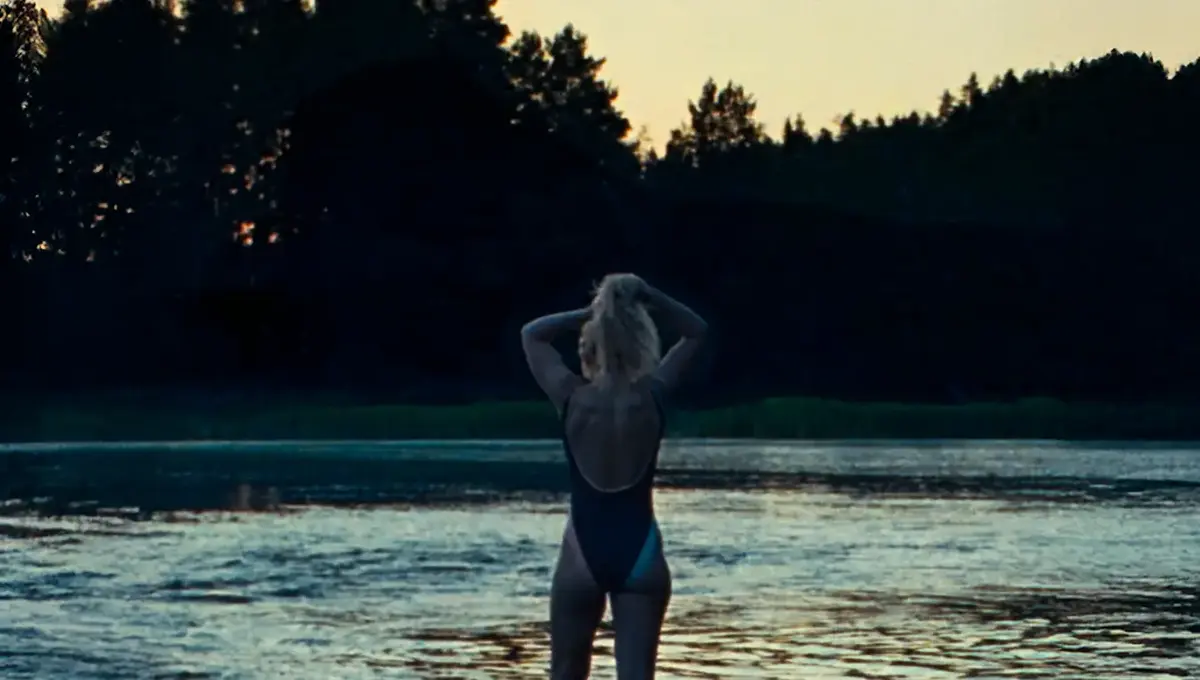
For a young woman, teenage years are important. They are years which act as a starting point in learning more about ourselves. Lidia came from a household that treated her with violence instead of love, as she and her sister (Thora Birch) had to endure abuse at the hands of their architect father (Michael Epp). Stewart should be credited in the depiction of this, showing maturity to the subject. The sexual abuse in question is not shown, but in doing so audiences can still feel the numbing pain both sisters went through. To help, Lidia found freedom in swimming and the water acted as a free-flowing escape to life at home. Work paid off when she scored a college scholarship, but soon finds herself succumbing to addiction through drugs and alcohol, ending her swimming career before it started.
Throughout the film we see she is withholding a secret, one that is personal and perhaps most wouldn’t understand. Through her trauma she masturbates at the thought of her previous abuse. While Lidia is trying to find out who she is, she meets and begins to loath her boyfriend (Earl Cave) for simply being kind to her. Despite various angry outbursts from Lidia, the pair marry and find themselves about to embark on parenthood, but sadly their baby daughter is stillborn.
After overcoming her addiction, and getting through grief of losing her child, she finds some stability in her life. While still finding a safe haven in the freeness of water, she learns to reflect on life’s hardship through writing. As a medium, it proves powerful for Lidia, a way to recount in her own way the way these experiences rendered her lost but now she’s found a way to accept and find a true love in expressing herself. The voiceovers that Poots provides to this are exceptionally thought-provoking and almost diary-like. Despite some parts being cliche, Stewart has excelled in making this sound personal to one’s pain.
Imogen Poots has always been a major star in whatever roles she plays, but as Lidia she brings something so beautiful yet heartbreaking to the table. As Lidia navigates adulthood she’s often feeling like her damaged teenage self but Poot’s performance helps to transcend these painful experiences into something meaningful later on in her life. It’s powerful stuff and portrayals such as this that young women need to see in the media.
Shot on 16mm, The Chronology of Water is unlike any other film out there. It’s unique, bold and very harsh in visuals at times – in a great way. The colouring of the film is vibrant, and arguably one of the most beautiful aspects of the way Stewart has directed the film. It has a stunning Super-8, vintage charm effect to it – enhanced by minimal yet naturally structured sounds.
What occasionally lets the film down is its long runtime. At 128 minutes, we often feel how heavy the film is. A simple tightening of the screenplay could have enhanced the complexity of its narrative. In a way, this film could be described as marmite to some viewers because of how different it looks and is structured. Similar to music records, some state they are ahead of their time and I feel this could be the case for The Chronology of Water. Audiences right now may not understand it, but certainly in years to come people will appreciate its genuine authenticity.
Stewart has always been an interesting and exciting key figure in the film industry. No one knows her next move and this directorial debut just proves how fresh her talent is. If anything, she’s not playing it safe and is looking to take those ultra-bold steps to create her art. Films like this are what we need in cinemas going forward.












-

 Featured Review3 weeks ago
jackass: best and last ★★★★★
-

 Featured Review4 weeks ago
Effi O Blaenau ★★★★★
-

 News2 weeks ago
Earliest Autograph Of Arnold Schwarzenegger Goes On Sale To Support UK’s Smallest Cinema
-

 Featured Review3 weeks ago
Supergirl ★★★
-

 Movie Reviews1 week ago
Gail Daughtry And The Celebrity Sex Pass ★★★
-

 Interviews3 weeks ago
British Urban Film Festival 2026 – Interview With Director Fitch Jean (It Comes In Waves)
-

 Interviews3 weeks ago
Cannes 2026 – Interview With Actress Huma Qureshi (Toxic: A Fairy Tale For Grown-Ups)
-

 Featured Review3 weeks ago
Lesbian Space Princess ★★★