
Features
Spider-Man: $2.5 Billion at the Box Office, a Licensed Slot Game, and a Place on the Best Online Casino Sites in the UK

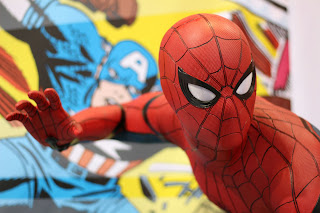
Spider-Man: Brand New Day opened on 360.1 million dollars across North America in August, the biggest domestic opening weekend in box office history, beating Avengers: Endgame’s 357.1 million dollar record from 2019, Deadline reported. By early October the film had crossed 2.5 billion dollars worldwide. Christopher Nolan’s The Odyssey sits close behind at roughly 1.77 billion, and Toy Story 5 passed 1.1 billion in the summer. Three franchise films, three different genres, one shared conclusion: 2026 is the year sequels and reboots carried the box office, almost without exception.
The casino industry noticed that pattern years before Hollywood’s trade press did. A licensed film gets turned into a slot machine, the slot machine becomes popular enough to justify its own promotional campaign, and that campaign gets built entirely around the film’s identity rather than generic casino branding. UK players checking what’s actually available right now will find a market reshaped since January, when the Gambling Commission capped bonus wagering requirements at ten times the bonus amount and banned incentives that mix more than one gambling product together. For a current, UKGC-licensed breakdown of which platforms are worth using, The Independent runs a guide to the best online casinos in the UK that tracks operators against the new regulatory standards.
Playtech’s The Dark Knight slot, built on the 2008 film and still running in UK casino lobbies, leans on Gotham’s lighting and sound design rather than a licensed logo stuck on a standard reel set. Blueprint Gaming has released three sequels to its Goonies slot since the original, including a 2025 follow-up, because the franchise kept proving it could carry a reel-based game the same way it carried four films’ worth of merchandise. NetEnt’s Jumanji slot uses dice rolls and a board-game bonus round as its core mechanic, borrowing the actual game-within-a-film structure rather than just the poster art. Beetlejuice Megaways, built by Barcrest under an official Warner Bros. licence, mirrors the film’s chaotic visual energy through its reel mechanics, which is closer to what a genuinely good adaptation looks like than most tie-in video games manage.
Operators in other markets run the same playbook even more aggressively. Light & Wonder’s Wizard of Oz slot series, exclusive to BetMGM in the US and Ontario, launched as a direct licensing tie-up with Warner Bros. Discovery, and BetMGM has since run Daily Prize Vault promotions worth up to 2,500 dollars in credit built around its licensed titles. It is a different regulatory market to the UK’s, but the mechanism is identical: the film creates the IP, the IP creates the slot, and the slot creates the promotional campaign that keeps players returning to that specific game rather than the operator’s whole lobby.
That ten-times wagering cap matters here because it strips out a lot of the noise that used to surround these campaigns. SBC News covered the reform in detail before it took effect on 19 January 2026, and the practical result is that a franchise-themed promotion now has to compete on the same transparent terms as every other offer rather than hiding behind a longer rollover. That makes the terms behind any offer, franchise-themed or otherwise, considerably easier to read than they were eighteen months ago.
None of this means every licensed slot earns its IP. The gap between The Dark Knight’s atmospheric lighting design and a generic fruit machine with a Batman logo slapped on top is the actual story here, and it is the same gap that separates a film that understands its franchise from one that is just cashing the cheque. Whether that makes franchise cinema and franchise slots the same industry wearing different clothes is a fair question. The box office numbers above suggest audiences don’t mind the repetition as long as the execution holds up, and the casino industry has clearly reached the same conclusion about its own IP-driven titles.
It also explains why studios increasingly treat a licensing deal with a game developer as part of a film’s rollout rather than an afterthought bolted on once the box office run is finished. Spider-Man, The Odyssey and Toy Story 5 all had merchandising and tie-in deals lined up before release, the same way a major slot licence now gets negotiated alongside a film’s marketing budget rather than after the fact. The franchise economy doesn’t stop at the cinema door; it just changes format once it gets there.
We’ve covered the Hollywood side of that overlap before in our Features coverage, and the franchise-bonus pipeline is simply that same relationship running in reverse: cinema borrowing from casinos, and casinos borrowing straight back.


-

 Featured Review1 week ago
Digger ★★
-

 News1 week ago
Shane Meadows Headlines + Joe Lycett Named First Patron As 2026 Forward Film + TV Festival Opens In Birmingham
-

 News2 weeks ago
70th BFI London Film Festival Announces ‘LFF For Free’ Programme
-

 Featured Review3 weeks ago
Resident Evil ★★★★
-

 Featured Review2 weeks ago
Sense And Sensibility ★★★★
-

 Featured Review4 weeks ago
Oasis: Don’t Look Back In Anger ★★★★
-

 Featured Review3 weeks ago
Pulp: What Do You Do For An Encore? ★★★★★
-

 Featured Review3 weeks ago
Just An Illusion ★★★★