
Interviews
Cinematographer Tonghuan Zhao on Visual Storytelling, from Independent Film to Commercial Drama

From the internationally screened feature film Jet Lag in Summer to vertical dramas attracting tens of millions of views, cinematographer Tonghuan Zhao discusses how his understanding of character, emotion and visual storytelling shapes both the creative and practical sides of filmmaking.
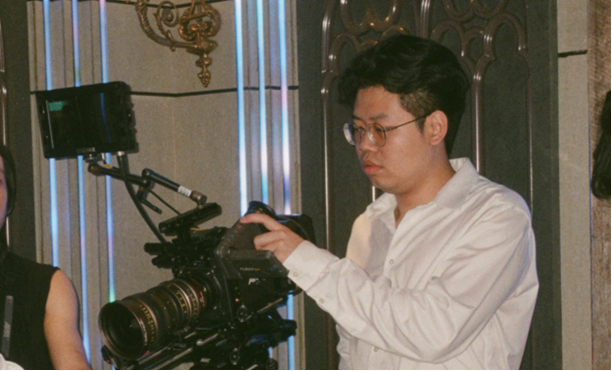
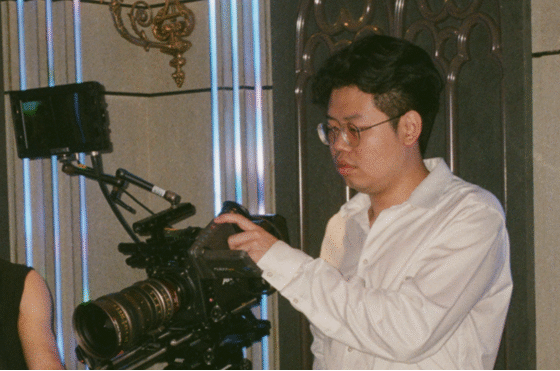
For cinematographer Tonghuan Zhao, the camera is a bridge between audiences and the world of a story. Through framing, movement and the relationship between people and their surroundings, he aims to bring viewers closer to characters and the circumstances shaping their lives.
It’s an approach that has informed his work across independent cinema and commercial productions.
As director of photography on the feature film Jet Lag in Summer, directed by Kunao Yan, Tonghuan helped shape a visual language that gives equal attention to the characters and the spaces they inhabit. The film’s naturalistic cinematography and patient observation of performance lend an intimacy to its portrait of young Chinese filmmakers navigating relationships, ambition and displacement in New York. Following its premiere at the 2025 Pingyao International Film Festival, the film travelled to audiences from different cultural backgrounds through Italy’s Far East Film Festival, the New York Asian Film Festival at Film at Lincoln Center, Canada’s Montreal Asian International Film Festival, Ireland’s Galway Film Fleadh and Spain’s Asian Film Festival Barcelona.
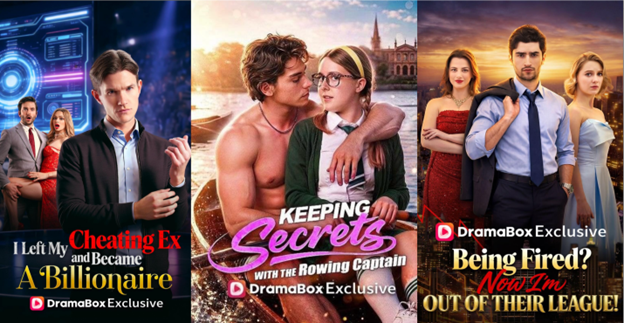
Beyond independent cinema, Tonghuan has also established a strong presence in commercial entertainment as a cinematographer. His credits include several highly successful vertical dramas, among them Being Fired? Now I’m Out of Their League!, which reached 30 million views on DramaBox, and Keeping Secrets with the Rowing Captain, which attracted 20.1 million views. These productions highlight the significant commercial reach of his work across a rapidly growing entertainment sector.
We spoke with Tonghuan about the making of Jet Lag in Summer, the people he works with behind the camera, and how his approach to storytelling carries into commercial productions.
DG: One thing I really enjoyed about Jet Lag in Summer was how natural the performances feel. The camera gives the characters room to interact with each other and their surroundings, and after a while you almost feel like you’re there with them. Was that something you were consciously trying to achieve?
Tonghuan Zhao: I’m really glad you felt that way. I’ve always thought of cinematography as a kind of bridge between the audience and the world of the story.
You’re inviting people into someone else’s life, helping them understand not just the characters, but also the environment they’re living in and what they’re going through.
I think my documentary photography background has a lot to do with that. It taught me to observe people before trying to interpret them. You start noticing small gestures, hesitations, or reactions that aren’t necessarily planned.
I like to prepare thoroughly, but I also want to leave room for those discoveries.
DG: Let’s talk about the barbershop scene, because I really loved that one! It’s genuinely funny, and the long take lets the actors play off each other so naturally. Then I realized you were in the scene yourself. I was curious how that worked, since you were also the cinematographer.
TZ: Oh, I love that scene too! We had a lot of fun making it.
We spent quite a bit of time working out the blocking and the timing with Kunao. The humour really comes from the actors and how they interact, so we wanted the camera to let that play out rather than relying on lots of cuts.
And yes, I was acting in it, which meant I couldn’t be behind the camera checking everything.
But that’s where having a good team makes such a difference.
For me, it’s really important that everyone understands what we’re trying to achieve, not just the technical instructions for a particular shot.
We’d already worked out the visual approach together, so when I stepped in front of the camera, the team knew what to do. And I trusted them to make their own decisions when they needed to.
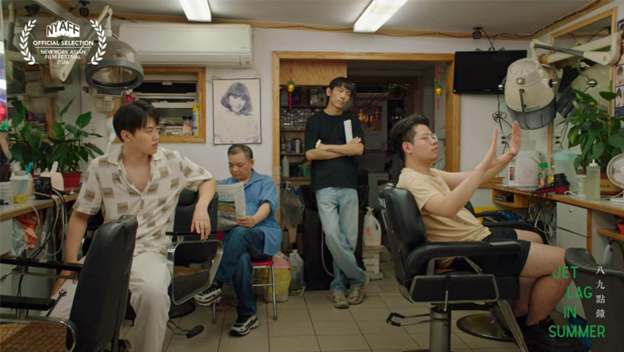
I actually like working that way. I don’t want to be the only person on set who understands the scene. If everyone knows what we’re going for, they can bring their own ideas, and sometimes those ideas make things even better.
DG: I also really liked how natural the apartment scenes felt. The spaces seem genuinely lived-in, and everything feels very organic. How did you work with the other departments to create that atmosphere?
TZ: Yeah, absolutely. I worked closely with our gaffer and production designer on those spaces.
I wanted the apartments to feel like real homes, and I wanted the actors to be able to move around naturally.
So instead of lighting every shot separately, we tried to light the space in a way that would work for different positions and camera movements.
We used a lot of practical lights and small fixtures that could be hidden in the set or worked into the production design.
That meant we could still control the image, but we weren’t constantly asking the actors to stand in a very specific spot.
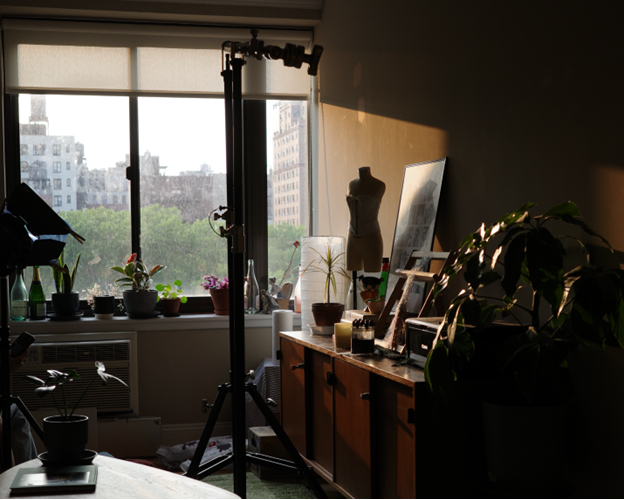
And a lot of it came from conversations with the team. I’d explain what I was looking for, and the gaffer or production designer would come back with an idea that made it work better.
DG: You’ve also worked on a number of successful vertical dramas. Those are fast-moving commercial productions, often with pretty demanding schedules. How do you bring that same approach into that environment?
TZ: I think it comes down to understanding the story well enough to make decisions quickly. You have a lot to shoot, and you can’t spend the same amount of time on every setup. So, you really need to know where the important moments are.
I started organizing the operators around different characters and dramatic relationships, rather than simply assigning everyone a different angle.
The idea is that we can capture several meaningful perspectives during the same performance. That helps the actors maintain their rhythm, and it gives the editor more useful material to work with.
It’s not just about having more footage. It’s about having the right footage, so the audience can follow what’s happening between the characters and really get involved in the story.
DG: So you’re usually shooting with two cameras on these productions, right?
TZ: Two is pretty common, yeah. But I’ve actually worked with three cameras quite a lot as well.
DG: Three? I would have thought they’d start getting in each other’s way. How do you make that work?
TZ: Well, they absolutely can if you don’t plan it properly!
That’s actually why I started developing a more structured way of working with multiple cameras.
You have to think about blocking, eyelines, screen direction, and how all those shots are going to work together in the edit.
So I put together a set of guidelines for the camera team, something everyone can refer to, especially when we’re working with new operators.
But it’s not just about technical rules. I also spend time talking with the operators about the characters and what each camera should be looking for.
One camera might follow the main interaction, another might concentrate on someone’s reactions, and a third might be watching for something happening elsewhere.
It’s a little like documentary filmmaking. Things happen simultaneously, and you want each camera to be ready for those moments.
I think the important thing is that the operators aren’t just waiting for instructions. They understand the scene and can make decisions themselves, while still working within the same visual approach.
DG: Does it feel very different for you, shooting a feature like Jet Lag in Summer compared to these more entertainment-driven vertical dramas?
TZ: Not really, at least not in the way I approach the work.
Of course, the visual styles, production schedules and storytelling rhythms can be very different. But I don’t think my approach changes all that much.
Before I was a filmmaker, I was an audience member. And I still try not to lose that perspective.
In a way, I think the camera becomes the audience’s eyes. It’s how they enter the world of the story, get to know the characters and understand what they’re going through.
The way you get there might be different, but what you’re trying to achieve is really the same.


-

 Featured Review4 weeks ago
Clayface ★★★★
-
 Features3 weeks ago
How to Choose an AI Video Generator: 8 Factors to Evaluate Before You Commit
-
 News4 weeks ago
Cannes Palme D’Or Winner, Major Previews And City-Wide Screenings Announced For 2026 Inverness Film Festival
-
 Movie Reviews4 weeks ago
The Social Reckoning ★★★
-
 Features4 weeks ago
With Healey Reportedly Eyeing a Slot Machine Tax Rise on 28 October, Has British Cinema Ever Really Nailed the Lure of the Fruit Machine?
-
 News4 weeks ago
Animation Nation Forum Returns To Manchester This November
-
 Movie Reviews4 weeks ago
The Uprising ★★★
-
 News2 weeks ago
Inaugural Edition Of MUBI Fest London To Take Over Hackney Picturehouse This November