
Interviews
Interview With Director Nick Butler (Lunar Sway)

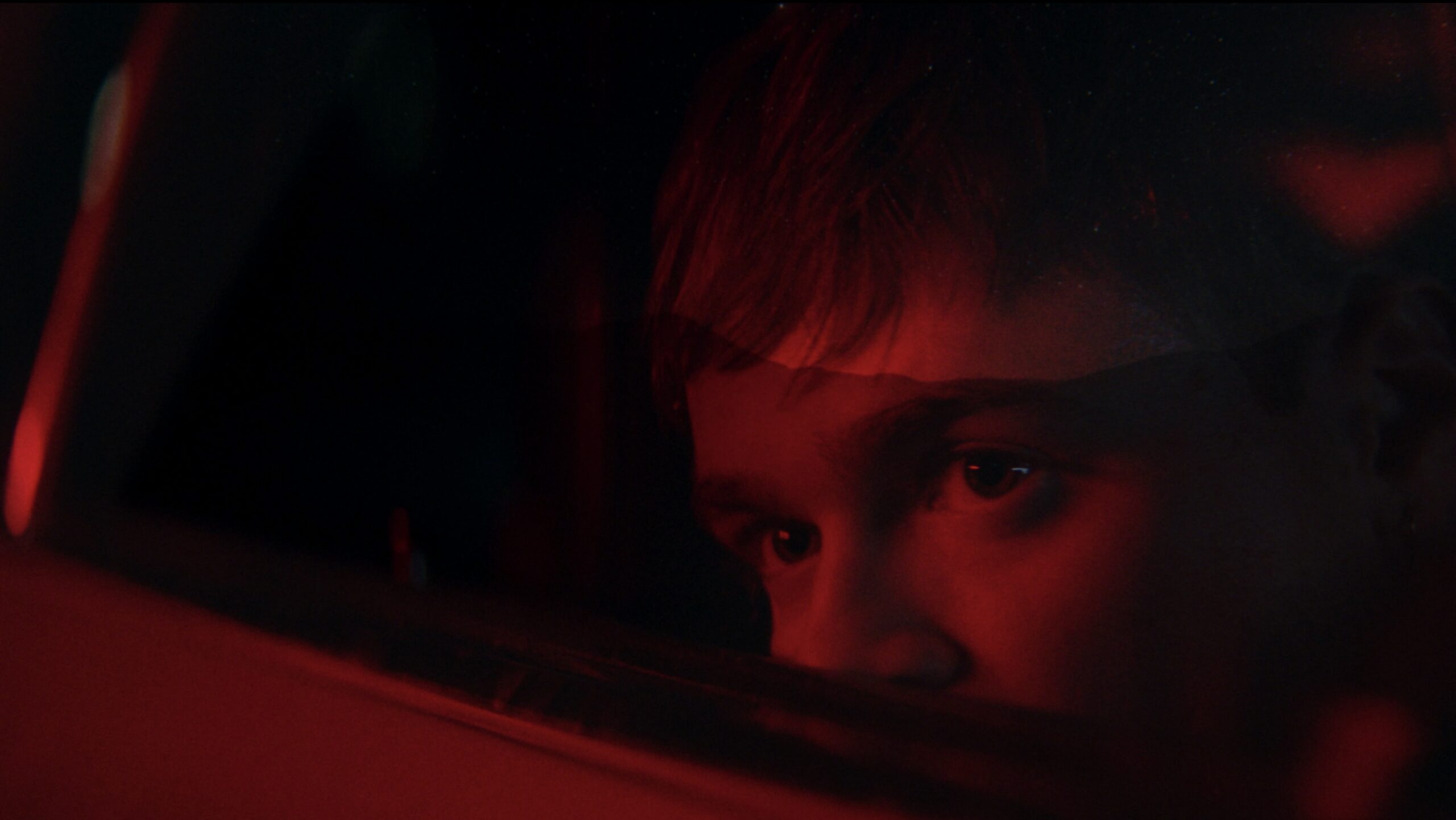
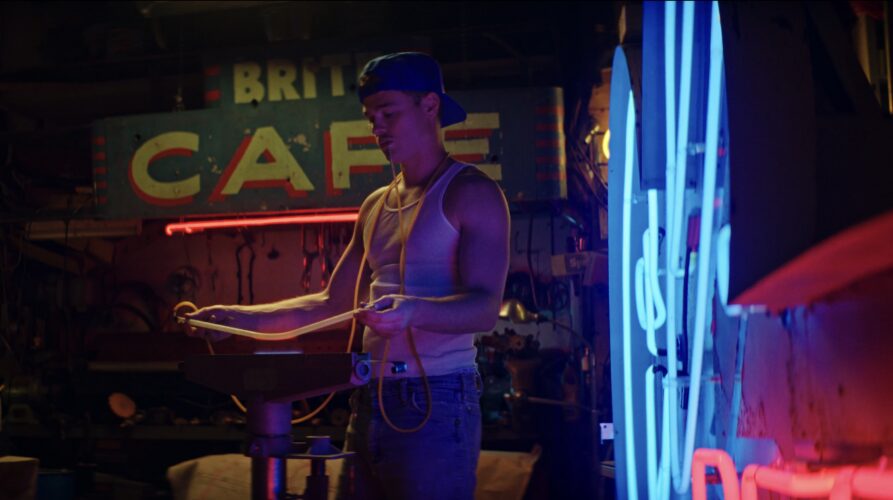
Screening this week at London’s The Arnzer, Lunar Sway follows Cliff (Noah Parker), a young man living in the desert town of Mooncrest. Struggling to navigate his sexuality and turbulent romantic relationships, Cliff finds his world further complicated by the sudden arrival of his estranged birth mother, Marg (Liza Weil). We spoke with writer-director Nick Butler about the film’s Lynchian atmosphere, striking desert setting, unconventional relationships, and the challenges of bringing his vision to the screen.
What was the biggest challenge of juggling writing, directing and editing your own film?
It’s not the first time I’ve edited my own feature. For my first feature, we worked with a different editor who did a great job, but I found that the post-production process was quite tight. So I took on the editing myself just to give myself more time, and I was really nervous that it wouldn’t work. I’ve done a lot of editing in the past, but I don’t consider myself a true editor. I’d say that would be the most challenging part, but I ended up loving the process. I’m so glad I did it, because it gave me room to really spend a lot of time editing the movie. I got a lot of feedback, too. But in terms of writing and directing, the visual aspects of the movie were such a big part of the concept, even during the writing process. I was already thinking a lot about the visuals as I was writing, so those two parts felt very much melded together.
The film has such a striking visual style, particularly its desert landscapes. Why did you choose to set the story in British Columbia?
We shot in a part of British Columbia that’s known as the Desert of Canada. A lot of people don’t think of Canada as having a desert, but it’s a beautiful area. I always saw the movie being set in a desert. I love deserts myself. I find them really beautiful places to escape to. But they’re also very dark, mysterious environments. They can be very lonely, but also peaceful and a nice escape. I thought the desert had all these different contradictions that paralleled Cliff and what he’s going through. The location really reflected the characters and what they’re going through. That was a really important part of the movie.
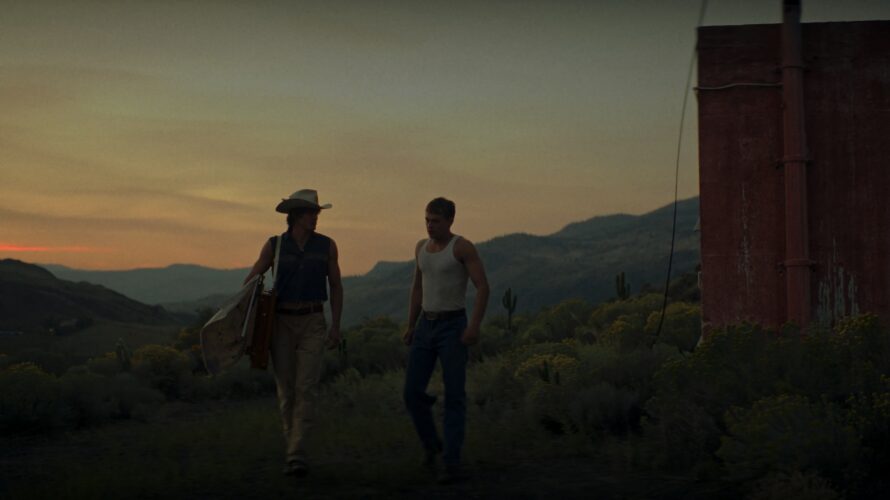
Cliff’s romantic partners seem to be mysterious and emotionally unstable. Do they reflect something broken within him, or is he simply unlucky in love?
No, I think it’s more than just being unlucky. He’s someone who’s looking for love in all the wrong places. He’s looking for that connection so desperately outside of himself. And he’s drawn to people who are withholding it, who are mysterious, who are not giving him the love that he wants. As a consequence, he feels like he can chase after it. I think a lot of people can relate to that. I definitely can. But I do think it comes from him. Over the course of the movie, he’s learning that you can’t just seek it outside yourself. You have to find it within yourself first if you’re going to find healthy love. There’s a scene in the movie where one of his romantic partners is actually obsessed with him. And to him, that’s the scariest thing that could happen.
Cliff’s relationship with Marg is particularly complicated and pushes some uncomfortable boundaries. How did you develop that dynamic? Were you hoping to shock audiences?
I hope so! It’s funny, when I started writing it, I didn’t know where it would go. We don’t want to spoil what happens, but there are definitely some twists and turns in the movie. It shocked me and surprised me. But it happened very organically. It came naturally from the characters and how their relationship develops. There are some scenes that hopefully will feel a bit shocking and unexpected. And to me, that’s always exciting as a writer. When you start to write something that makes you feel uncomfortable, that’s always a good sign. When it’s too comfortable, then it’s a little too easy.So when I first came up with some of the ideas in the movie, I thought, oh no, do I really want to go here? But that’s how you know you’re playing with something that could be interesting. Because you might dig up something unexpected or something you haven’t seen before. You have to at least explore those options and see where you land.
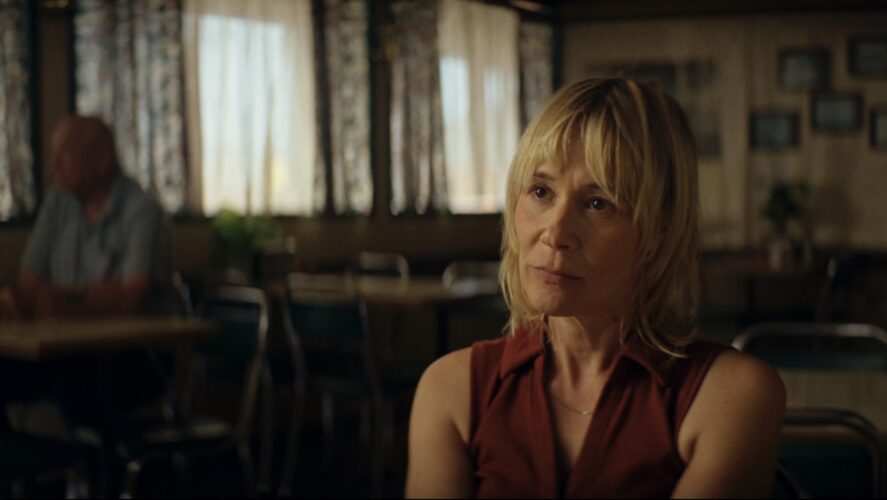
What was it like working with such a fantastic cast? How did you find Noah Parker and Liza Weil for the roles of Cliff and Marg?
I know, we’re so lucky. Our two leads, Noah and Liza, obviously were there the most, and they’re just so amazing. I’m still really close friends with both of them. They’re both such kind people in real life. We all just love each other so much, so I feel really lucky. One of the highlights of this whole experience was getting to know them and work with them. But the casting process was quite uncommonly easy, because one of the first auditions I got was Liza’s. And I was halfway through watching the tape when I thought, this has to be her. Right? She’s so good. Then within a few days, I got Noah’s tape. I was halfway through watching it and I thought, it has to be him! I’d started searching months in advance, but I really didn’t need the time, because I found them so quickly. Luckily, they remained available for the shoot, and it all worked out. We got so lucky with all of our supporting cast, too. Everybody was so great.
There’s something distinctly Lynchian about the film’s visual style, particularly its dream sequences and enigmatic symbolism. How important are these surreal elements to understanding Cliff’s psychology?
Good question. I think because it’s a movie about a character who doesn’t know what to believe, who doesn’t know what’s real. He’s surrounded by con artists, liars, people who are kind of using him. And he’s trying to figure that out. So it made sense to me to give ourselves permission not to embrace reality fully, because he never knows what’s real. He’s constantly alienated from the world around him. We wanted to add these very surrealistic elements throughout, and poetic elements as well, to make it feel a bit like he’s not quite grounded in reality. I think that just reflects how he’s feeling throughout the movie, and how we all feel sometimes.






-
 News6 days ago
Manchester Animation Festival Announces 2026 Winners And New AI Policy For 2027 Competition
-
 Features4 weeks ago
How to Choose an AI Video Generator: 8 Factors to Evaluate Before You Commit
-

 Featured Review1 week ago
I Play Rocky ★★★
-

 News3 weeks ago
Inaugural Edition Of MUBI Fest London To Take Over Hackney Picturehouse This November
-

 Featured Review1 week ago
Godzilla Minus Zero ★★★★★
-
 News2 weeks ago
Aesthetica Film Festival Announces Award Winners For 2026
-
 Interviews3 weeks ago
Interview With Ranbir Kapoor, Sai Pallavi and Yash (Ramayana: Rise Of A Legend)
-
 News3 weeks ago
Filmmaker Alex Cox Brings Latest Feature ‘Dead Souls’ To UK Cinemas For Special Q+A Tour