

Features
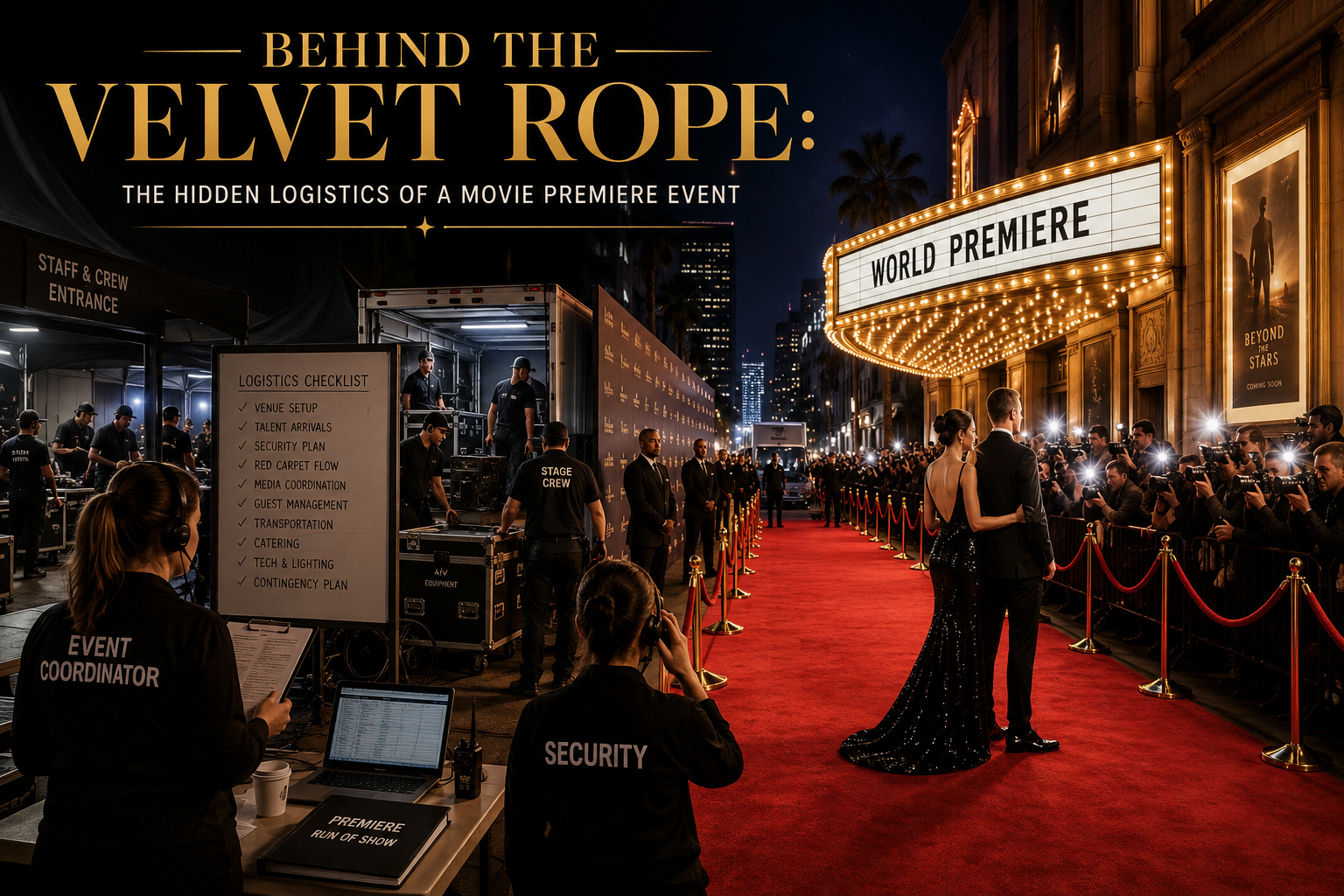
Behind the Velvet Rope: The Hidden Logistics of a Movie Premiere Event

Picture London’s Leicester Square on a soggy Tuesday night. Popcorn grease, cheap rain ponchos, and expensive perfume hang in the air as a crowd of thousands chants in the drizzle. Suddenly, the flashbulbs start. A fleet of blacked-out cars rolls up, the doors pop open, and the cast steps out looking impossibly perfect, as if they hadn’t spent the last hour stuck in gridlock traffic on the Embankment.
It is a beautiful show, but it is built on a lie. Behind that seemingly effortless glide down the carpet is a massive, highly stressful logistical operation that has been in development for months.
A major West End premiere is less of a party and more of a military campaign. The public sees the designer suits, but they do not see the infinite spreadsheets or the physical heavy lifting. It is a massive coordinated effort where multiple specialist hire firms are contracted to deliver the ground infrastructure.
Everything from crowd-control barriers to VIP seating must be set up, secured, and torn down in a matter of hours. To understand the sheer scale of these events, you have to look past the velvet rope and at the unglamorous work happening in the background.
Fighting the Westminster Council Red Tape
Weeks before a single camera crew shows up, the event organisers are usually drowning in council paperwork. Leicester Square might be the historic home of British cinema, but it is also a public space run by Westminster City Council, and they do not hand out permits easily.
You need street closure orders, entertainment licences, and permission to park dozens of massive support trucks on narrow streets that were built for horse-drawn carriages. Then come the health and safety audits. Every truss, every spotlight, and every temporary structure must be signed off by structural engineers. The risk assessments are legendary, covering everything from the inevitable British downpours to counter-terrorism protocols and emergency crowd evacuation plans.
Then you have the security. Planners have to coordinate with the Metropolitan Police and specialised private firms to manage thousands of screaming fans. If a crowd gets too excited, things can go wrong very quickly. Security teams design complex one-way flow systems and place barriers to prevent surges, all while trying to give the fans a decent view. Indeed, as guides from easyEventHire recently noted, traditional post-and-rope systems are designed for guidance and organisation rather than physical security, meaning heavy-duty steel barriers are essential for front-of-house crowd control. It is a tricky balance: keeping the talent safe, the fans happy, and the roads of central London open for as long as humanly possible.
The 2:00 AM Build Crew
When the permits are sorted, the physical transformation begins. The crew does not have days to set this up. Because Leicester Square is a thriving pedestrian area, the council will not let you block it off for long. The build crew usually rolls in at 2:00 AM on the day of the premiere, working through the freezing morning to erect a temporary palace. By sunrise, they need to have transformed a public square into a Hollywood set.
And that red carpet? It is rarely just laid down on the tarmac. If you put a carpet straight onto uneven paving stones, you would have actors tripping over every five yards. Instead, crews build a massive wooden deck over the square first, levelling it out so the stars can walk smoothly in six-inch heels and camera dollies can roll without shaking.
Next comes the canopy. The British weather is the sworn enemy of silk dresses and expensive hair. Massive marquees and custom tents are erected, engineered to look clean on camera but strong enough to withstand high winds. Underneath, a spiderweb of power cables runs back to massive, silent generators hidden down side streets, powering giant LED screens and lighting arrays that make a grey London afternoon look like sunny Los Angeles.
Further down the carpet, they build the media riser. It is essentially a wooden scaffolding structure where hundreds of photographers and camera crews are packed together like sardines. Every single news outlet is assigned a specific, numbered square foot of space. If you are a major TV station, you get a prime spot near the entrance; if you write for a small blog, you are down at the end where the stars are already tired of talking.
The Minute-by-Minute Arrival Dance
Once the guests start arriving, the event becomes a frantic exercise in time management. The carpet only stays active for about two hours. In that short window, the team has to get dozens of actors, directors, influencers, and VIPs past the cameras and into their seats.
To do this, publicists use a strict, minute-by-minute schedule. The arrival order is carefully planned. You start with the influencers and minor cast members to get the crowd warmed up and give the photographers something to shoot.
Next come the writers and directors, who usually do the longer, more technical interviews with the film trades.
Then come the lead actors, arriving in the final thirty minutes to maximise the noise and get the live TV slots. Finally, the absolute top-tier guests (think royalty or massive surprise stars) slip in just before the doors close.
Each star has a chaperone walking just out of the camera’s frame, carrying a clipboard, water, and emergency umbrellas. Their job is to keep the talent moving. If a lead actor gets stuck chatting for too long or signing too many autographs, the whole schedule falls apart. And if the screening is delayed, the cinema owners will charge the film studio massive fines for running over time.
Tear-Down and the After-Party Rush
As soon as the stars are inside the cinema and the film starts, the carpet crew goes into reverse. The structure that took fourteen hours to build has to be ripped down and cleared away. The council expects Leicester Square to look normal by the time the morning commuters show up, so it is a frantic race against the clock.
Meanwhile, the focus shifts to the after-party. Since cinemas are not built for hosting massive parties, the guests need to be moved to a secondary venue. This means coordinating a fleet of private cars and coaches to transport hundreds of people through central London traffic without losing anyone.
Over at the party venue (whether it is a historic hall in the City or a repurposed warehouse) another team is waiting. The caterers, bartenders, and security teams have to be ready to go the second the credits roll. If a guest has to wait more than five minutes for a drink or a coat check, the illusion of luxury breaks down.
The Invisible Crew
When you see a premiere on the news, you are looking at a carefully packaged marketing tool. You do not see the sleep-deprived site managers, the riggers, the security guards shivering in the rain, or the transport coordinators shouting into radios.
But without them, a premiere would just be a group of cold people standing on a wet London street. It is a masterclass in temporary logistics, a high-wire act where everything must go right on the night, and where the real directors are the ones holding the clipboards.


-

 Featured Review1 week ago
Digger ★★
-

 News2 weeks ago
Shane Meadows Headlines + Joe Lycett Named First Patron As 2026 Forward Film + TV Festival Opens In Birmingham
-

 News2 weeks ago
70th BFI London Film Festival Announces ‘LFF For Free’ Programme
-
 Featured Review3 weeks ago
Resident Evil ★★★★
-

 Featured Review2 weeks ago
Sense And Sensibility ★★★★
-

 Featured Review4 weeks ago
Pulp: What Do You Do For An Encore? ★★★★★
-

 Featured Review3 weeks ago
Just An Illusion ★★★★
-

 Featured Review4 weeks ago
Practical Magic 2 ★★★