
Features
Cherries, Bells and BARs: The Fruit Machine as Screen Icon

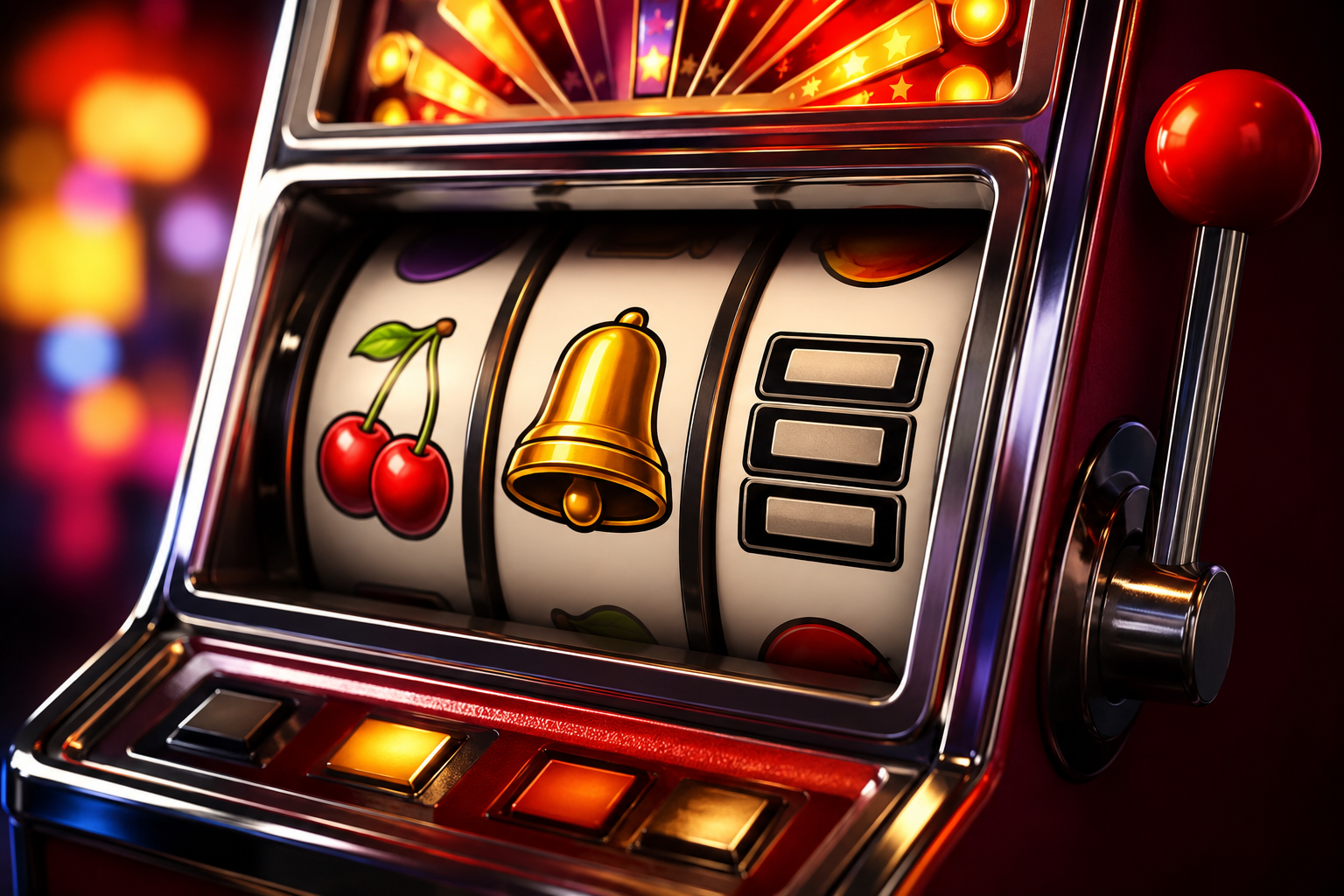
Film editors know something about slot machines that engineers do not. The sound of three reels stopping in sequence is one of cinema’s most efficient pieces of shorthand, capable of establishing a location, a character’s state of mind, and a whole moral atmosphere in about two seconds of screen time. From the neon interiors of Scorsese’s Casino to the frayed desperation of the Safdies’ Uncut Gems, directors keep returning to the machine because it does narrative work that dialogue would take a page to accomplish. What almost never gets explained on screen is where any of that iconography came from. This article is intended for readers aged 18 and over.
Cinema’s Favourite Piece of Set Dressing
The slot machine occupies an unusual position in film grammar. It is not quite a character and rather more than a prop. Place one behind an actor and the audience immediately reads the scene as transient, slightly seedy, faintly hopeful. Airports, roadside bars, and the outer edges of a casino floor where the serious money is not being played.
Directors use it as a mood instrument. In heist films it signals the ordinary punter against whom the sophisticated protagonists are defined. In character studies it signals someone at the end of their options. The machine itself never changes; what changes is who the camera finds standing in front of it, which is a remarkably economical bit of visual storytelling.
Where the Symbols Actually Came From
The imagery on those reels has an origin story more mundane and more interesting than the mythology suggests. The usual account traces the fruit symbols to early twentieth century vending machines that dispensed chewing gum, where cherries, lemons and plums indicated the flavour you had won rather than a cash prize. The BAR symbol is widely attributed to the logo of the Bell-Fruit Gum Company, essentially a stylised stick of gum that outlived its own product by a century.
The bell has a different lineage, associated with the Liberty Bell machines of the same era. What all of this means is that the visual language film-makers reach for to signify chance and vice is, in origin, confectionery branding. That is a fairly good joke that cinema has never quite got around to telling.
The British Machine Is Its Own Species
British film and television inherited a slightly different object from the American one. The pub fruit machine, with its nudges, holds and feature boards, developed as a distinct tradition, and it carries different cultural weight on screen. Where the Vegas slot signals spectacle, the corner-of-the-pub machine signals something more domestic and more melancholy, which is why British social realism reaches for it so readily.
That heritage still shapes the industry. Inspired Gaming, one of the significant British developers, runs a studio named Bell-Fruit, a direct nod to the same gum company that supplied the BAR symbol. The lineage from vending machine to pub cabinet to phone screen is unbroken, and largely undocumented outside the trade.
Retro Design in the Digital Era
Which brings us to the odd afterlife of all this iconography. Digital slots could look like anything at all, freed entirely from mechanical constraint, and a substantial share of them choose to look like a machine from 1965. Cherries, bells, gold-bordered sevens, the deliberate clunk of a reel stopping that no longer physically exists.
Playing Golden Winner is a reasonable example of the type, being Inspired’s online version of a retail cabinet, built on a conventional five by three grid with ten fixed lines, and dressing classic fruit-machine symbols in a rather cosmic visual treatment. The design decisions are almost archaeological. A generation that never fed coins into a physical cabinet is being sold the sensory memory of one, in much the same way films use the machine to evoke an era most of the audience did not live through.
What the Numbers Underneath Actually Mean
Here the romance and the mathematics part company, and it is worth being precise. Every spin on a digital slot is produced by a random number generator and resolves independently of every other spin. The reels are an animation of a result that has already been determined. There is no sequence, no due payout, no warming up.
The figure that matters is the return to player, the theoretical long-run percentage returned across an enormous number of spins. Golden Winner runs at 94.5 per cent, which sits below the level of many modern video slots, and the maximum win is capped at 2,500 times the stake. Both numbers describe long-run behaviour across millions of spins rather than anything about your afternoon. Great Britain also now applies statutory stake caps on online slots, currently £5 per spin for players aged 25 and over and £2 for those aged 18 to 24.
The Gap Between the Film and the Machine
Cinema, being cinema, tends to misrepresent all of this rather thoroughly. Films love a system: the counter, the tell, the pattern spotted by a protagonist sharper than everyone else in the room. It makes for excellent drama and it is the precise opposite of how a slot works.
That gap is worth holding onto, because the appeal of the movie version is genuinely seductive. The screen version rewards intelligence and nerve. The real one is indifferent to both, which is neither a criticism nor a recommendation, simply the design. Understanding that the machine cannot be outthought is the difference between treating a spin as entertainment and treating it as a plan.
Keeping It in the Entertainment Column
If you do play, the practical framing that keeps it healthy is fairly simple, and it is the same framing you would apply to a cinema ticket. Decide the amount before you start, treat it as the cost of the entertainment rather than an investment, and set the deposit and session limits that every licensed operator is required to offer.
If it stops being fun, the support infrastructure in Britain is free and genuinely good. GamCare operates the National Gambling Helpline on 0808 8020 133, available around the clock at no cost, alongside online chat and structured treatment. GAMSTOP will self-exclude you from every operator licensed in Great Britain in a single registration, which is a considerably more effective mechanism than willpower.
Roll Credits
There is something quietly pleasing about tracing a line from a gum company’s logo, through a pub cabinet in a Ken Loach frame, to an animation on a phone screen. The fruit machine has survived every technological shift thrown at it by becoming, essentially, a piece of design heritage that happens to still be operational.
Cinema will keep using it, because nothing else establishes a certain kind of scene so quickly. Just remember that the version on screen operates under the laws of narrative, where effort and insight are rewarded, and the version on your phone operates under the laws of probability, where they are not. Enjoy both, take the first one more seriously than the second, and keep the whole thing firmly in the entertainment column. 18+, terms and conditions apply.


-
 News3 weeks ago
Earliest Autograph Of Arnold Schwarzenegger Goes On Sale To Support UK’s Smallest Cinema
-

 Movie Reviews3 weeks ago
Gail Daughtry And The Celebrity Sex Pass ★★★
-

 Featured Review2 weeks ago
Evil Dead Burn ★★★
-

 Featured Review3 days ago
Pinocchio Unstrung ★★★
-

 News3 weeks ago
Oscar Winner Rachel Shenton Chooses Best Short Film As The Midlands Movies Awards Announces 2026 Winners
-

 Featured Review3 weeks ago
The Last Viking ★★★★
-
 Featured Review3 weeks ago
Minions And Monsters ★★★
-
 Features3 weeks ago
MM Shorts – Between Breath And Silence