
Featured Review
Hamnet ★★

Released: 9 January 2025
Director: Chloe Zhao
Starring: Paul Mescal, Jessie Buckley, Joe Alwyn
There are many films out there, try as they might, that attempt to mess with our emotional reality. I am not just talking about what the filmmaker is trying to make you feel; I’m talking about an effort to make someone feel something in a manner undeserved in its presentation. A shortcut that takes advantage of those who are easily bent by their showing of physical reactions. I find it difficult to see how Chloé Zhao’s Shakespeare melodrama doesn’t fit under this bracket, but it’s far from straightforward.
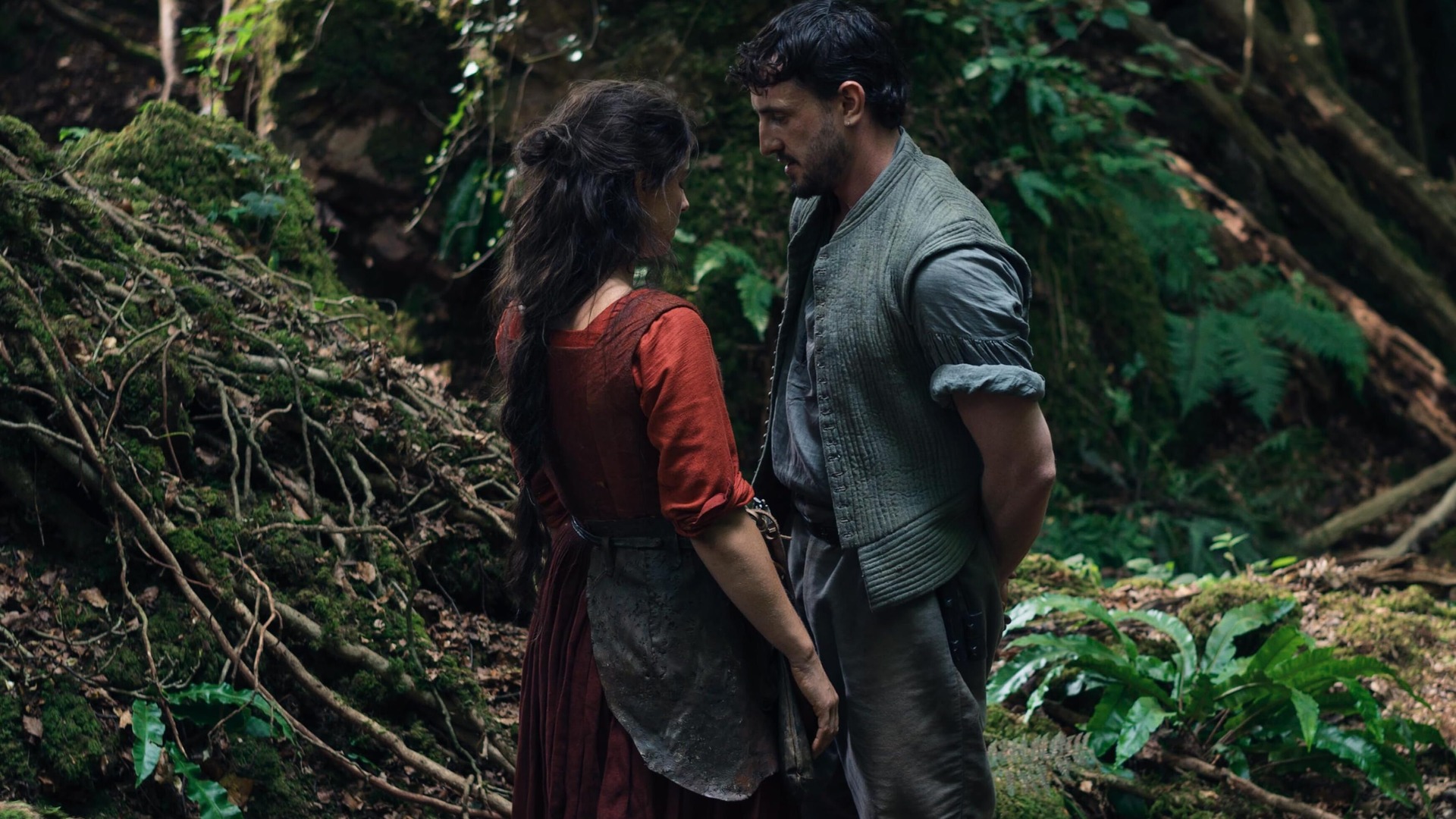
Based on the largely fictional novel of the same title, Hamnet follows the overly dramatised relationship between William Shakespeare (Paul Mescal) and Agnes Hathaway (Jessie Buckley) in the rural town of Stratford-upon-Avon. From the outset, Zhao’s period piece builds this relationship as something of a disturbance to the ordinary, more in line with the natural world around them; Agnes is looked down upon in the town, regarded by many as the daughter of a forest witch, as she is seen flying her pet hawk, whilst having a compulsion with a seemingly mysterious cave. William, a Latin tutor at the time, has a reputable status about him, so when it is revealed that the two are in love, his family is initially hesitant to the idea. Despite all this, the two are fated to marry.
Zhao really tries to build a sense of inevitable consequence between these characters. The two retell Greek myths, with Agnes foreshadowing Shakespeare’s future as something wonderful, whilst she predicts her own death with two living children. The first act is clouded in these enigmas; there is a lot of suggestive imagery attempting to entice a sense of uncanny surrealism in the world of literature. Staring into nature, deep caves, and parables of destiny. Although somewhat blank at face value, Zhao pulls the metaphorical rug from underneath our feet in the second half; the film’s faux hypnotics turn into directly told allegories, forcefully manipulating your emotional sphere, in a way disproportionate to its sense of character and staging, with everything shifting after its emotional tipping point, which I will not spoil. After said moment, all of Zhao’s characters’ sentimental responses feel entirely fated to run their course toward a predictable ending. A film suddenly exists entirely as a straight line, destined for one direction and one direction only: a banal ‘importance of art’ message and its cathartic ability to heal one’s trauma.
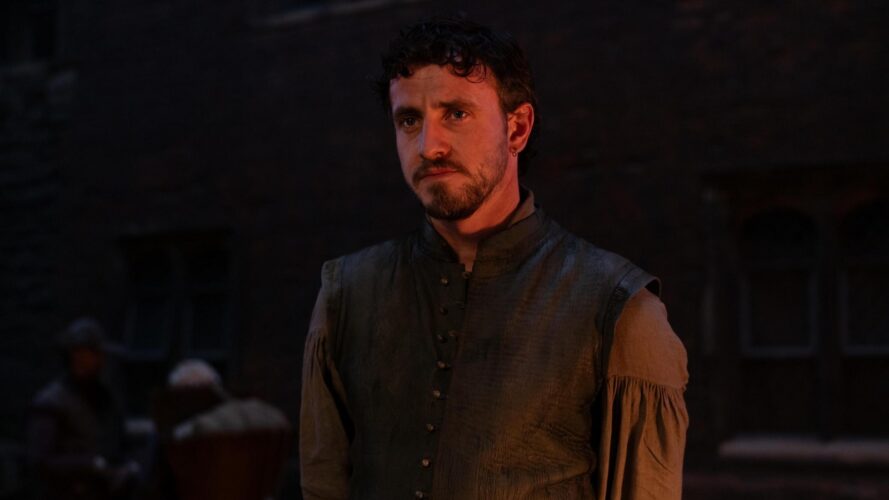
It is not that an inevitable climax always ruins a film’s advancements; in fact, that is wholly untrue, but Zhao rarely uses that sense of fate, or unreliable narrator, to her advantage. It turns into a film more bothered with making you cry for the entirety of its second half than with developing its once-signified fairytale storytelling, unbothered by the literarily deceptive but now just tuned into Shakespeare’s history that ironically does all the telling and not enough of the showing. The scene that is most telling of this peculiarity comes after Shakespeare departs for London to begin writing Hamlet, where Paul Mescal, who is un-ordinarily just okay in this, looks out glumly into an empty pier and delivers a stitched-on “To be or not to be”, as Zhao makes sure of his identity just in case you somehow didn’t know who he already was.
However, i was impressed by the mature innocence in the performance of their son Hamnet played by Jacobi Jupe. But the acting as a whole runs on the tightrope of laughability that exists in melodramas; for me, they either work or fail dismally. I’m not in a position to fully judge this film’s paternal instincts and reactions to anguish, but out of our lead lot, I think Buckley falls foul of that tightrope by the end, where her awkward agony winces in the face of palpable believability.
Despite its attempt to shape human feelings, Hamnet functions as a sort of neat-looking peel-away sticker. Its surface is sleek-looking, and its emotions exist on screen, but once you peer behind, there’s little to grab onto beyond vague markers of comical hysterics. It is all closed out by the most poignantly contrived piece of music in contemporary cinema, as composer Max Richter foreseeably uses one of his own to have one last laugh, as On the Nature of Daylight pulls the curtain tight shut, reminding me that we need to ban that song being used in films from now on.











-
 News2 weeks ago
Full 2026 Programme For BFI Flare Revealed
-

 Featured Review3 weeks ago
If I Had Legs I’d Kick You ★★★★★
-
 Interviews3 weeks ago
Up Close with Marc Cubelli
-

 Movie Reviews3 weeks ago
The Day The Earth Blew Up: A Looney Tunes Movie ★★★
-

 Featured Review4 weeks ago
Twinless ★★★★★
-
 Featured Review3 weeks ago
Wuthering Heights ★★
-

 Featured Review2 weeks ago
The Moment ★★★★
-

 Featured Review3 weeks ago
Crime 101 ★★★★