

Interviews
Interview With Director Bi Gan (Resurrection)

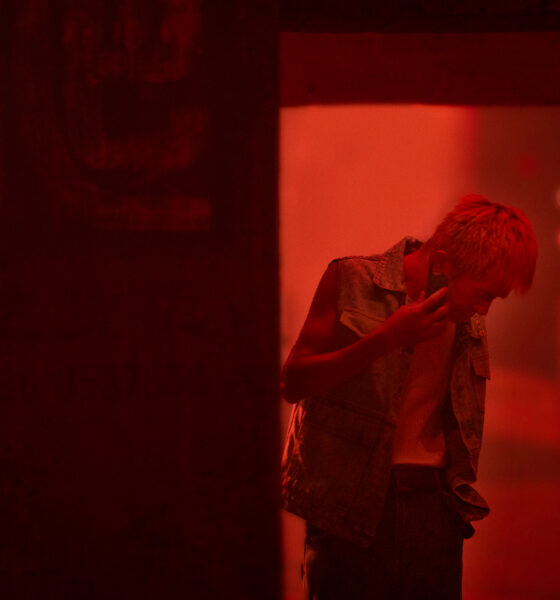
Nobody makes films quite like Bi Gan. The inimitable Chinese prodigy has become a bit of a mythic figure among film enthusiasts ever since he first burst onto the scene with Kaili Blues: a graceful feature-length debut that cemented Bi as a venerable formalist at the tender age of 26. Bi, a Kaili-native, appears to be just as enigmatic as his oeuvre: a master of poetic imagemaking and the dreamlike long take, Bi Gan seems to operate on a frequency few could attune to. His films will make you swoon, question reality, and transport you to the realm of dreams where love could effortlessly transcend time and space. Ahead of the UK release of the filmmaker’s most confounding work to date, Resurrection, I sat down with maestro Bi Gan to discuss the universality of the human experience, making sense of the world using the language of film, and finding connection in the wake of the apocalypse.
Dimitri Kraus: I find Resurrection to be a very generous film. In a way, I think it invites the audience to establish a very personal connection with it. How do you trust your audience so much? Where do you find that trust?
Bi Gan: First of all, thank you so much for using the word ‘generous’ to describe my film, from the bottom of my heart. I feel that I am one of the Deliriants [dreamers in Resurrection], and I want to share all of my thoughts about films with my audience. And in terms of your question, I think I’m just an ordinary person. I live a very ordinary life. I am just one of the commoners, like all of us — it’s just that I make art, that’s it. I believe that we all experience the world in a very similar way; we encounter rejection, barriers, and the world’s embrace on an equal footing. Also, just like another very famous filmmaker has said, I believe that the audiences are not stupid.
DK: Certainly not. I think what you’ve just said kind of leads into my next question: your film is so full of love for human beings, for the art we create, for the communal spaces we all share… In your work, love seems to be able to conquer pretty much anything. Where do you find that love, especially when the world around us feels increasingly apocalyptic?
BG: I believe that there are certain changes in the world, as everyone agreed, that have become irreversible. It all develops, and it changes; there’s no way back. And just like everything in the world, there’s going to be a beginning and an end. The stars in the universe may disappear one day, but the next day you could see a new star appear. I wouldn’t call myself a visionary person coming up with answers for future problems. What I try to do is just explore the world through artistic creation and bring back the sensations to my own ontology. I believe I am a subject with rich and complex feelings and emotions, and through art I can communicate with other rich and complex subjects who have their own subjectivity — and that’s good enough. That’s beautiful enough.
DK: It’s very interesting that you mention subjectivity, specifically because my next question is about how you frame sensory experiences. In one of your recent interviews, you mentioned that post-2020, you became fascinated with Immanuel Kant’s philosophy. Do you hope your audience engages with your film on an inherently personal, sensory level, or is that not important to you? Do you want the audience to find their own way?
BG: I think there is a recurring theme in all of the previous questions, and it’s that we have drastically changed our way of experiencing the world — and so have our senses. Our engagement with the world has changed dramatically. I think there is this kind of drift. Perhaps, we have gone astray from how we’re supposed to feel and how we receive information. Sometimes, you see people watching a three-minute film on their phone and realize that everyone lives in their own information cocoon, everyone lives in their own bubble. I think this brings a level of alienation to all of us, so I still want to use a language that’s very specific to film in order to tell a good story. I still want to utilize the language of film to convey the relationship between us and the world. Maybe the audiences are not used to watching my films because of that — perhaps, watching my films is a bit like reading a book. You need to open up all your senses and I don’t want to just throw audiences into a pool of different sensations. What I’m trying to do is build the sensations together with my audience. In the first scene, you see the burning screen, and it suggests that all the audiences watching the film are the Deliriants. So what I’m trying to do is press this restart button, to reboot all of our senses and use that as a key clue to experiencing the world.

DK: That’s fascinating, especially considering that you’ve recently mentioned that audiences have become accustomed to certain things and we choose to engage with art in a very rigid manner. I suppose we’ve almost been conditioned to feel a certain way? In that same interview, you also said that we tend to calculate what the public likes and cater to them. How do you approach filming Resurrection specifically as an antithesis to that?
BG: Actually, I would like to answer your question with just a single line from the audio chapter in this film: “I belong to myself, and myself only”. I can only use my own way to address how I deliver a piece of art.
DK: That’s beautiful, thank you. Given the way your film is structured, I think it traces both the history of cinema and the histories of China over the 20th century. How do you approach the wealth of histories and the passage of time you’re dealing with in Resurrection?
BG: Well, I live in a very specific time that I can speak for. What I can say is the last chapter in the film, the one about the sensory experience of touch during the last night of 1999 — that’s the era in which I lived. Naturally, I echo with that period of time more because I grew up in it. During this period, I started becoming aware of the world, even though my worldview might not have been fully established yet. So this time span is closely linked with my personal experience. In terms of other chapters, they are all parts of history, and I’ve never lived in those eras. But still, I think all of them interact with the history of cinema, and this can create very interesting dynamics. What we were trying to do was not to present anything absolute, straightforward, or specific in terms of the history itself. Instead, we tried to come up with something abstract, complex, and beautiful. We wanted to bring out the core of history on a more aesthetical or conceptual level and try to evoke people’s emotions, instead of just telling something very specific in terms of historical fiction. For all of these historical periods, our priority was to present the illusions and hallucinations related to that period of time, instead of presenting the real historical reality. Even though sometimes, I think illusions and reality can blend together.
Resurrection is in UK cinemas March 13th







-
 Featured Review4 days ago
Digger ★★
-
 News4 days ago
Shane Meadows Headlines + Joe Lycett Named First Patron As 2026 Forward Film + TV Festival Opens In Birmingham
-

 Featured Review4 weeks ago
Venice Film Festival 2026 – Primetime ★★★★
-
 News1 week ago
70th BFI London Film Festival Announces ‘LFF For Free’ Programme
-

 Featured Review2 weeks ago
Resident Evil ★★★★
-

 Featured Review4 weeks ago
Venice Film Festival 2026 – Wild Horse Nine ★★★★
-

 Featured Review2 weeks ago
Sense And Sensibility ★★★★
-

 Featured Review3 weeks ago
Oasis: Don’t Look Back In Anger ★★★★