
Interviews
Interview With Director Sarmad Khoosat + Actors Mamya Shajaffar/Channan Hanif/Farazeh Syed (Lali)

Hollywood filmmakers love to see themselves as risk takers and progressive creatives going against accepted orthodoxies. In truth, there is a little taboo in Western cinema anymore. If you pitch it right, pretty much anything goes; that is not illegal. The real risk takers, in the current climate are filmmakers working in countries like Pakistan where they have to be constantly wary of censorship, religious, political, social sensitivity and one wrong move can lead to major trouble.
Sarmad Sultan Khoosat is one such filmmaker. His film Zindagi Tamasha was banned in Pakistan. He produced Joyland, which received huge international acclaim but, nevertheless, was a controversial film in its homeland.
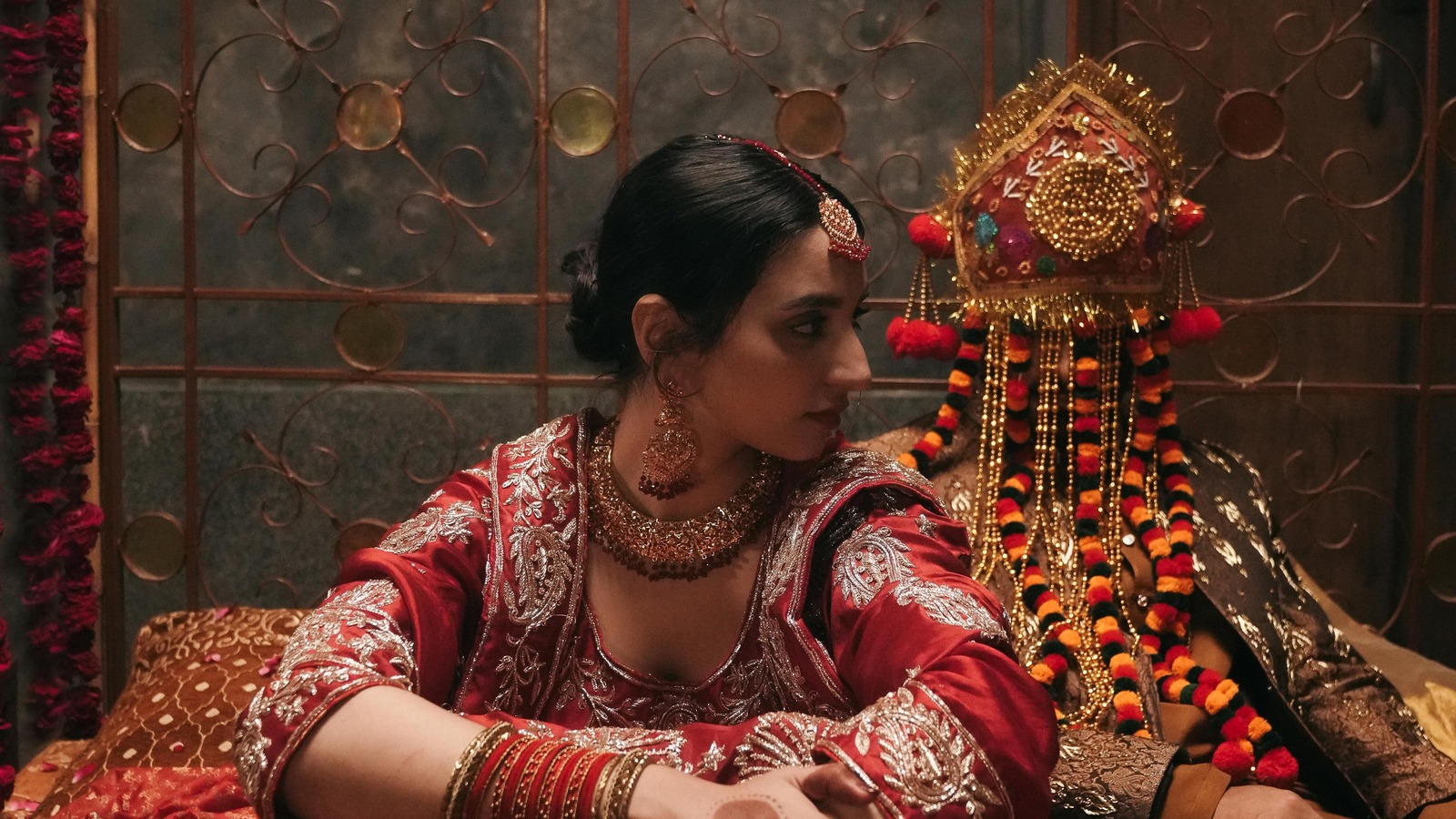
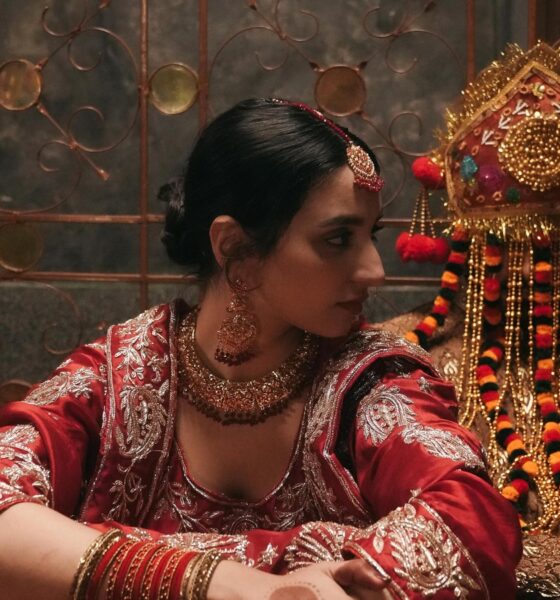
At this year’s London Film Festival back in October, Sarmad premiered his new film Lali which he directed. It’s a beautifully observed, tautly written, funny, touching social commentary on Pakistani life centred on a family and its immediate neighbourhood. Superficially, it might be deemed a family drama but the film defies genre. It is at once a dark comedy, a horror film, a fantasy drama, social commentary and even a musical. For those unfamiliar with Pakistani cinema, it’s an eye-opener. Visually stunning, creative, memorable, it contains some electric performances from the lead cast, who I was astonished to hear were pretty much newcomers to film.
The story centres around a couple (Mamya Shajaffar and Channan Hanif) who marry, largely to get away from their respective pasts. He is a badly scarred (both physically and emotionally) man living with decades of resentment in his heart. The bride has a history of relationships with men who all died in mysterious circumstances. The two come together in a complex web of sexual desire, superstition, ghosts and nosy neighbours. The film also features a rousing, hilarious performance by contemporary artist, Farazeh Syed who plays the matriarch of the family, sohni ami.
At LFF I had a delightful time interviewing Sarmad and the three leading cast members.
It’s officially described as a black comedy but genre of film do you, as director, say Lali is?
Sarmad: The tradition of cinema is now over 100 years old and so I find the concept of genre a bit limiting. I like the idea of being independent and free of all accepted boundaries that can pigeonhole you. I feel Lali is a shape shifting film. We’ve tried to incorporate different elements that felt right for the micro universe of the film. It is a dark comedy, he’s, but it’s a musical too, I’d say. And then it’s a very intense romance or love story, and then it becomes a very dark psychological drama. So, what I can say is, that these are very intentional shades or different personalities of the same film, just as how life happens to us in different shades.
The most striking thing for me was how natural the family unit felt. I totally believed that you were all related, because of the easy way you spoke to each other, the way you sometimes loved each other and sometimes didn’t and sometimes fought. How did you go about creating that kind of natural feel?
Channan: We took part in workshops over several months before filming. The point was to try to capture exactly what you’re describing. We would try different things and be mindful of the tone we were trying to get. When Sarmd said, I think you’ve got something here, we would take that home with us and think about how and why it worked and try and build on it.
It’s the comfort of building a bond. There’s technique and the science to doing things, but there is also that aha moment when something feels right. Suddenly, it’s the way you look at someone or how you can take their hand.
Sarmad: There are exercises we did like looking into each other’s eyes intently but ultimately, it comes down to the brilliance of the cast.
Farazeh: Also, during shooting it was a very comfortable environment and I remember noticing that before each scene Sarmad would talk to whoever was in that scene, just very casually and help create that safe, friendly environment.
Sarmad: It was about allowing the actors to try things. On set, form me, it’s not about being cerebral about it, that comes in the preparation for the film. On set it’s about being there and how that moment speaks to you. I don’t concern myself too much with the burden of dialogue. People get caught up in that but it’s more about how you feel at that time. So there was a lot of improvisation, so they could make the dialogue and the scene their own.
Mamya : For me it was about being present in the moment and believing we are that family and there’s nothing beyond that right now.
Farazeh: We were actually living that reality.
The two lead characters; Scarface and the man killer……
(Laughter)
Sarmad: That’s such a cool log line for the English version of the film! Scarface and the Man Killer.
Glad you like it! By the end of the film we still don’t know whether the two main characters are good or bad or what they’ve actually done. How do you, as actors work to keep the sympathy of the audience but also keep the character enigmatic enough to possibly be the villain?
Mamya: I just believed that I had done nothing wrong. That I was a product of my circumstances. If someone had been harmed it was not because of anything I had done. So, at no point did I think that I was not trying my best to save the situation or the marriage or those around me. With that belief and I guess, the sympathy for self I believed I could keep the sympathy of the audience.
Did you like your character?
Yes. I adored her.
And Channan?
Channan: As an actor you’re conscious it’s about building a relationship with the audience. So, you hope that an audience will be ready to sympathise with or try to understand a character with all their flaws and their positive traits. Basically, I think it’s about just trying to play the role honestly. Even if you’re playing a villain, and in the past 10 years or so, I guess there’s been so much antihero stuff on TV and in films and while I think X is very far from an antihero, as an actor you always hope that your character is not going to be seen as purely evil, purely bad. Maybe, like Scarface, he does bad things but maybe he’s also cute in some ways . So, just by playing him honestly, you hope you can humanise him.
There’s a powerful point in the film where your character says of sohni ami, ‘she humiliated my father all those years.’ And I thought that’s it, that’s the core of the character, this resentment that has been building inside him for decades.
Channan: Right, I would agree with that. I think from the beginning of the movie there are hints at what problems he has in the way he feels discomfort or resentment, because he can tell that sohni ami has a much more loving and warm relationship with everyone else. So, yeah, I think that’s a pretty apt reading of the situation. I think that’s something a lot of people can relate to; having complicated relationships with your parents.
And so to Sohni Ami! She’s loud, she says what she thinks, she’s totally unfiltered, she looks at the hot guys and tells them to cover up but smirks at how good they look!
(Laughter). In playing her, was she an amalgamation of different women that you’ve met or someone you built wholly from your mind?
Farazeh: She was definitely an amalgamation of a couple of women that I know or had come across in my life. When I first met Sarmad and he was telling me about her and what her story was, what her life had been, I kept saying to him but that’s me! I’ve been surrounded by very strong women all my life, in my home and outside. I really do believe that she’s an amalgamation of many South Asian women who are very strong and have agency. I think it’s a false impression people have. that women, especially South Asian women are weak and battered and beaten down. Of course that is a reality also but then look at what they survive!
The female characters are all very strong in this film. Is that something you’ve found generally in Pakistani cinema?
Farazeh: This was my first film.
Really! I’m astonished to hear that. It’s a fabulous performance.
Sarmad: It was the feature debut for Mamya, Channan and Farazeh!
On the subject of the female characters. These are strong women. One had a lover she wanted and went and sat on top of a tree waiting for him and then there’s a woman who carries the body of a dead lover on a motorbike and brings him back. I feel that, often, we underwrite strong women and overwrite the stereotypes; the damsel in distress waiting for her knight in shining armour. We don’t offer that in this film!
There are some bold themes in this film. Sexual desire, maybe killing lovers, madness, everything is in here. How do you think it will be received and is it going to be a mainstream release or an arthouse film?
Sarmad: The general landscape of Pakistani cinema is that it’s not producing enough films. So, we do not have that division of mainstream and independent cinema. The country produces may be seven or eight films a year. So everything is independent or supported by TV channels. The film studio system has pretty much collapsed. We would hope that we will have a theatrical release. But then we have very few theatres left in Pakistan, too.
Talking about the themes of the film, I just find it unfair that there’s an assumption that because we’re showing intimacy on screen, people will be uncomfortable with it. People are comfortable with violence and blood! And what is acceptable in the mainstream can actually be very vulgar. I don’t want to sound like the moral police, but I think there is a vulgarity in the way that violence is shown and accepted but if intimacy is shown, even if it’s sensitively done, it immediately becomes risqué. As a filmmaker I do struggle with what gets labelled as unacceptable.
This film has weddings in it, it has violence, it’s got love, it’s got singing. In a vacuum. those are all things that are loved in Pakistani cinema. I think we have a story here that is relatable, audiences will be able to say, yeah, I heard about something similar from friends and neighbours and and so they can relate to it. There are Hollywood movies playing in Pakistan that show intimacy and there are scenes in mainstream films which show a couple drenched in the rain, showing skin and engaged in song and dance and so on. So, hopefully, fingers crossed, this will be accepted as something that is real and happens and the intimacy is part of it.
I’m afraid this film may come with notoriety because of me and what I’ve done in the past few years. The film itself is harmless. Yes, there are bits I wanted to show the way I envisioned them. But they’re not done insensitively or irresponsibly. How is an intimate kiss more threatening or unacceptable than a five minute song where the couple are nuzzling and drenched in rain and rubbing on each other? I find that kind of thing more vulgar and exploitative. This is the story in which, as it progresses, we are going deeper into the mental recesses through the skin and that’s why some of those scenes of intimacy are relevant to the idea of the film.
How is the film doing on the festival circuit?
Mamya: It’s played to full houses. It’s been very well received across the board.
Channan: I don’t think people want to make a film that’s just an easy watch. We’re not in the business of that. I think this film gets people thinking. They watch it and have questions. I hope that in London, which has a massive diaspora, they’ll embrace it. The film is subtitled in English and that helps too. I’m very hopeful that even if people are a bit shell-shocked at first, they’ll then sit with it so they can unpack it.










-

 News1 week ago
Manchester Animation Festival Announces 2026 Winners And New AI Policy For 2027 Competition
-

 Features4 weeks ago
How to Choose an AI Video Generator: 8 Factors to Evaluate Before You Commit
-

 Featured Review2 weeks ago
I Play Rocky ★★★
-

 News3 weeks ago
Inaugural Edition Of MUBI Fest London To Take Over Hackney Picturehouse This November
-

 Featured Review2 weeks ago
Godzilla Minus Zero ★★★★★
-
 News2 weeks ago
Aesthetica Film Festival Announces Award Winners For 2026
-
 Interviews3 weeks ago
Interview With Ranbir Kapoor, Sai Pallavi and Yash (Ramayana: Rise Of A Legend)
-
 News3 weeks ago
Filmmaker Alex Cox Brings Latest Feature ‘Dead Souls’ To UK Cinemas For Special Q+A Tour