
Features
Skull Island on film: how each era rebuilt King Kong’s home

Kong gets the title, but the island gets the first act. Every major King Kong film spends its opening stretch sailing towards a place that is not on the charts, and how that place looks tells you a great deal about the people who made the film and the tools they had. Over more than eighty years the island has been a set of painted glass sheets, a Hawaiian coastline, a digital jungle and a string of Vietnamese provinces. It has also changed oceans, sunk and been reinvented more than once.
1933: a jungle painted on glass
The oddest fact about the original island is that the 1933 film never calls it Skull Island. Carl Denham describes an uncharted island with a mountain shaped like a skull, and that is as close as the script gets. RKO used the famous name in some of its publicity, and it stuck.
Merian C. Cooper and Ernest B. Schoedsack built the place at RKO Radio Pictures out of whatever was to hand. For the live-action jungle scenes Cooper used the set of The Most Dangerous Game, which the studio had made the year before. The deeper jungle was an illusion of depth, created by layering glass paintings by Mario Larrinaga and Byron L. Crabbe, with a look modelled on the engravings of Gustave Doré. According to Turner Classic Movies, the great wall dividing the village from the interior was a leftover from Cecil B. DeMille’s The King of Kings (1927), and it later burned in the Atlanta sequence of Gone with the Wind. Into this theatrical gloom went the stop-motion creatures of Willis O’Brien’s effects team.
The result is not a believable place, and it is all the stronger for it. It looks like a dream of a jungle: misty, vertical and far too dark to see across. The sequel, Son of Kong, released later in 1933, promptly sank the island in an earthquake.
1976: real cliffs and an oil company
Japan’s Toho borrowed Kong in the 1960s and gave him new homes, Faro Island in King Kong vs. Godzilla and Mondo Island in King Kong Escapes. Hollywood returned to the story in 1976 with producer Dino De Laurentiis and director John Guillermin, and the mood had shifted. The expedition now belongs to an oil company, Petrox, whose man believes the island is rich in crude, and the place hides behind a permanent bank of cloud.
For the first time the island was a real landscape. The American Film Institute’s catalogue records that the Hawaiian scenes were filmed on the northern coast of Kauai, and those sea cliffs and valleys do more work than any effect in the film. Kong himself was Rick Baker in a suit, uncredited on screen, alongside a forty-foot mechanical ape built by Carlo Rambaldi and Glen Robinson. The finale swapped the Empire State Building for the World Trade Center, a very 1970s decision for a very 1970s film.
That closing image of an ape on a skyscraper has long since escaped the cinema. It turns up in posters, parodies and games, and Blueprint Gaming’s jungle-themed game, described in this King Kong Cash slot review, has its own Kong dozing beside the reels and a free spins round set on the Empire State Building. It is not a film tie-in, and like any slot it is a game of chance.
2005 and 2017: digital jungle, then Vietnam
Peter Jackson’s 2005 remake for Universal went back to 1933, in setting and in spirit. Visual effects trade site Animation World Network reported that Weta Digital combined miniatures with computer-generated trees and foliage, aiming for a stylised jungle of twisted terrain that stayed faithful to the original film. This island sits west of Sumatra and is crumbling into the sea, scattered with ruins. Weta Workshop even published a mock field guide, The World of Kong: A Natural History of Skull Island, cataloguing its wildlife. The film won three Academy Awards, including Visual Effects.
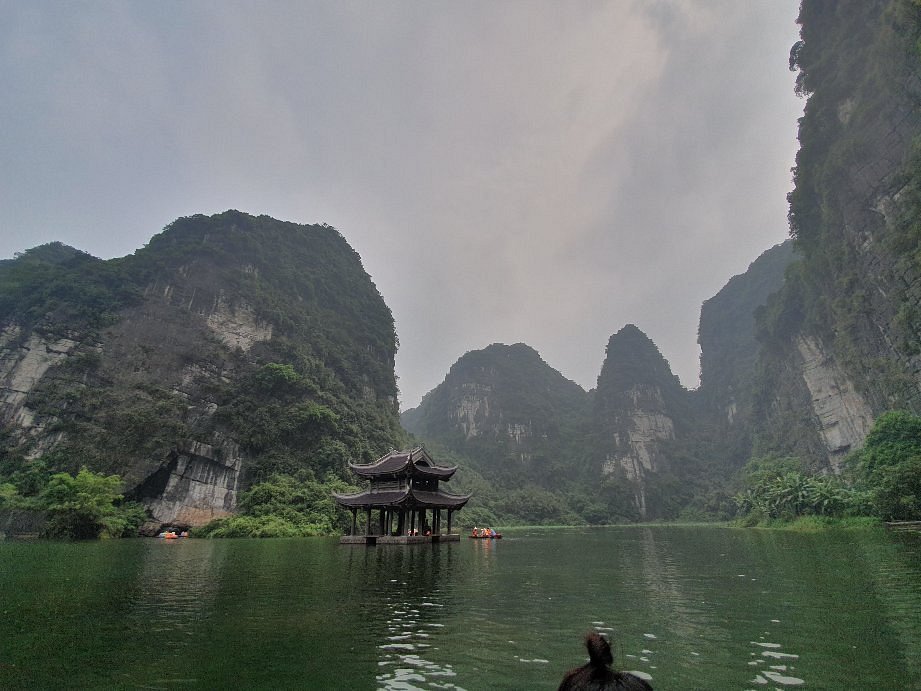
Kong: Skull Island (2017) took the opposite route. Director Jordan Vogt-Roberts set the story in 1973, moved the island to the South Pacific, ringed it with a storm system and went looking for real scenery. The production filmed in Vietnam’s Ninh Binh, Quang Ninh and Quang Binh provinces, including Ha Long Bay, as well as on Oahu in Hawaii and Australia’s Gold Coast. Vogt-Roberts called the look of Vietnam “gorgeous and otherworldly at the same time”, which is a fair summary of what an island like this needs.
What the island tells us
Put the versions side by side and a pattern appears. The 1933 island is a place of pure imagination, built by showmen. The 1976 island is a resource to be drilled. Jackson’s is a lost world already dying, and the 2017 version is a wilderness that outsiders should leave alone. Kong barely changes. His home is rebuilt every time, and it is always worth the voyage.
18+ only. Treat any game as paid entertainment, never a way to make money. Free, confidential help 24/7: National Gambling Helpline, 0808 8020 133.


-

 News1 day ago
Manchester Animation Festival Announces 2026 Winners And New AI Policy For 2027 Competition
-

 Featured Review4 weeks ago
Clayface ★★★★
-

 Features3 weeks ago
How to Choose an AI Video Generator: 8 Factors to Evaluate Before You Commit
-

 News4 weeks ago
Cannes Palme D’Or Winner, Major Previews And City-Wide Screenings Announced For 2026 Inverness Film Festival
-
 Movie Reviews4 weeks ago
The Social Reckoning ★★★
-

 News2 weeks ago
Inaugural Edition Of MUBI Fest London To Take Over Hackney Picturehouse This November
-
 News1 week ago
Aesthetica Film Festival Announces Award Winners For 2026
-

 Featured Review5 days ago
Godzilla Minus Zero ★★★★★