
Featured Review
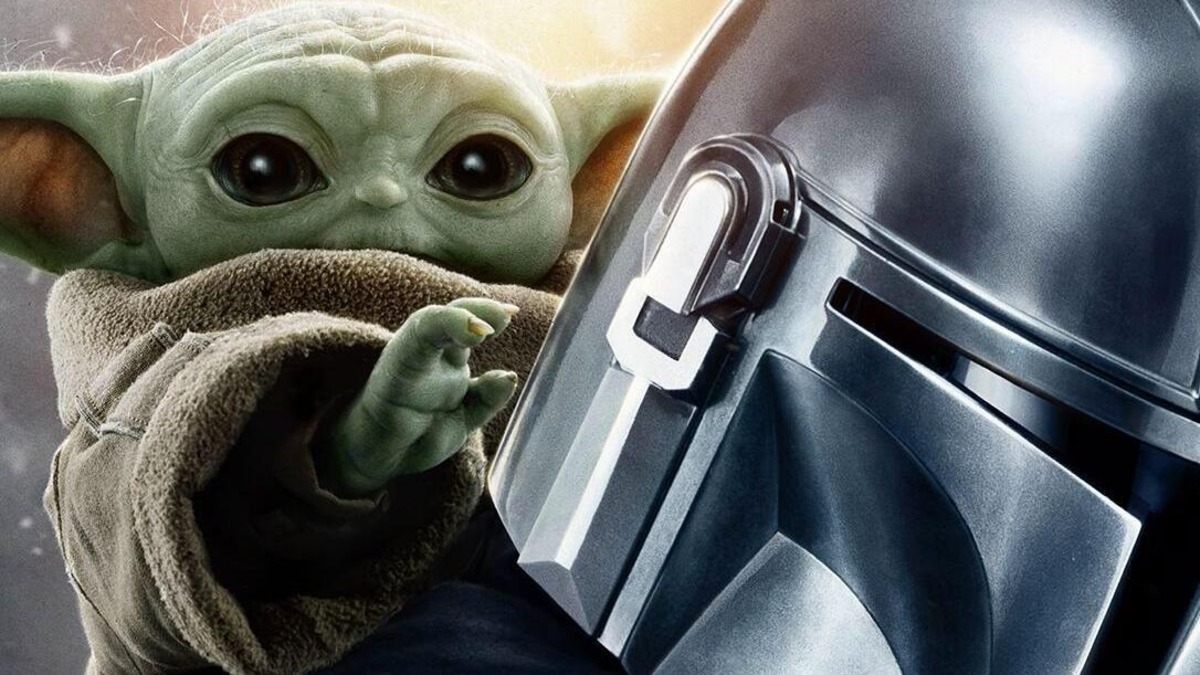
Star Wars: The Mandalorian and Grogu ★★

Released: 22 May 2026
Director: Jon Favreau
Starring: Pedro Pascal, Sigourney Weaver, Jeremy Allen White, Steve Blum, Jonny Coyne & Martin Scorsese
There’s something magical about watching Star Wars on the big screen. Who doesn’t get goosebumps at the following: the anticipation that comes when you see that famous blue text of “A long time ago, in a galaxy far, far away”. John Williams’ opening fanfare as it blasts through those surround sound speakers, and of course, that gold opening crawl as it charts off into the distance. This cinematic formula might as well be a coded message by the filmmakers: “buckle up, folks, and lock in. We’re about to take you on a galactic ride of your life.”
But I would be kidding myself when those moments have been fleeting of late. It has been seven years since the critically disastrous Star Wars: The Rise of Skywalker, the third film in the sequel trilogy. Seven years when the bar was permanently set low. Seven years that signalled the fractures that the franchise still hasn’t recovered from – an acknowledgement that has been difficult to accept in a legacy spanning nearly fifty years.
Like a Mandalorian creed, I’ve always believed that Star Wars can – and should – exist telling stories in multiple genres, styles, and effects for audiences to experience. Star Wars is for everyone. It can do more than just stay in the gaze of the Skywalker Saga and rely on nostalgia. It can focus on things besides the Jedi and the Force, ushering new heroes into its domain. In other words, there’s more than one way to Star Wars, and that’s certainly the energy that’s carried into Jon Favreau’s The Mandalorian and Grogu, the film spin-off of the TV show.
For its action-packed opener, The Mandalorian and Grogu happily accept those terms and conditions. Our monosyllabic space Western gunslinger Din Djarin (Pedro Pascal) now works as an independent contractor for hire, alongside his faithful green companion. Together, on a Hoth-like planet, they speed run (like a video game) in dismantling the last imperial warlords of the Empire. There are neat touches to this moment: Din hiding in the shadows like Batman, picking off his enemies one by one and unleashing his full arsenal of gadgets, anything from a blaster gun to flamethrowers. Not even a mouse droid can escape the chaos, bustling down corridors in a unique POV shot before Grogu uses the Force to dismantle it. A brief fight with AT-AT walkers continues Din’s relentlessness to strike fear into escaping imperial loyalists, before the duo is eventually rescued by Star Wars Rebels legend Zeb Orrelios (Steve Blum). For at least the first 30 minutes, it’s off to a strong start – a fun, breezy back-to-basics approach reminiscent of The Mandalorian‘s glory days of seasons one and two, and without the convoluted inconsistency that bogged down most of season three.
But that’s as far as Favreau’s effort can muster, an ongoing reflection of the internal crisis that Star Wars has been under since 2019. For every Andor (the gold standard), Star Wars Visions and Maul: Shadow Lord, there’s The Book of Boba Fett, a show that jettisoned its titular character back into the Sarlacc pit in favour of doing The Mandalorian 2.5. For every creative or experimental exploration to showcase Star Wars’ vast storytelling (e.g. the High Republic era of The Acolyte and the Goonies-inspired Skeleton Crew), it’s curtailed by the predictable whiff of toxic, gatekeeping and backlash amongst the fanbase. And it’s hard not to see past the continued discouragement when film projects are constantly announced, only to be delayed or quietly sunsetted. At this point, we all might as well be Luke Skywalker, staring into the distance, watching the two suns over Tatooine in search of a (renewed) new hope.
The Mandalorian and Grogu finds itself caught in that state of flux, eager to please with a safe, risk-averse storyline yet wanting to flex its creative muscles through the use of VFX, puppetry and stop-motion animation to show what Star Wars can be. It may have kick-started Disney’s jump into streaming, but as a film, it’s a TV movie, an extended episode where you can see the seams of an episode’s beginning and endings. It’s a feeling put into context right from its opening titles, favouring its TV show’s font rather than the MS clipart version that made it onto the film poster. It’s one of many questionable choices that The Mandalorian and Grogu makes, and in return, that lighthearted straightforwardness devised by writers Favreau, Dave Filoni and Noah Kloor barely makes an imprint on the midi-chlorian count.
That feeling continues to grow once that cooked ‘bantha meat’ of its storyline begins to emerge. We’re in the era of the New Republic, that post-Return of the Jedi glow where the Empire is defeated, and the galaxy is coming to terms with its rule. In the midst of change and doing what is necessary to prevent another war (narrator: it did not work), Sigourney Weaver’s Colonel Ward tasks Din with a trip to the Hutts. His mission – should he choose to accept – is to obtain the next target in the Republic’s deck of cards – the capture of Lord Janu (Jonny Coyne). But in order to fulfil that mission, he must help the Hutts reunite with their nephew, a beefed-up, Wrestlemania-inspired Rotta the Hutt (voiced by The Bear’s Jeremy Allen White), in order to get the information about Janu’s whereabouts.
Favreau, Filoni and Noor certainly imbue The Mandalorian and Grogu with some interesting conversations, peeling back the layers on fatherhood and parental legacy, and what it means to find your voice that is not defined by your past. In certain moments, Rotta’s story takes centre stage, a Huttese trying to outrun his famous father, Jabba, and become his own man (or Hutt?) by partaking in a gladiatorial game that feels ripped out from a scene from EA’s Star Wars Jedi: Fallen Order. By winning his freedom, he will be able to dictate his own destiny. Knowing the slippery history of his father’s syndicate crimes, such as freezing our heroes in carbonite or dressing them up in golden bikinis, it’s an anchor that plays nicely into the foundations of what Star Wars has built itself on, of found families and the friends you make along the way. Din and Grogu’s ongoing relationship tap into that sentiment, as a father-son dynamic where the son will outlive his father, knowing a day will come when Grogu will have to fend for himself.
Yet aside from the Easter Eggs and nostalgic familiarity (including references to The Book of Boba Fett and The Clone Wars), it’s still an entry that never feels confident enough to execute those themes. Favreau’s fast and loose direction frequently retreats to safety, never willing to go beyond the structured threads of its TV show environment to make its story bigger than what it is. Small-scale intimacy is one thing, yet it means nothing without the emotional tissue to pull those themes through. Would people care or understand Zeb’s past as one of the last few surviving Lesat after his homeworld was wiped out by the Empire? Would audiences have prior knowledge of the Hutt twins’ grasp for power despite Rotta being the true heir to the Hutt empire? Would people recognise that Embo, a bounty hunter deployed by the Hutts to track Mando, is a veteran villain of The Clone Wars? The Mandalorian and Grogu’s storyline is built on the thin-layered assumption you’ve watched all the connecting stories to make this feel whole, and in prioritising action over depth, characters don’t marinate and grow into the present story. It simply rinses and repeats, offering little to no new substance with the New Republic, no meaningful conflicts, and no perilous stakes to cause concern for its heroes. Pascal nor Weaver – it’s two leading human characters – get much material to feed on in terms of character development. Instead, the film banks on Grogu’s popularity and his cuteness to hold down the fort while the franchise still works out its next logical step.
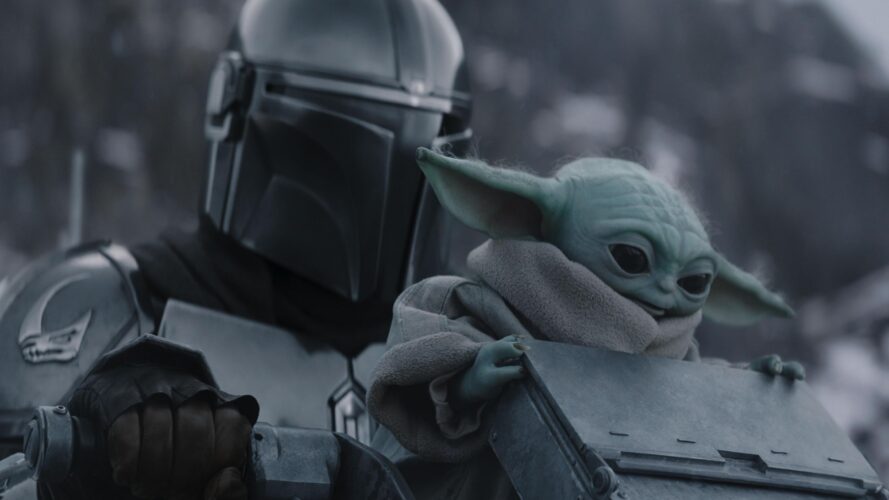
If anything, what Favreau does get right is the film’s technical craftsmanship with a real emphasis on old school innovation. As if it were learning from past mistakes with its overreliance on ‘the volume’ in previous seasons, veteran production designers Doug Chiang and Andrew L. Jones find opportune moments to make The Mandalorian and Grogu feel expansive, from the Blade Runner, neon-esque scenery on Shakari (with a brilliant Martin Scorsese cameo) to Ray Harryhausen-inspired stop-motion droids as seen on Nal Hutta. Its best feature belongs to its puppetry. Grogu’s expressions have come a long way since his first encounter as ‘The Child’, able to emote more and interact with its surroundings. He can confidently leap onto Din’s shoulder like an addition to his beskar-clad armour. He no longer needs a space stroller or a pouch, happy to use his little legs to get around when it’s safe to do so. He can climb into tight spaces to open doors or destroy droids from the inside by pulling out their cables and wires. And he’s still a hungry little guy, still being led by his stomach on most occasions.
This plays into one of the film’s best moments, where Grogu teams up with the Anzellans, a confident turn that shifts into an experimental silent movie with limited words, yet guided by composer Ludwig Göransson’s brilliant score. The humour undoubtedly sets it apart, as the miniature group navigate anything from fixing the new Razor Crest to forging a rescue plan to get Din from The Hutts. It’s one of the rare opportunities the film charmingly finds itself actually slowing down to craft something resembling a lasting, emotional care, but comes far too late to save it from its inconsistency.
The Mandalorian and Grogu may be an improvement over Star Wars’ last big screen escapade, but it’s more of a sideward step than a meaningful path forward. It doesn’t justify its leap to the cinematic screen with its weakness evidently on show, and no Star Wars film should ever feel like it simply exists to make up the numbers. And in that galaxy far, far away, it proves we still have a long way to go before the franchise can recapture that cinematic magic.







-
 Featured Review2 weeks ago
Pinocchio Unstrung ★★★
-
 Featured Review1 week ago
The Odyssey ★★★★★
-

 Movie Reviews4 weeks ago
Gail Daughtry And The Celebrity Sex Pass ★★★
-
 Featured Review3 weeks ago
Evil Dead Burn ★★★
-
 Featured Review4 weeks ago
Minions And Monsters ★★★
-
 Featured Review4 weeks ago
Nirvanna The Band The Show The Movie ★★★★★
-

 News3 weeks ago
Manchester’s LGBTQ+ Film + TV Festival SCENE Unveils Star-Studded 2026 Programme
-
 Features3 weeks ago
The Multi-Channel Film Marketing Playbook: How Independent Films Can Reach Audiences Beyond Search and Social Media