

Movie Reviews
The Uprising ★★★

Released: 9 October 2026
Director: Paul Greengrass
Starring: Andrew Garfield, Jamie Bell, Stephen Dillane, Tom Hollander, Thomasin McKenzie
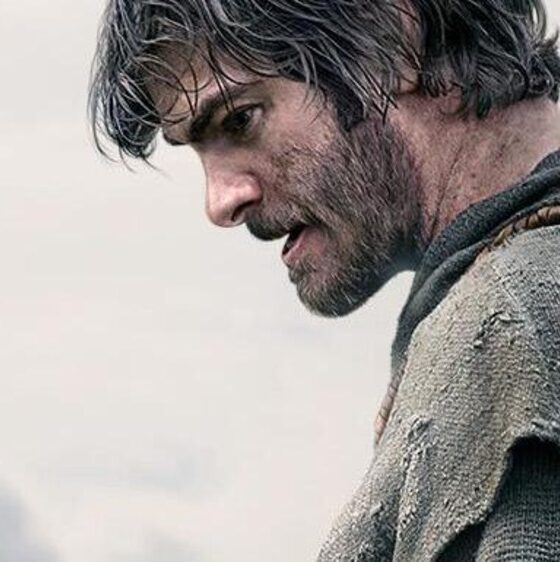
Set in England in 1381, The Uprising tells a fictionalised version of the Peasant’s Revolt which stems from rising tensions due to the Black Death that killed nearly half the population and the increase in taxes for the peasantry. The revolts across England are inspired by the actions of a Ploughman (Andrew Garfield) who ends up leading the movement with Wat Tyler (Cosmo Jarvis) and John Ball (Jamie Bell). As social unrests spreads in the country, Richard II (Woody Norman), the 14-year-old king, is letting his council rule in his stead due to his young age and the terrifying nightmares that keep haunting him.
The main question explored in The Uprising is a timely and important one. While this story is set in 1381, the uneven distribution of wealth is an issue that we know too well at present. The Peasant’s Revolt portrayed in the movie is also reminiscent of the revolts that are happening today across Europe where protests and social unrest are spreading across France, Italy, Spain, Portugal, and Albania. The protests across different countries vary in numbers and method, but they all have one thing in common: citizens are protesting the constantly rising cost of living and increases in rent and petrol prices. And after seeing the footage from European countries, suddenly the events of the film do not seem so far away in time nor impossible to witness in our present.
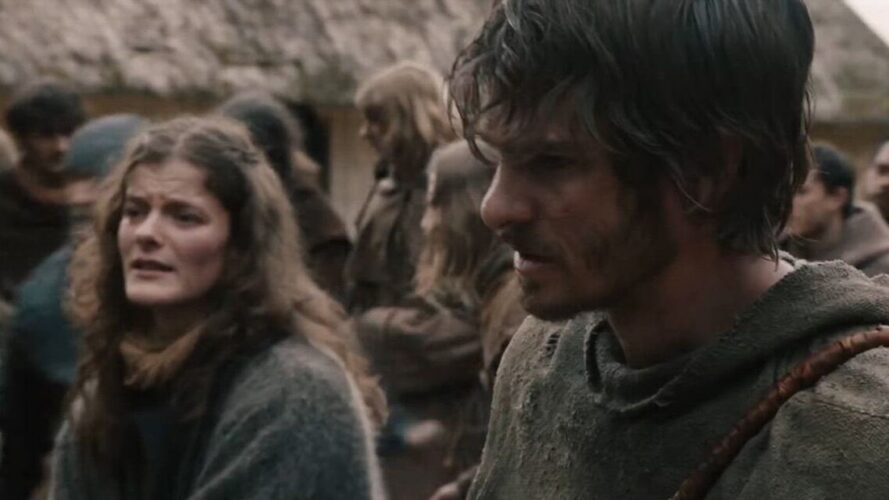
Paul Greengrass’ signature style creates a unique and compelling aesthetic for The Uprising. The shaky camera immerses the audience in the herd of the Peasant’s Revolt, making us participants in the events of the movie rather than mere spectators. The aerial shots also work well to show the scale of the revolt and how much it overtook the country at the time, which is not always easy to convey in such a character-focused narrative.
In The Uprising, Greengrass introduces the fictional character of the Ploughman within a well-documented and existing historical event. This is a fascinating choice and one that works because it grants him more liberties with the Ploughman’s storyline without being grounded in the realities of the event, as is the case for the other historical characters such as the King or John Ball. However, in order for this to work, the film would have needed to explore the historical context from the peasant’s perspective a little bit more rather than simply using 1381 as a backdrop for the story and using the intertitles at the beginning to convey the main information about the historical context.
The film gives too much space to the King and his council when they are the least interesting aspect of the entire narrative. When we do see their side of the story, it often gives away what their next moves would be and, therefore, hurt the film’s pacing which is especially slow in its first half. If it had focussed exclusively on the Ploughman and the revolt, The Uprising would have been much snappier and narratively more focused. Extra attention on the Ploughman would have also allowed the audience to know more about his backstory and personal ideals which could have heightened the stakes early on.
Despite its initial slow pacing, The Uprising is still a well-made movie that speaks to current issues as well as reflecting on the past. It features some excellent character work from Andrew Garfield in a movie that could have done more with its historical setting and overall narrative.








-

 Featured Review3 weeks ago
Digger ★★
-

 News3 weeks ago
Shane Meadows Headlines + Joe Lycett Named First Patron As 2026 Forward Film + TV Festival Opens In Birmingham
-

 News4 weeks ago
70th BFI London Film Festival Announces ‘LFF For Free’ Programme
-

 Featured Review5 days ago
Forgotten Island ★★★
-

 Featured Review4 weeks ago
Sense And Sensibility ★★★★
-

 Movie Reviews3 weeks ago
Bad Apples ★★★★
-

 Interviews3 days ago
Interview With Director Rhys Marc Jones (Black Church Bay)
-

 News2 weeks ago
Welsh Talent Set To Shine At 20th Anniversary Edition Of Iris Prize LGBTQ+ Film Festival