

Interviews
BFI Flare 2026 – Interview With Directors Rahemur Rahman and Lily Vetch (Body Of Our Own)

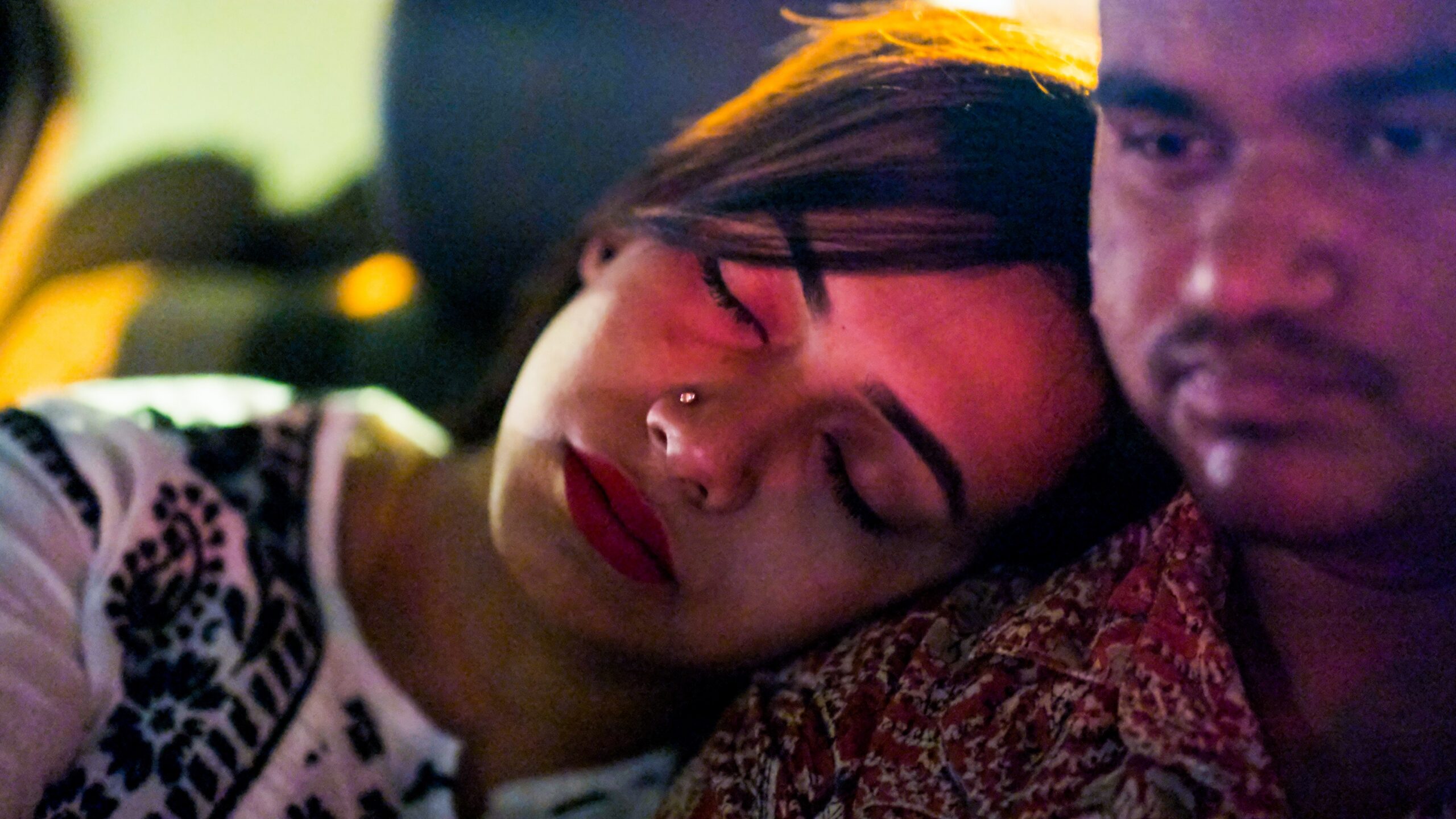
Body of Our Own is a vibrant, visually appealing, extended short documentary with a soulful depth about the daily lives of three, transgender (Hijra) females in South Asia. It will have its world premiere atBFI Flare as part of the This Is Home programme.
Awards Editor, Rehna Azim, sat down with its directors Rahemur Rahman and Lily Vetch to talk about the film before its big night.
Rahemur Rahman is an award-winning, London-born designer, filmmaker, artist and Senior Lecturer of fashion at Central Saint Martins.
Lily Vetch is a London-based film director, photographer and producer.
Q: The film’s title is an intriguing one. It can be understood on several different levels. What made you choose it? What do you want the audience to get from it?
Lily: I came up with the title quite spontaneously but it’s about ownership of the body. The theme of the film is about trans women taking back ownership of their bodies because their bodies have been politicised for so long and it’s still happening. So, the title is a quick way to say this is our body.
Rahemur: We considered calling it Body of My Own for a bit but we came back to Body of Our Own to show the collective power of a body in the widest sense; a body of people. If one part of the body as a whole is not well, we are all not well. We all collectively need to look after trans women but also are the marginalised parts of it. There has been so much said and done against the trans community, that we felt the title spoke to the gravity of the story that we wanted to tell. So, thank you for asking the question, I love it!
Lily: During shooting I was reading a lot of of Christina Lamb’s work. She wrote a book called Our Bodies are a Battleground. And how women’s bodies are the first to be weaponised, they’re often raped as a weapon. In war women’s bodies have often been weaponised in that way and that’s something that makes me very angry, as a woman. It feels very personal in that way.
Rahemur: I remember that book. My heritage is Bangladeshi. In the war to establish Bangladesh, women’s bodies were literally weaponised as a tactic. And now it mirrors how the world is using that trans bodies as a battleground.
Q: What drew you to the trans community in South Asia?
Rahemur: I started in fashion, well I’m still in fashion, but I was in Bangladesh, some years ago, working with artisans and I came across transwomen in a hostile situation, initially. I was with friends, wearing a garland of flowers around my head and my wrists. That’s unusual in a country where only women, traditionally, wear jasmine flowers in their hair, so I stood out like a sore thumb. It was my first time in Bangladesh and I didn’t know the gender rules were so strictly applied. A group of hijras came up and were giving the women flowers and I didn’t know it was just for them. I wasn’t a safe space for them. So, they came up behind me and tried to steal my bag with my passport and wallet in it. It’s not uncommon for them to be involved in such criminal acts. But in this case they saw me as both a queer person, and as someone who stood out as not being a local. So, they snatched my bag and were then abusive and confrontational. That too, is not an uncommon perception of them because some tend to have an antagonistic attitude towards men who have, historically, not stood by them. I got my passport and money back but the encounter left me with a lot of questions. I thought it would be good to look at this community through film and the concept evolved over time. Lily taught me about sound and we went from making an observational film to being more of a sister or friend in the room so people could understand their lives a bit better.
Q: How big is the hijra community in South Asia/India?
Rahemur: It’s huge. We’ve been to many crevices of South Asia, including up in the mountains and the Hijra community is everywhere. I think people forget that. Even in small, remote villages, there will be a group of Hijra sisters who live together and try to support each other. Whether it’s in Nepal, Pakistan, Burma or India, these smaller communities have always been there as an integral part of the wider community.
Lily: Within the trans community, If you’re born into one of these groups, you grow up feeling like a woman and living as one. During the years we were working on the project, we heard many stories of how individuals who felt isolated found others to take them under their wing and make them part of a bigger group. It’s a lesson in understanding transness and that this is not just a trend, these are people born with the mind of a woman but the body of a man.
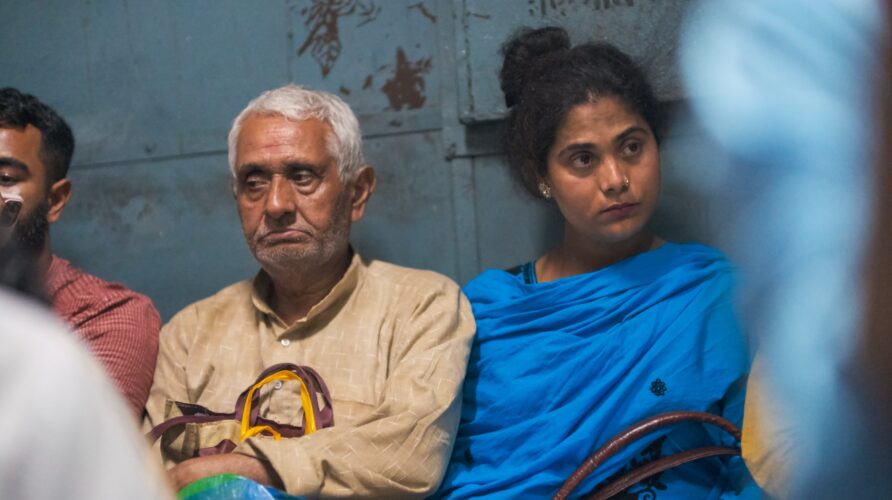
Q: The term ‘guru ma’ is used in the film. What is the role of the guru?
Rahemur: There is a hierarchical system within the community which has helped them survive for thousands of years. A Guru is at the top of the group and will have daughters and granddaughters and so becomes this major matriarchal figure within it. But it’s important to understand that it’s about financial and social security . A lot of the children and younger ones will go and beg or do sex work and they will give a percentage of what they earn to the guru. That guru will, in turn give a percentage to their guru and so it goes up the lineage. The hierarchy is a means through which the group survives. It’s how individuals within it gain financial security. They can also move up in rank, over time. Gurus can become really quite powerful. Some can be very rich and a few even take up roles in local politics and can be very influential. Globalisation is changing this hierarchical system, though. For example, social media now allows an individual to make money through being an influencer. So, you will come across hijras who want to be famous and go into film and dancing on social media platforms where they can make lots of money. Some of them are now not part of the traditional system and are just trans women with their own autonomy and agency and a body of their own!
Q: The Hijra community is both underground, living in the shadows and also very visible. How does the general public react to them?
Lily: There’s a weird push and pull of some people accepting them and some being scared of them. There a film online of a hijra woman saying that men from the wider community are quick to sexualise women in general, but they can’t act out with those women, so they sexualise hijra women because a lot of them work as prostitutes. So, at night these men will use them as sex workers but during the daytime they will marginalise abuse them. It’s very hard then for the hijra women to assimilate into society. We did see some lovely environments where they are part of a family but those cases are few and far between.
Q: There’s very lush scenery in the film and there’s a lot of colour and vibrancy but there’s also an underlying sadness, was that something you picked up on and wanted to show?
Lily: We wanted to show joy and sisterhood but we didn’t want to be excessive about that. Many members of the hijra community often come from very hard situations, they may have toxic relationships with their family and face a lot of obstacles. For example, some remain within their family, but it can be a contractual relationship where they are only accepted because they make money and therefore fit into the traditional role of an adult child who funds the entire family.
We noticed that the more streetwise and sassy you are, the easier it can be to gain some autonomy in your life. But if you don’t put up boundaries or combat your stigmatisation, your marginalisation, you become, I hate to use the word victim, but certainly you are at the whims of the hijra community and can be assaulted and abused and not fully protected from society.
Q: There are three very different characters in the film. What drew you to them?
Rahemur: Each of the three are used almost as metaphors in the story and represent different aspects of the collective hijra story, in South Asia. So, Momo becomes the light, the dreamer. Neshi has a sadder beat. She’s going through harsher times in the rigidity of the hijra hierarchical system. Jannat becomes the emotional pull, representing empathy, the one who wants to fall in love and people can relate to that. They represent three dreams, to be safe, to find love to become famous. We end the film not on a triumphant note but in a sombre mood, with Neshi by the water, because the reality for many in the community is sombre. They have to navigate so many obstacles and difficulties. They have to deal with so much, like being sexualised and objectified even when they’re doing something simple like shopping..
We knew Neshi was going to be in the film from the start. She has hope behind her eyes, but there is still a deep sadness to her which is captivating. While we were filming, she would sing at certain moments and we knew from the lyrics what she was feeling; whether she was joyous or sad. Often she sang at her saddest moments. We wanted to show elements of that in the film.
Q: How open were they to being filmed?
Lily: We were very lucky that we almost immediately met three such interesting characters. People spend years looking for their characters and we were just so lucky. We were very young when we started filming and it was amazing that we connected with them at such a deep level, instantly . There was a soulful quality to them. We’d been told by journalists that they wouldn’t let us into their community and would be guarded but we found them very open. They said, yeah, come shoot almost the day we landed! They were all so incredibly charismatic and brought so much to the film.
Q: You’re premiering the film at BFI Flare Festival, what does that mean for you?
Rahemur: It means recognition. We’ve been applying to festivals since December and as we’re both based in London and the film was largely funded in London, premiering it at this festival is like a homecoming. We’re hoping that the film opens up lots of discussions. We’re looking forward to seeing our contemporaries and people we look up to. I’ve seen to so many films at the BFI, over the years and to have our film showing there is just amazing. But for us, the question is, where next? We want people to be inquisitive in lots of different cities. We hope that audiences both at this festival and future ones understand the trans community a bit better after watching our film. We can’t change the world, but hopefully people will have a little more empathy.
Lily: The film journey has been hard. We’ve had to hustle for so long and we put our own money into the film that it’s been really emotional. It’s hard to even get into festivals, but it’s also frightening to put something out there that you’ve worked on for seven years. I feel lucky that we’re putting it out into such a safe space. It’s a really lovely festival. It’s a welcoming festival where we will be showing the film to people who are supportive of what we’re trying to show with it. But we hope that we can get the same sort of support and interest at other festivals which are less geared towards this community.








-

 Featured Review4 days ago
Digger ★★
-
 News4 days ago
Shane Meadows Headlines + Joe Lycett Named First Patron As 2026 Forward Film + TV Festival Opens In Birmingham
-

 Featured Review4 weeks ago
Venice Film Festival 2026 – Primetime ★★★★
-

 News1 week ago
70th BFI London Film Festival Announces ‘LFF For Free’ Programme
-

 Featured Review2 weeks ago
Resident Evil ★★★★
-

 Featured Review4 weeks ago
Venice Film Festival 2026 – Wild Horse Nine ★★★★
-

 Featured Review2 weeks ago
Sense And Sensibility ★★★★
-

 Featured Review3 weeks ago
Oasis: Don’t Look Back In Anger ★★★★