

Interviews
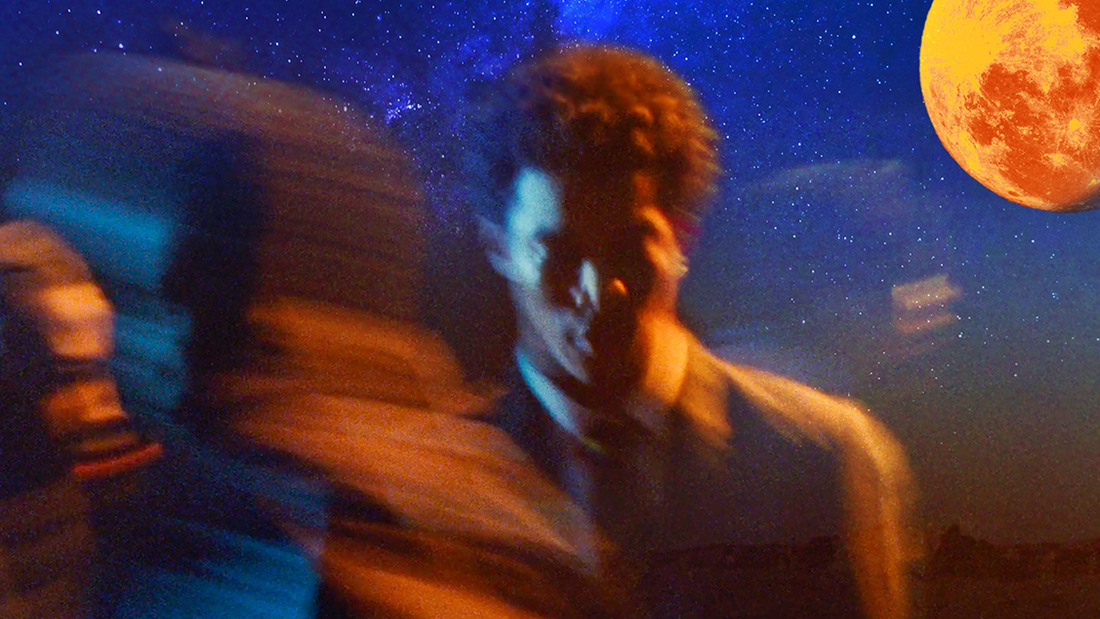
Interview With Director/Actress Letitia Wright (Highway To The Moon)

One minute you’re at an independent film festival watching a short film by some newcomer called Christopher Nolan, the next minute you’re watching him collect Oscars like sweets, for a three hour epic called Oppenheimer.
Short films are often the calling cards of great film makers of the future. However, these films are often small in scope and look, as if they’re made on a shoestring budget, which they usually are.
Letitia Wright’s short film ‘Highway to the Moon‘ a fantasy drama about the mysterious aftermath of young black boys whose lives have been snatched away by the scourge of knife crime, looks pretty epic. She takes a burning issue of the day and makes it both big and intimate, surreal and gritty, soft and hard. It’s an impressive directorial and writing achievement from a young woman better known for her acting, in television series like Top Boy and cinema behemoths like Black Panther and the Avengers movies.
Last month I got to meet Letitia for a 1-1 interview at the Sea Containers hotel in London.
The film looks epic, tackles a big subject and is visually beautiful. Why make it a short as opposed to a feature?
I made a short because that’s the starting place for the production company, 3.16. I wanted to really go through the process of understanding how to make a film, how to do it. I feel short films allow you that opportunity to get stuck in but not at a huge risk and without the huge responsibilities of what it means to carry a feature.
Knife crime is a big topic to take on. If I could give you all the money and resources, wave magic wand and you could tackle this problem at all the different layers of it, because there are so many layers, what would be your main focus?
The first focus point would be the young people that it’s impacting and finding out directly from them what is needed in their communities. To help them by putting funding there. I think, really just talking to the young people. And the parents as well.
This film comes from a personal situation that was very painful for you, but when you were researching the subject, did you discover anything that you perhaps didn’t know before?
I discovered something that felt different from what I’ve seen for years and years, especially in the news and through different types of representations, and that is the sense of regret. It might be expressed in a different way, it might not be in the way that we want it to be expressed but there is that burden of regret. And also the sense of loss that has a ripple effect across many different parts of the community. It’s not just the parents, it’s also the friends; the friends that want to retaliate but also the friends who want it to stop. In my research I found that I wasn’t seeing those direct conversation between the young people. I wasn’t seeing them sitting down in a room and talking to each other. I saw police talking, teachers talking, mothers talking. I saw everybody speaking but not them, especially to each other. So, I really want to help them do this.
This ripple effect you mention and we see it at the end of the film, is it accepted by the community that this is a problem they all need to step up and deal with?
Like you said, there’s so many layers to this and I didn’t want to make a film that – I didn’t want anyone to feel like we’re pointing a finger at them. So, I did the opposite thing. Instead of looking at the different layers that we know this topic has, I wanted to take it to the root of it, which is the young boys and how they treat each other. I wanted to start there and that’s a huge responsibility. Yes, there are so many layers but the starting point for me was the way in which the young boys speak to each other and see each other and nurture each other, and I felt that if I could start there then hopefully I can get through to them.
One of the lines that struck me was the one about lost kings. It’s like you’ve lost one or two generations of young black boys. What is your hope for the film when it’s screened at schools? What’s your hope that audiences will get out of it?
I hope that it is a seed for young people to just really see themselves as valuable. You know, I’m able to do what I do because I saw a young girl in a movie years ago, Keke Palmer, and I was like wow! It gave me a different sense of belonging and often if you’re being told by society, by other people, that you are a stereotype, you are a statistic, you don’t fit in, you’re never gonna like all of these negative affirmations. We can’t expect that to hit the hearts of young people. So, my hope is that this is a birthing, a seed of a message of love. That they are valuable, they are kings, they are to be seen. That they ought to have unity and love amongst each other and it should start with them. That would be my hope, you know, so that I could hopefully shift something. It won’t solve all the problems but it would be a start to shift something.
Two of the film’s actors also joined us on the interview. Kenyan Sandy who plays Micah…
Barry Jenkins said, after Moonlight came out, that black men are not shown to be sensitive or loving or emotional in films, or vulnerable. In this film we get all of that because you see crying, you see brotherhood, real emotion. How important was it for you to portray that in the relationship between the boys?
It was very, very important to portray that. Micah is under a lot of emotions and it would have been dishonest for me to not go deep within myself to portray that. I previously watched a short film called Men don’t cry or Men can cry and it’s about the muscle of tears and how it’s normalised for men to be stiff and not show these emotions . However, we need to show we can cry and we can be in vulnerable spaces and fall onto our brothers and they will be there for us and we’re not going to be judged. It’s not showing weakness. Micah allows his emotions to really pour out when he’s in the right hands and I hope young boys watch this and know that the emotions you have behind closed doors can be shown in the light . That you can be honest and sad and not filter it, but show it in its rawest form.
Also Lamar Waves who plays Trey…
You spoke to boys and young men of your generation in your research process. How do you think they are likely to receive this film when they see it?
I think it gives a lot of hope. It gives a different perspective and a sense of responsibility towards each other. A lot of times, with discourse, it’s very easy to look at people in black and white ways, or as enemies, and I feel like this film reinforces the idea of being your brother’s keeper. And even the ending, there’s something there that a lot of people wouldn’t be able to conceptualise, that they’d think was impossible, in terms of being able to forgive someone who has done something so inconceivable. But when you see something like this, it’s an inspiration for your own life. In order to move forward Micah has to forgive, and I think that’s something that a lot of people, subconsciously, take away from the film. And, maybe, hopefully apply to their own life.








-
 Featured Review1 week ago
Digger ★★
-
 News2 weeks ago
Shane Meadows Headlines + Joe Lycett Named First Patron As 2026 Forward Film + TV Festival Opens In Birmingham
-

 News2 weeks ago
70th BFI London Film Festival Announces ‘LFF For Free’ Programme
-

 Featured Review3 weeks ago
Resident Evil ★★★★
-

 Featured Review2 weeks ago
Sense And Sensibility ★★★★
-

 Featured Review4 weeks ago
Pulp: What Do You Do For An Encore? ★★★★★
-

 Featured Review3 weeks ago
Just An Illusion ★★★★
-

 Featured Review4 weeks ago
Practical Magic 2 ★★★