
Interviews
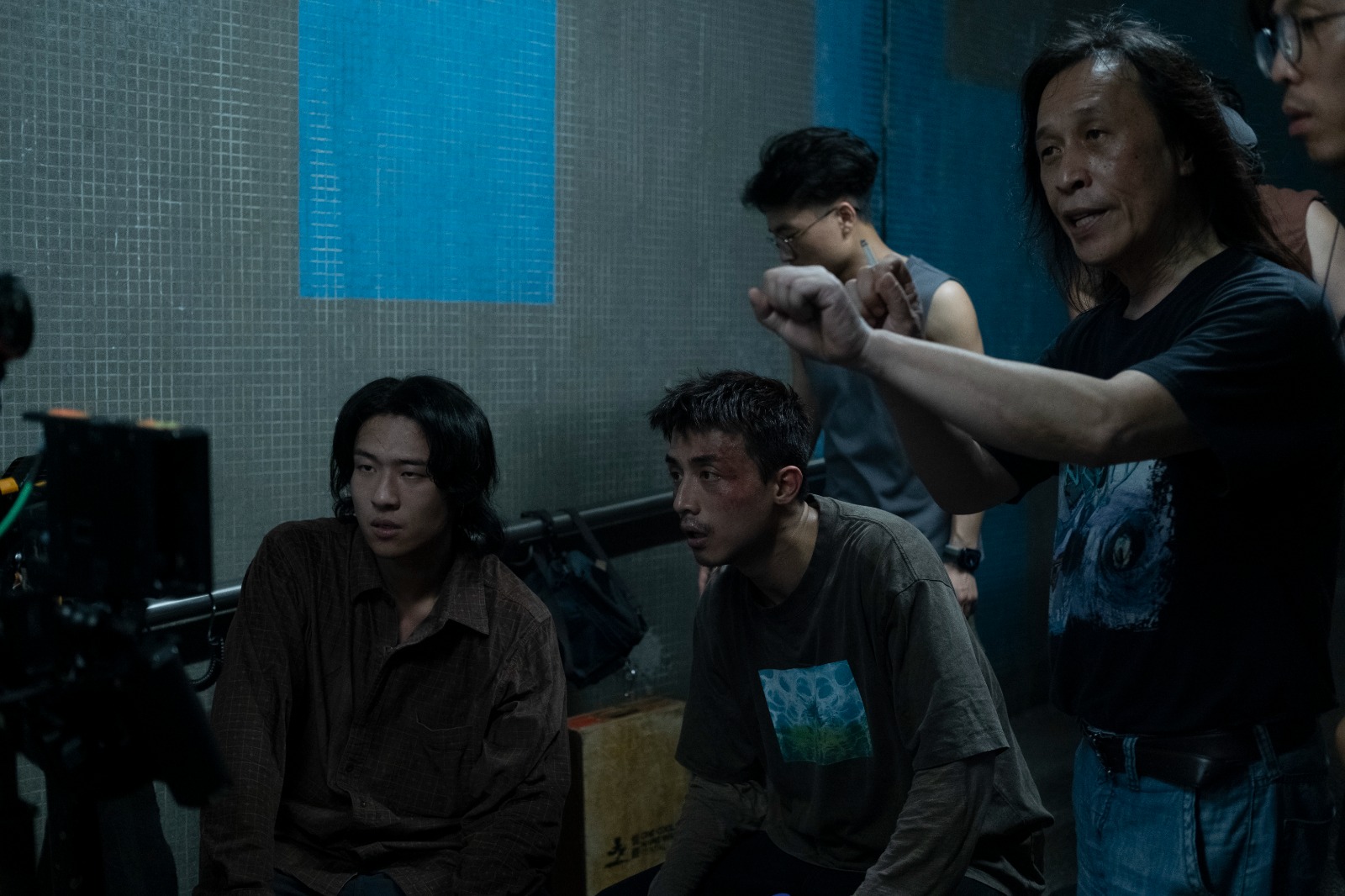
Interview With Director Herman Yau (We’re Nothing At All)

East Asian genre cinema wouldn’t be the same without Herman Yau. A Category III veteran of the old guard, Yau is one of the most fascinating figures to emerge from the era of extreme Hong Kong horror classics and high-octane action thrillers. Beloved by fans for his versatile filmmaking style and sharp social commentary, Yau’s work is just as entertaining as it is pointedly clever — unsurprisingly, he earned his PhD in Cultural Studies with a dissertation on political censorship. In recent years, Yau’s films leaned heavily towards blockbuster Mainland co-productions, with the filmmaker utilising his academic background to inject his kinetic action cinema with a healthy dose of subversive commentary.
Yau’s latest, however, trades all that scale and opulence for pathos: a self-funded Cantonese passion project, We’re Nothing At All is an intimate queer narrative that focuses on the aftermath of a harrowing terrorist attack.
Ahead of the film’s UK release, I had the privilege to catch up with Herman Yau and discuss the film’s unflinching social commentary, the risks associated with self-funded filmmaking, and what really counts as a “Hong Kong film”.
Dimitri Kraus: Your work is often synonymous with Category III genre cinema and explosive action co-productions. We’re Nothing At All, despite some similarities, feels like a striking departure. How different is it directing an intimate, self-funded production like this compared to works like The Untold Story or even something more grounded like A Gilded Game?
Herman Yau: Actually, despite this being a self-funded movie, my work attitude hasn’t changed at all. I think the difference this time around—in the creative aspect—is that I didn’t have to seek approval from the board of any VIPs involved. Other than that, it was just the same as before.
DK: You paint a picture of Hong Kong hidden in plain sight, a kind of open secret that nobody seems to acknowledge. Do you want your film to act as a mirror for that side of present-day Hong Kong?
HY: Yes, in a certain sense, it certainly acts like a mirror. Here, I would like to mention a term that a world-famous scholar once coined: reverse hallucination. What it means is that while things are happening in society, or even within our sight, some people choose not to see that. I think the film is a mirror, but it’s also kind of a magic mirror. When these things appear on screen, you can’t deny them. You’re forced to look at them in a rather straightforward way—not to accept, mind you—to recognize and acknowledge those kinds of situations happening in the real world.

DK: Your film seems to bridge the gap between the past and the present. There are a few moments when characters reminisce about certain places that have since closed, with only sketches remaining as reminders of their existence. Would you say that could be read as an allusion to the increasingly conservative, changing attitudes in Hong Kong today?
HY: Yes, one of the very important points I wanted to manifest through this film is hypocrisy. But this kind of hypocrisy, to me, is not really related to those sketches. They signify that in the past, Hong Kong has gone through a lot of city development. Some of the old buildings had been in the city for years—or even a hundred years—only to be demolished and rebuilt into a completely different structure. In the past ten years, some artists in Hong Kong (like ANSONBEAN’s character in the film) have been trying to capture the cityscape of old Hong Kong prior to its disappearance. It’s a kind of cultural artifact among certain groups of people, so I chose Ike (ANSONBEAN) to be an artist. He earns his living by drawing the past.
DK: Despite the film’s focus on topicality, at its core this is still a genre film — complete with gratuitous gore and shocking imagery. How do you balance that without feeling like you’re punishing the audience through such graphic content?
HY: During the writing process and up until the actual time of filming, I didn’t really think about balancing, per se. To me, in a certain sense, We’re Nothing At All is more realistic than something like Ebola Syndrome or The Untold Story. I’d say that violence is just a way of execution in those two films, but in We’re Nothing At All, it plays a much more important part. In this film, I didn’t want to exaggerate anything that people could categorize as gore, vulgarity, or anything disgusting. Still, there’s quite a lot of graphic content in this film — for me, this is necessary as I want the audience to see how cruel the result of a bombing like that could be. For Ebola Syndrome, I intentionally wanted to exaggerate brutality, but in We’re Nothing At All, I think such graphic violence is necessary, and I wouldn’t want to avoid it.
DK: This is a self-funded project, so I’d imagine it’s a very personal film for you. What is it about this story that particularly resonated with you?
HY: I really enjoy the level of freedom that comes with a self-funded project like that. Still, the movie has to go through the standard censorship process, and that’s something I understood well before we started production. I can say that after all those years of making big budget co-productions, in 2024, I got a really strong desire to make a Hong Kong movie. In recent years, there have been a lot of discussions among Hong Kong moviegoers on what the definition of a “Hong Kong film” is. My previous works are classified as co-productions because some of the funding comes from the Mainland, so in the eyes of the local audience, that is no longer a Hong Kong movie. Of course, some co-productions also involve cast members from the Mainland who speak Mandarin and their lines get ADR’d into Cantonese, so for the Hong Kong viewers, this is closer to a regular Mainland film. With We’re Nothing At All, I wanted to make a fully Hong Kong film. Firstly, it is fully funded by Hong Kong investors. In the business sense, this movie is very risky in terms of profitability. It was hard to find financial backing, so I invested in it myself. I’m a Hong Kong guy, so all the money comes from Hong Kong. All the cast members are from Hong Kong, too. I also intentionally injected homosexual elements into the film because depictions of homosexuality are not allowed in Mainland China due to the local film censorship regulations, so this movie can never be screened there. We’re Nothing At All features actors and actresses from Hong Kong, is directed by a Hong Kong director, is fully in Cantonese, all the crew members are from Hong Kong, and all the money for it comes from Hong Kong. The target audience for this film is the Hong Kong audience. So in that sense, I don’t think anybody could question whether this is a “Hong Kong film”.
Naturally, a project like that is very risky. We’re Nothing At All is a Category III film, so we’re losing the younger audience under the age of 18. On top of that, due to the subject matter of homosexuality, this film will not be screened in Singapore and Malaysia or shown on free TV channels. Of course, some streaming platforms could host it, but even in-flight entertainment like Cathay Pacific could have issues due to the film’s Category III nature. In terms of business, it’s all really risky. My logic here is this: because I’m so lucky that in the past I could secure so many investors for my previous works, whether I could recoup the costs or not, I had to make a film that no investor would be willing to invest in. It’s a bit of a paradox: I’m gambling all of my money, I know it’s a major risk, and it’ll be very hard to recoup all the costs. But I have a kind of confidence that this film in no way could ever be a total loss. Sure, I might lose some money, but not all the amount that I put into this project.

DK: There’s a conversation in the film that I really appreciated: audiences today often seem to dismiss earnestness and sentimentality. As ANSONBEAN’s character laments, “In old movies, people called it touching. Now, audiences call those characters foolish”. Is this another case of the hypocritical mindset and an implication of the social order?
HY: Yes, but I don’t think this is strictly a Hong Kong issue. In the past ten or twenty years, attitudes have changed quite significantly. Before, people treated sacrifice for love as something romantic and even heroic. Nowadays, people are reminding others—and themselves—that they should be a bit more selfish. We don’t really have a clear picture because everyone is constantly theorizing about it. Ironically, some dismiss earnestness because all the theorizing is causing confusion [laughs].
DK: I’d like to ask you about the significance of the film’s title. Would you say your characters representing underprivileged communities believe they’re truly “nothing at all”? Has the Hong Kong society completely abandoned them?
HY: Yes, but I’d also say that those abandoned by society wouldn’t think that way. They don’t have the time, and they’re not granted opportunities to speak about those issues. I also hope that audiences can read the title as slightly ironic, rather than taking the strict meaning behind those words.
We’re Nothing At All is in UK cinemas May 29


-

 Featured Review3 weeks ago
jackass: best and last ★★★★★
-

 Featured Review4 weeks ago
Effi O Blaenau ★★★★★
-

 News2 weeks ago
Earliest Autograph Of Arnold Schwarzenegger Goes On Sale To Support UK’s Smallest Cinema
-

 Featured Review3 weeks ago
Supergirl ★★★
-

 Movie Reviews1 week ago
Gail Daughtry And The Celebrity Sex Pass ★★★
-

 Interviews3 weeks ago
British Urban Film Festival 2026 – Interview With Director Fitch Jean (It Comes In Waves)
-

 Featured Review3 weeks ago
Lesbian Space Princess ★★★
-

 Interviews3 weeks ago
Cannes 2026 – Interview With Actress Huma Qureshi (Toxic: A Fairy Tale For Grown-Ups)