

Interviews
Interview With Director Renny Harlin (The Strangers: Chapter 3)

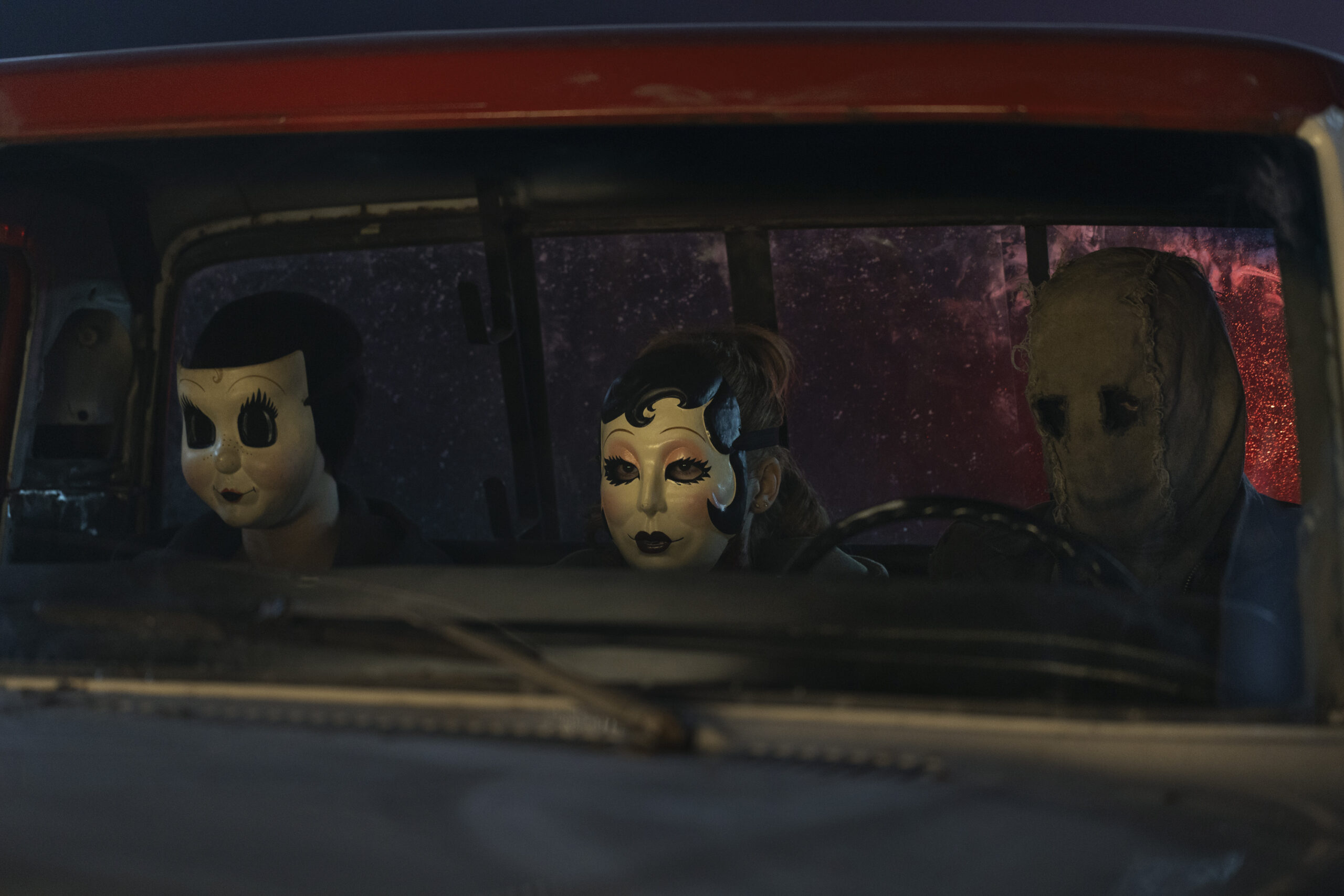
Renny Harlin has seen it all: from his early days as an action-horror enthusiast getting his start in Hollywood to directing Nick Cheung and Jackie Chan in Hong Kong-Chinese co-productions, Harlin is among the most versatile filmmakers working today. The king of earnest excess and meticulously staged set pieces, Harlin remains just as consistent as he was back in the 90s — a real craftsman of the old guard. He’s always been one of the unsung genre imagemakers alongside fellow maximalists Paul W.S. Anderson and Peter Hyams, effortlessly functioning within and on the margins of the studio system thanks to his genre-flexible methodology and audience-friendly sensibilities. Harlin’s latest effort is his grand return to the horror genre with The Strangers Trilogy: a remarkably ambitious project that sees the director venture back into the woods of slasher filmmaking and psychological terror. With the third film, The Strangers — Chapter 3, slashing into cinemas this week, it was the perfect time to sit down with Renny Harlin to discuss his maximalist filmmaking, the beauty of spatial storytelling, and the fabled 4.5-hour supercut of the trilogy.
Dimitri: Your career is just so fascinating. You’re a genre filmmaker who has worked all over the world, and you’ve now returned to pure horror with The Strangers, shooting all three films at once. You’re no stranger to working within existing worlds and expanding them: how did you manage to merge your maximalist filmmaking style with the minimalist horror of The Strangers?
Renny: [laughs] Nobody has ever called my moviemaking style “maximalist”, but I know where you’re coming from and I like that…
DK: It’s a compliment!
RH: I appreciate it! And I understand that: with some of my big action movies, it can feel big and bombastic, and then in a movie like this, in certain ways, it skews very intimate and detail-oriented. It all boils down to the fact that I love visual storytelling. That comes from my childhood, from my mom taking me to see Hitchcock and Polanski movies. For me, it’s all about the image: whether it’s a big action movie or an intimate horror film, it’s about trying to put the audience in the main character’s shoes and making them feel like they’re there — and that’s all visual storytelling. The use of camera angles, the use of environment… whether it’s an airport, a mountainscape, or just a room. You could say that I love manipulating the audience by placing the camera in a certain spot and positioning a character in a certain way. Whether some people will ever appreciate it or even think about it, I put a lot of effort and research into how I shoot each film. I love to think about why it’s edited in a certain way, why there’s empty space or silence — that’s also why I love horror films. It’s always a great chance to play with the timing, mislead the audience, and surprise them. And I don’t mean jumpscares, but rather the process of creating tension and making it unbearable for the audience, hopefully making them feel like they are in the character’s shoes.
DK: To build up a bit on what you’re saying: I think the way you navigate space and geography has always felt very unique, every location carefully mapped out and designed for maximum payoff. What’s it like to be using a whole town in The Strangers as your filmmaking sandbox?
RH: I could talk to you forever, Dimitri [laughs], and hopefully, on my next movie in May, we can talk again and talk more, because I really appreciate you knowing my movies and paying attention to what I’m trying to do. I just want to preface this by saying that I feel like in modern cinema, especially modern action cinema, I often get lost in the geography of things and the action. It’s shot so tight and cut so fast that I can’t really appreciate the space and understand the spatial relationships, which takes away from the tension and the danger… because I don’t know where the danger is! I’m not saying this to badmouth others or make myself seem like a genius, but I do pay a lot of attention to that. On this project, it was interesting because we had to set up the movie exactly as the original film — that’s the point, it’s called The Strangers — so we had to create that setup, which is pretty much just the house. We expanded on it a little bit in the first chapter, but then in the second movie, we go out into the wilderness. Then in the third film, we’re combining all of that with several locations around the town. It was really about expanding upon the traditional home invasion movie: instead of just one tight location, what if we have a town that feels really unsafe, no matter where you go. Whether you’re dealing with the sheriff, the car mechanic, or you’re just at the diner, it’s dangerous and feels like a trap that you can’t get out of. And you could say: “Why don’t you just take the bus and get the hell out of that town?” But she tries and fails! It’s like a loop where you just end up in the same place where you started, so it’s almost like a nightmare in that sense. That’s what I was trying to create.
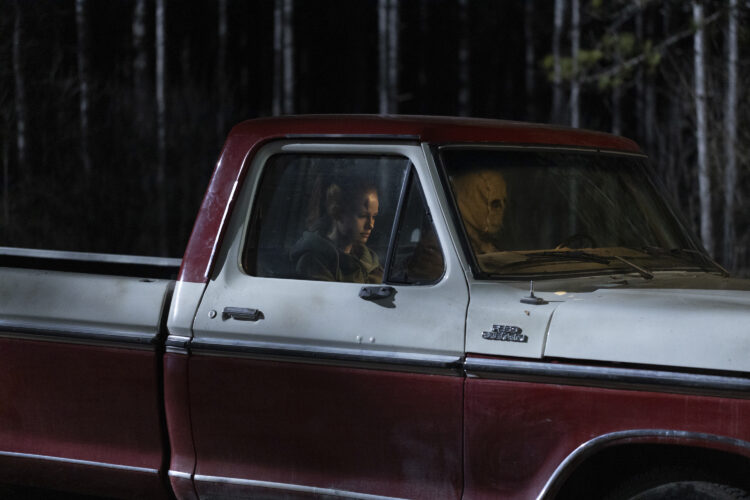
DK: Throughout this trilogy, I feel like fans of your filmmaking could spot all the Harlin characteristics: suspenseful whodunnit like in Mindhunters, survival thriller à la Devil’s Pass, even animal attack horror with the boar in the second chapter. Do you personally think you have a specific set of things that defines your style?
RH: I’m more aware of them when a smart expert like you brings it up, then I realise: “Of course, that’s absolutely true” [laughs]. But I think it just boils down to the kind of things that I’m drawn to and fascinated by, the kind of movies I enjoyed, and the kind of books I read when I was young. I’m just drawn to certain things. I’m drawn to the survivalist aspect, and that comes from certain movies I love: we can go back to films like Deliverance, Southern Comfort, Apocalypse Now, or even The Deer Hunter. I love the spectacle, I love the survival aspect, I love the human struggle, I love the absurdity of the world we live in. And yes, whenever I start a new movie, there might be a lot of different reasons why I’m interested in a certain story, it might be a different genre or a different style of movie from what I’ve done before… but I realise, particularly now that you mention it, that I try to bring those elements into it because I like them.
DK: I have to ask you this before we wrap up. Will we be able to see the 4.5-hour supercut of the Strangers trilogy one day? It sounds like that’s the way you intended the films to work — your true vision for them, so to speak.
RH: Absolutely. We’ve only had one showing of that version now, and it’s not like we just glued together the three movies — we recut all three chapters. If the first movie is kind of a setup and repeats a lot of the things that happened in the original, then the second one is sort of a bridge, and the third chapter is the conclusion of Maya’s journey. I feel a lot of satisfaction being able to present the combination, as I’ve been able to cut out certain things: I bet I cut out about half an hour of the first movie and at least 20 minutes of the second movie, and that way I can get rid of the filler scenes that had to be there to have a complete 90-minute feature. I can concentrate on the things that are important and interesting to me, so we have one movie that’s a tight psychological study of Maya’s journey and deterioration. I haven’t had this conversation with the studio yet, but I think if they’re smart and ballsy, there will be a theatrical release of the supercut in the near future. Then, those who are interested in seeing what the journey would really be when I can drop all the stuff that I don’t think is so important and concentrate on things that really matter… they will have a whole new experience and a new appreciation for this trilogy.

The Strangers – Chapter 3 is in cinemas 6th February





-

 Featured Review2 weeks ago
Project Hail Mary ★★★★
-

 Featured Review3 weeks ago
Dolly ★★★
-

 Movie Reviews2 weeks ago
Peaky Blinders: The Immortal Man ★★★
-
 Interviews4 weeks ago
Interview With Director Lakshmipriya Devi (Boong)
-

 Movie Reviews2 weeks ago
How To Make A Killing ★★
-

 Featured Review2 weeks ago
Glasgow Film Festival 2026 – Couture ★★★
-
 Featured Review4 weeks ago
EPIC: Elvis Presley In Concert ★★★★
-
 Featured Review4 weeks ago
Sundance 2026 – Everybody To Kenmure Street ★★★★