

Features
MM Shorts – The Estrogen Gospel (Robyn Adams)

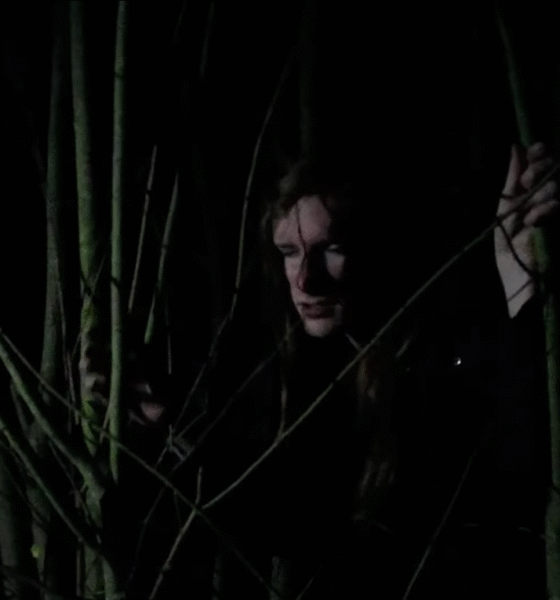
There are two types of pilgrimages throughout writer/director Robyn Adams’ debut short The Estrogen Gospel. There is the literal journey that the unnamed pilgrim is on, taking them towards an old church, through areas when the Pendle witch trials took place, and eventually into the depths of real and metaphorical horror; then there is a journey of gender identity, intertwining with the real events and adding layers to the dense script.
The pilgrim (played by Adams) is a transgender woman, reconciling with both her gender and religious identities. Starting in a pub – named Robin Redbreast, the first of many references to Play for Today and Ghost Stories for Christmas within the film – she is warned by a group (Lily MacKenzie, Stephanie Jayne Turner and Carol Fitzgerald, all of whom are also trans) that women have been found dead on the trail, and that the night brings with it horrors.
So far, so folkloric. Adams makes no effort to hide the clear influence of British folk horror here, from the aforementioned references to classic BBC productions, to the sense of something lurking just under the surface. There’s a clever subversion, however, as folk horror often deals with the ‘other’ and by introducing trans identity, we get a more personal sense of otherness.
During the pub sequence, the pilgrim explains that they’re not used to seeing so many trans people in one place. The response of ‘we’re everywhere, people just choose not to look’ speaks to how gender identity is treated by the media, by pockets of the community, as something that is recent, rather than something that has always been present. There’s another interesting line about ‘most people using torches on their phones’ but that these do not provide enough light.

Speaking to Adams about the making of the film, she explained that the initial idea had been to set The Estrogen Gospel in the 1970s, essentially eliminating any high-tech aspects. While this was removed from the final project, the idea of disconnecting from the online world was important.
“A lot of trans art is about online spaces and virtual identity, which is something I do really love and would like to explore in future projects, so I think The Estrogen Gospel is a bit of an outlier in a lot of the conversations I’ve heard about trans cinema in the sense that it’s not only completely disconnected from anything involving the internet, but also essentially a movie about ‘touching grass’.”
The pilgrim’s journey takes her to a church. Having been brought up in the Church of England, Adams was keen to examine her place within that denomination, especially as some pockets would not be accepting of her trans identity.
“A lot of both the film and the filmmaking process were about reckoning with the disconnects between my personal faith and the more conservative aspects of organised religion, particularly in relation to queerness. The scene I wrote with the Pilgrim alone in the corner of the church is probably the most obvious that this comes through, because I absolutely love the architecture of old churches and I love being in those kinds of spaces, yet there’s always the risk of those old places of sanctuary not being understanding or accepting spaces for me to be in because of my transgender identity.”
Despite the risk of not always been accepted with religion, the church is presented as a final safe space in the film, before the pilgrim can continue their journey – and after which point the film transforms into a grungy Evil Dead, SOV-style horror. According to Adams, the idea of the church being a safe space was directly inspired by video games such as Resident Evil – intended to show the character stepping out of the familiar.
“…both transition and religious pilgrimage are journeys which take a great amount of effort on the part of the person taking them, yet they’re both incredibly fulfilling experiences to those who need them.”
Once night falls, the pilgrim is stalked by a killer called The Strangler (Ethan Coates). Surrounding The Strangler is a disorientating mass of ghostly voices that mock the pilgrim and trap her within the trees and brambles. An interesting point is that The Strangler spouts the sort of misogynistic nonsense that we would expect from a slasher film, highlighting that trans women not only face bigotry when transitioning, but then risk the ire of violence against women. For the supernatural forces, these are instead focused on turning the pilgrim back from her journey (transition).
“I really wanted the supernatural threat in the film to not just embody transphobia, but also the ways in which different forms of hatred and bigotry intersect. I put a lot of commentary on misogyny and its presence in England’s past and present into the film and its script, particularly as I wanted to explore the ways in which traditional and historical misogyny inform transphobic and transmisogynistic ideals and bigotry.

“Viewers who know their northern English history might pick up on the handful of references to the Pendle witch trials that I scattered throughout the movie and its script – that, among a couple of other historical influences, heavily informed my approach to portraying this kind of legacy of misogyny in England’s past which, in this case quite literally, haunts its present.”
As mentioned earlier, it’s a dense film. Packed with references to folk horror films, historical events, and a clear link between the physical progression of the character, and the emotional and physical transition that anyone going through a gender affirming process will undertake. Yet, despite the references, Adams shows a singular style as a filmmaker, adapting each of the components into something that fits fully into the work.
There are moments that feel a little stilted; not everyone feels fully comfortable on camera, but this is never to the point that it becomes a detriment to the film, and Adams avoids the pitfalls of first-time filmmakers by not overexplaining within the script, which feels tight and leaves plenty of space for silence. The very purposeful decision to change the style of the film at the halfway point also gives The Estrogen Gospel a clear visual style that guides the viewer.
“I used a Canon EOS 4000D on this film, which I use for practically all of my film projects. It has a slightly ‘rougher’ look than what some people prefer, but it’s a quality that I personally love and like to embrace in my work, particularly given my influences.
“The switch in style when it gets to the night scenes is wholly intentional – most (if not all) of the day scenes are shot using a tripod, whereas everything at night is handheld. Everything in the day is slow, creeping, meditative, whereas at night it’s all a whirling half-seen nightmare of shadows and branches and body parts – if the Pilgrim must keep moving to survive, then so does the camera.”
And while Adams may have been concerned that this deeply personal film might not find an audience, it has been well received on the festival circuit and is now available to view on YouTube.
“I originally wasn’t sure if other people would vibe with what I was doing, because The Estrogen Gospel is micro-budget, queer, and very theatrical, yet not by any means camp, and horror-wise it’s very much on the quiet and uneasy side rather than all-out gore and elaborate ghoul FX. It’s also a very personal project, so I was worried that people wouldn’t be able to relate to the complicated emotions I was exploring through this, but thankfully the movie seems to have made its way to all sorts of people who really felt what I was doing and have messaged me to express that, which means all the world and more to me.”
Now Adams is looking ahead to upcoming projects, having recently completed shooting their first lead role in The Moon is a Hologram, written and directed by Selene Kapsaski, as well as directing Frankenstein Created Robyn, which she says is more autobiographical than The Estrogen Gospel. There are also more acting roles on the horizon, and a good chance she will get behind the camera again before the year is out.
“I’ve always got ideas swimming around in my head – with any luck, I’ll be getting started on my second genre directorial effort sooner rather than later!”


-

 Featured Review5 days ago
Digger ★★
-
 News5 days ago
Shane Meadows Headlines + Joe Lycett Named First Patron As 2026 Forward Film + TV Festival Opens In Birmingham
-

 Featured Review4 weeks ago
Venice Film Festival 2026 – Primetime ★★★★
-

 News1 week ago
70th BFI London Film Festival Announces ‘LFF For Free’ Programme
-
 Featured Review3 weeks ago
Resident Evil ★★★★
-

 Featured Review4 weeks ago
Venice Film Festival 2026 – Wild Horse Nine ★★★★
-

 Featured Review2 weeks ago
Sense And Sensibility ★★★★
-

 Featured Review3 weeks ago
Oasis: Don’t Look Back In Anger ★★★★