

Movie Reviews
Shelby Oaks ★★★

Released: 29 October 2025
Director: Chris Stuckmann
Starring: Sarah Durn
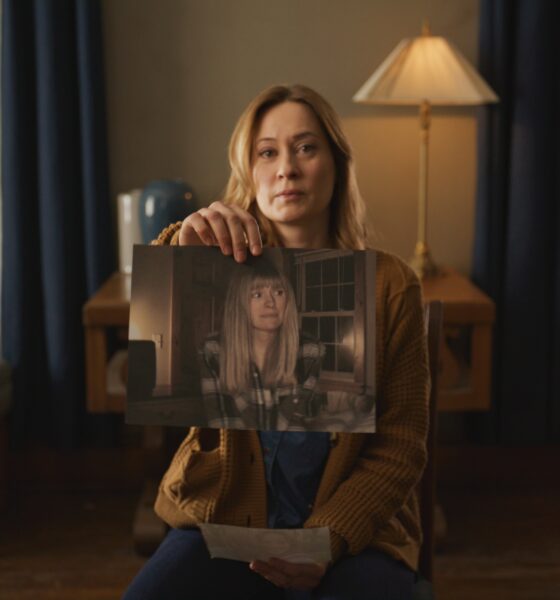
Within the film community, many of us have grown up watching movie content on YouTube. Whether it be channels counting how many grizzly deaths occur in a horror movie, or express thoughts and opinions in review format, there’s something for everyone. Although we all have our personal favourites, there’s one individual who is pretty well known by the masses, even if you’ve only heard his name – Chris Stuckmann. It’s not everyday that YouTubers move from creating videos to feature length films, but that’s exactly what Stuckmann has done with Shelby Oaks. Distributed by Neon and backed by fan-favourite director Mike Flanagan, the film delivers a mash-up of horror sub-genres to tell the story of a woman’s obsessive search for her missing sister, as she’s led into a terrifying mystery at the hands of an unknown evil. Featuring an impressive cast and an even better creepy, uncomfortable atmosphere, Shelby Oaks provides an intriguing mystery and confident scares, though is slightly bogged down by too many ideas, many of which borrowed, creating a final act that fails to bring it all together.
If Stuckmann himself isn’t the movie’s main talking point, the genre-blend taking place during the first act surely is. The first 15-20 minutes of Shelby Oaks fit tidily into the found footage genre, taking shape of a mockumentary. The story is presented in bursts of news clips, interviews and footage retrieved from the missing Riley Brennan’s camera, immediately getting you hooked and wanting to crack the case whilst learning more about its eerie undertones. However, once that 20-or-so minute mark hits, Shelby Oaks becomes something else entirely. Seamlessly flitting from found footage mockumentary to a regular feature film, it somehow manages to immerse you into the story even further. This may sound like a gimmick on paper, but Stuckmann manages to surpass that with how well he pulls it off. The found footage elements are so strong that many may be disappointed it strays away from this, whereas others will happily float inside the story alongside the characters. Wherever you land on it, it’s undeniable that it’s an impressive mark to make during your entry into filmmaking.
There are many other technical aspects within Shelby Oaks that work just as well as the genre blend, namely the cinematography from Andrew Scott Baird (The Pale Door). There’s some really playful use of shadows to aid the atmosphere, negative space that keeps your eyes darting around looking for something spooky, and characters often framed in a way that make their reactions the focal point. Not only does this increase the fear factor, but lets the talent in front of the camera shine. Shelby Oaks is the name of the town in which Riley Brennan goes missing, and the use of location is excellent here. From old, abandoned fairgrounds to deep, dark forests and even a dank, dingy prison (the one used in The Shawshank Redemption, may I add), there’s a lot of freaky imagery to feast your eyes upon, regardless of whatever demons are lurking in the shadows. The setting itself is enough to send a shiver down your spine, and many of the set pieces feel unique, too. We have a really talented ensemble on our hands that bring Stuckmann’s story to life – the cast are ridiculously good. Led by Camille Sullivan (The Butterfly Effect) who is utterly fantastic with her display of emotions, particularly fear, and backed by Sarah Durn (Carry-On), Brendan Sexton III (Three Billboards Outside Ebbing, Missouri) and even the likes of Keith David (The Thing) and Michael Beach (Saw X), there’s as much talent in front of the camera as behind. Tying the technical aspects together into a spooky little bow is the score, composed by James Burkholder (Werewolves), Andrew Brush (Doctor Sleep) and Taylor Stewart (Hush). To put it simply, it’s just plain creepy, whilst also knowing when to show restraint and when to bring in the heavy hitting notes. From a technical standpoint, it’s rather impressive.

Chris Stuckmann fans know that he is a big lover of horror, so it’s to be expected that his first feature delves straight into it. One of Shelby Oaks’ most impressive attributes is its ability to create a sense of atmosphere. Not only is this a story that makes you feel uneasy from the get-go, but that eerie, creepy feeling engulfs you until the very last frame. As mentioned, the use of cinematography means we can’t help but look in every dark corner, and the settings themselves further increase the fear factor. As our main character Mia sets off to find her sister, there is a lot of skulking around in the dark, flashing a torch around corners and entering territory that basically scream ‘do not come in here’. This has the ability to ensure many audience members should be on the edge of their seats, perhaps even looking through their hands as the music silences and the darkness engulfs them. Even a window cracking slightly can elicit a terrifying response from the crowd. On the flipside, this does mean that a lot of jump scares are present, which becomes a little tiresome, as does being left on tenterhooks for a large portion of the runtime. Jump scares are less effective when they’re expected, and much of the final act feels like one big jump scare waiting to happen. What is effective, however, is the use of the main threat/villain on our hands. Stuckmann and team know to use this sparingly, so whenever it does make an appearance, it’s frightening.
The biggest mixed bag Shelby Oaks presents is the story. It starts off strong, with an engaging found footage sequence followed by an intriguing mystery. Getting to the bottom of a disappearance will undoubtedly be fun for true crime fans, and there’s plenty of spooky imagery filtered throughout to keep horror fans entertained. The bread-crumbing is effective, giving you pieces of information as the plot moves on. However, as the story progresses past the halfway point, it begins to fall apart, particularly during the latter stages that fail to bring it all together in a concise manner. The script is brimming with ideas, many of which are great, but sometimes less is more. The more we find out about Riley’s disappearance, the more convoluted it all becomes. Sure, the outcome of where she ended up is particularly disturbing, but introducing this in the final act makes for a rushed climax. The ending itself delves too far into silly territory, failing to adhere to the unsettling, sparing horror the rest of the run-time delivers. Not only are we facing the disappearance of Riley but we also have threads of sexual violence, loss and grief, childhood trauma, familial bonds, obsession and a supernatural aspect that oversees all the rest. Unfortunately, it feels a little too much.
It’s easy to spot the similarities between Shelby Oaks and the iconic horror movies that have come before it, particularly The Blair Witch Project (1999), Hereditary (2018) and The Ring (2002) amongst plenty of others. Whether you find these homages a suitable nod to your favourites or a little bit on the nose and obvious, it’s key to remember one thing – this is a feature debut, and many of the same kind don’t get put into the limelight like this. Though Shelby Oaks suffers from a messy story, a convoluted final act and too many homages, it certainly makes up for this with excellent performances, frightening scares, up-to-scratch technical aspects and an eerie atmosphere to tie it all together. It may not be the best horror film of the year, but as a feature debut, it’s fantastic.








-
 News3 weeks ago
Full 2026 Programme For BFI Flare Revealed
-
 Featured Review2 weeks ago
Dolly ★★★
-

 Featured Review3 weeks ago
The Moment ★★★★
-

 Featured Review6 days ago
Project Hail Mary ★★★★
-
 Featured Review3 weeks ago
EPIC: Elvis Presley In Concert ★★★★
-
 Interviews3 weeks ago
Interview With Director Lakshmipriya Devi (Boong)
-

 Featured Review4 weeks ago
The Secret Agent ★★★★
-
 Movie Reviews3 weeks ago
Good Luck, Have Fun, Don’t Die ★★★