
Indie
Francesco Dalli Cani Undergoes Six-Month Physical Transformation for Supernatural Thriller ‘Fallen’

The Italian actor takes on the dual roles of a tormented priest and a fallen angel in an ambitious short film exploring faith, redemption and the possibility of salvation.
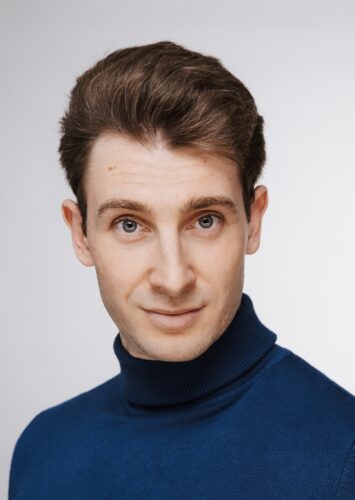
Italian actor Francesco Dalli Cani is taking his commitment to character transformation to an extraordinary level in Fallen, a supernatural horror short film that required six months of intensive physical preparation, a complete change in appearance and the challenge of portraying two radically different characters within the same story.
Written and directed by Madison Champine and produced by Robert Hughes, Fallen follows Father Antonio Luci, a young priest whose unwavering religious convictions are shaken by the presence of a mysterious supernatural entity named Ugo. Unable to free himself from his unwanted companion, Antonio retreats into self-imposed exile at a deconsecrated abbey in northern Italy, where repeated attempts at self-exorcism gradually begin to destroy his resolve.
But Ugo is no ordinary demon. An ancient fallen being who has witnessed the rise and collapse of civilizations, he harbors a seemingly impossible desire: redemption. Before he can ask Antonio for help, however, he must somehow earn the trust of the very priest determined to condemn him. At the heart of the story lies a question that challenges both characters’ understanding of faith: Can a soul, no matter how lost, truly be saved?
For Dalli Cani, the opportunity to portray both Father Antonio and Ugo presented an acting challenge unlike anything he had previously undertaken.
Two Characters, One Actor and an Extraordinary Commitment
From the earliest stages of development, the filmmakers envisioned Fallen as a project in which one performer would embody both the tormented priest and the supernatural being haunting him. The characters needed to be physically and vocally distinct, requiring more than conventional wardrobe, makeup or performance adjustments. Although the screenplay and character designs continued evolving throughout development, one requirement remained unchanged: the lead actor would undergo a significant physical transformation.
“When I was brought on board, I had a meeting with the producer and director,” Dalli Cani recalls. “They explained what they were aiming to achieve, and I was ecstatic. They wanted to give me the whole rundown because what they were planning was very demanding, both physically and mentally.”
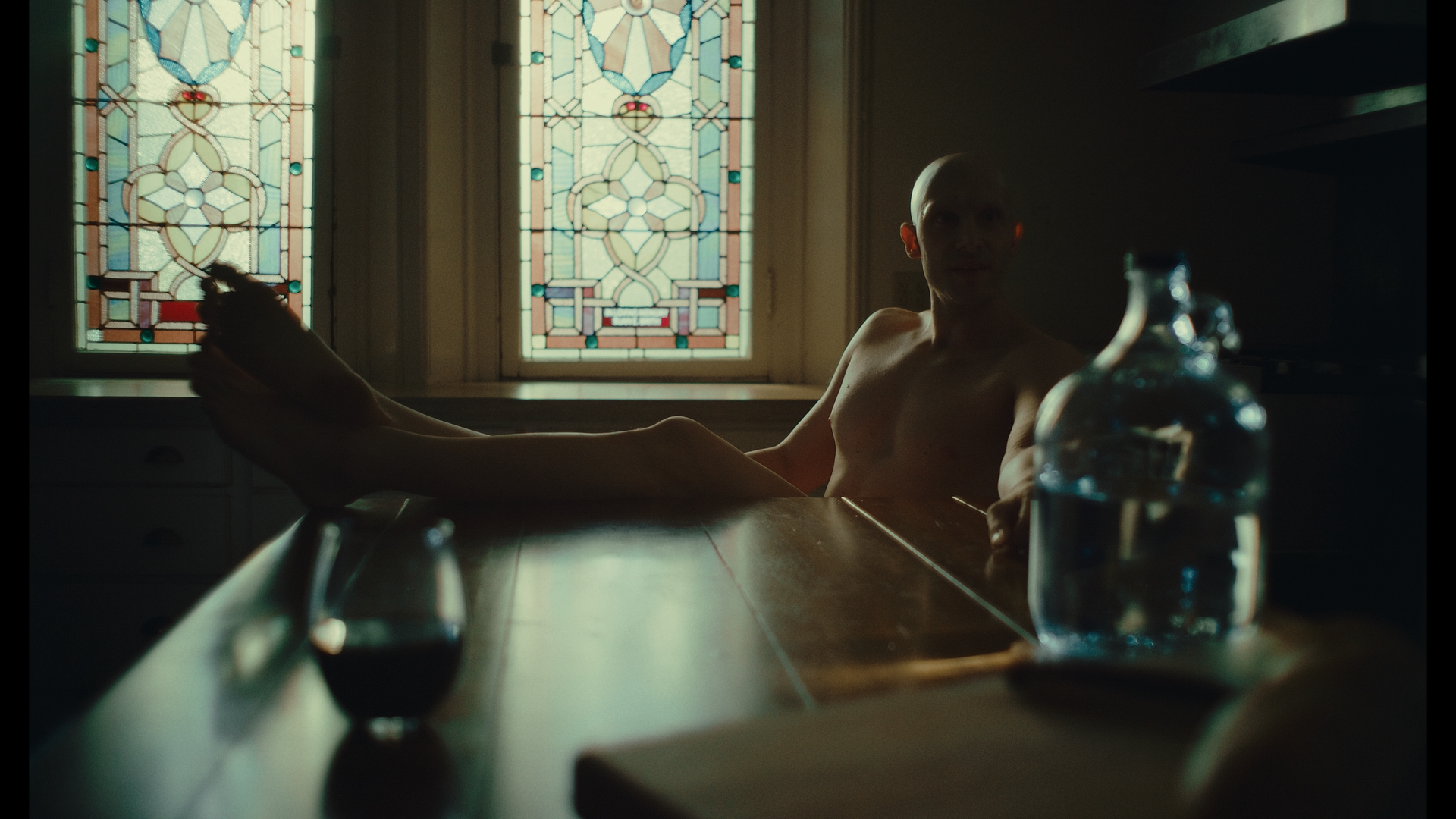
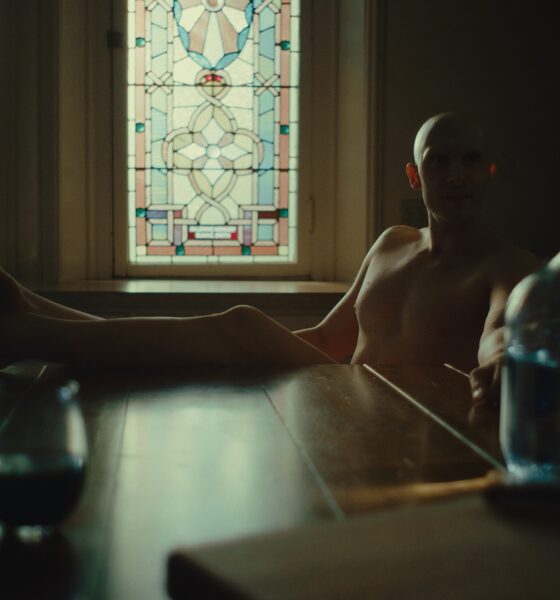
The original concept featured a priest and a demon, with the latter eventually evolving into a fallen angel. Even Ugo’s appearance changed considerably during preproduction. His bald, completely unclothed presentation was established relatively late in the process, approximately two months before principal photography. For Dalli Cani, the transformation was intended to create a striking visual contrast between the two characters while supporting their opposing emotional and spiritual journeys. Father Antonio, also known as Tony, is an intelligent but emotionally guarded priest who has spent years studying scripture, memorizing prayers and immersing himself in religious doctrine. He believes devotion should be rewarded and struggles to understand why his knowledge and dedication have failed to protect him.
Ugo, meanwhile, is unsettlingly composed, charismatic and far older than humanity itself. Condemned to an eternity of exile, he challenges Antonio’s rigid convictions while quietly searching for a path toward his own salvation. The relationship between them gradually shifts from hostility toward something far more complicated, forcing both characters to confront the possibility that certainty and faith are not necessarily the same thing.
For an actor whose training has long emphasized language, philosophy and psychological complexity, the material offered an especially compelling opportunity. Born in Arzignano and raised in Vicenza, Italy, Dalli Cani studied Latin, Ancient Greek, philosophy and classical literature before earning a law degree from the University of Padova. His early theatre experience and appreciation for Shakespeare helped shape his analytical approach to character development.
After relocating to Los Angeles in 2023, he continued his professional training at the New York Film Academy, graduating in 2025. His growing screen résumé includes the mafia romance vertical series Sweet Temptation, while his work across film, theatre and modeling has consistently emphasized adaptability and physical expression. With Fallen, those qualities would be tested on an entirely different scale.
Building the Transformation: Six Months of Preparation
Producer Robert Hughes, a Marine Corps veteran and personal trainer, took responsibility for coordinating the physical transformation, assembling a team of fitness and medical professionals to oversee the process. Among them was certified personal trainer John Conrad Dacayanan, Hughes’ nephew, who relocated from San Francisco to Los Angeles for the duration of the project to work closely with Dalli Cani.
Also joining the team was Italian personal trainer Giuseppe Todescan, who had worked with the actor since 2020 and continued providing remote training after his move to the United States. Nutritionist Orazio Ragusa, another longtime member of Dalli Cani’s personal team, developed an individualized ketogenic dietary program in coordination with the trainers and producer. The preparation was divided into two principal phases. The first three months concentrated on reducing body fat and improving cardiovascular capacity. The following three months shifted toward heavier resistance training and muscle development. The program combined gym sessions, swimming, hill running, bodyweight exercises, mobility work and structured recovery periods.
“After the general assessment, Robert brought out an entire whiteboard and gave us the breakdown of the next six months,” Dalli Cani remembers. “I was excited and terrified at the same time.”
The schedule was demanding, sometimes requiring two workouts in a single day. Dacayanan oversaw the majority of the gym training, organizing sessions around different muscle groups, including chest, triceps, back, biceps, shoulders and legs. Additional sessions focused on balance, plyometrics and abdominal strength. Todescan continued working remotely with Dalli Cani, often incorporating bodyweight exercises and a weighted vest into their sessions. The objective was not simply to improve the actor’s appearance. The filmmakers wanted him to develop the strength, conditioning and physical control necessary to sustain two contrasting performances.
From Seven Minutes to Thirty: The Fitness Tests Behind Fallen
One of the most demanding elements of the program was a recurring fitness assessment known as “Chelsea,” a 30-minute workout in which participants attempt to complete a sequence of pull-ups, dips and squats every minute on the minute for 30 minutes. Dalli Cani initially struggled to complete even a fraction of the challenge.
“When we first started, I’m pretty sure I got demolished at around seven minutes,” he admits. “And I was using rubber bands to help me out.”
As the months progressed, the assessment became a regular measure of his physical development. By the end of the training period, he recalls reaching the full 30 minutes on one occasion with assistance bands, while more consistently achieving approximately 20 minutes. Another recurring challenge took place on the steep trails leading to Griffith Observatory in Los Angeles. Every Saturday, Dalli Cani and Dacayanan would head toward the landmark, where the actor was required to run uphill wearing a weighted vest, complete additional laps near the observatory, descend and repeat the climb. The terrain proved almost as difficult as the exercise itself.
“The weighted jacket was heavy, but the worst part was the terrain,” Dalli Cani explains. “It was very dusty and steep. The first time, I ended up breathing through my mouth, and all that dust dried my throat. I actually lost my voice.”
Hughes used the exercise to emphasize breathing technique and cardiovascular control. The results became measurable. Dalli Cani reduced his initial uphill running time from approximately 20 minutes to 15 minutes over the course of the six-month program.
A Marine’s Approach to Training in the Water
Perhaps the most unusual component of the preparation came directly from Hughes, who personally supervised weekly swimming sessions. Having learned that Dalli Cani had taken swimming lessons extensively during childhood, Hughes decided to incorporate aquatic conditioning into the program. The sessions included swimming sprints, underwater exercises and movements transitioning between land and water. They also involved heavy chains.
“Robert brought these enormous chains to the pool,” Dalli Cani recalls. “One ring was as big as my fist.”
The actor was required to drag the chains underwater, perform submerged squats and tread water while holding the additional weight. One particularly demanding exercise involved carrying the chains while walking underwater around the perimeter of the pool.
“The training was ruthless,” he says. “It really pushed my limits.”
The aquatic work became Dalli Cani’s favorite part of the preparation, despite its intensity. He credits the experience with significantly improving his conditioning and strengthening his awareness of breathing and physical control. The actor has continued swimming with Hughes since completing Fallen, although the underwater breath-holding and weighted exercises he describes are specialized activities that carry serious risks and require appropriate professional safety precautions.
The Italian Christmas That Tested His Discipline
For all the physically demanding workouts, Dalli Cani insists that the greatest challenge came not in the gym or swimming pool, but during a monthlong trip home to Italy over Christmas. Throughout the transformation, Ragusa had placed him on a closely monitored ketogenic diet, significantly restricting carbohydrate intake while adjusting the program according to his training schedule and medical results. During his holiday visit, Dalli Cani underwent medical examinations at Casa di Cura Eretenia in Italy, with the results shared with his nutritionist to help guide the remaining months of preparation.
But navigating the dietary restrictions in a country famous for its culinary traditions proved to be an entirely different kind of endurance test.
“Keto during Christmas in Italy is not fun,” Dalli Cani laughs.
Surrounded by family gatherings, holiday celebrations, homemade pasta, risotto, cakes and traditional seasonal dishes, he found himself repeatedly explaining why he couldn’t eat the food being offered.
“Have you ever tried having an Italian cook for you and then telling them you’re not going to eat it?” he asks. “You break their heart. They look at you with disappointment because they think they didn’t cook well enough.”
The situation became particularly painful when he visited his favorite pizzeria, a restaurant he had frequented for more than 20 years. The owners, longtime friends who had watched him grow up, were genuinely concerned when he explained that he couldn’t eat their pizza.
“They thought I was sick,” he recalls. “Which made no sense because even when I was sick, I would order their pizza as a comfort meal.”
Then came what he describes as the ultimate test of willpower. While Dalli Cani sat eating a carefully portioned meal of tuna, zucchini and olive oil, his friend Brando arrived with a pizza from that very restaurant.
“He ordered a big pizza from my favorite place, had it delivered to my doorstep, got a Coca-Cola from the fridge and sat down eating it in front of me with a smirk on his face,” Dalli Cani remembers. “Yes, there is a photo of this terrible thing. I was crying inside.”
Despite the temptations, Dalli Cani maintained the prescribed program throughout his stay, continuing his workouts with Todescan while remaining in communication with the Los Angeles team. He credits the coordination among his trainers, nutritionist and medical professionals with helping him complete the preparation. The six-month dietary and exercise regimen was developed specifically for the production under professional supervision and medical monitoring, rather than as a general fitness approach.
The Importance of Recovery and Mental Discipline
Hughes was equally demanding when it came to recovery. With the training schedule placing substantial stress on the actor’s body, sleep became a nonnegotiable part of the program.
“Robert was very clear about sleeping,” Dalli Cani explains. “He said if I didn’t get enough sleep, the chances of getting hurt would be much higher.”
According to Dalli Cani, Hughes even warned that he would consider recasting the role if the actor failed to take his recovery seriously. During his visit to Italy, Dalli Cani’s uncle, Gianni, gave him an Apple Watch to help monitor his sleep patterns and share information with his nutritionist. The team also emphasized warm-ups, stretching, muscle recovery and regular assessments of fatigue. Some recovery sessions involved massage tools, stretching routines and hydrotherapy, while rest days were determined according to how his body was responding rather than a rigid weekly schedule.
“I really feel like I developed a good mind-body connection during those six months,” Dalli Cani reflects.
The preparation demanded an unusual level of commitment, but it also provided the physical foundation for a performance that would require him to move between two very different identities.
Bringing a Deconsecrated Abbey to Life in California
Although Fallen is set in northern Italy, principal photography took place in Riverside, California, utilizing the Universal Unitarian Church and the historic Waite Mansion. The locations provided the architectural atmosphere needed to establish Antonio’s isolated religious world, where candlelit interiors, spiritual imagery and the oppressive presence of Ugo create a setting in which faith and fear become increasingly difficult to separate.
For Dalli Cani, the production represented the culmination of months of preparation. He first completed his scenes as Father Antonio before undergoing the final visual transformation into Ugo. The latter character’s appearance had evolved significantly during development, and by the time cameras rolled, the contrast between the two figures was striking enough to surprise even members of the production team.
The transformation also produced one of the film’s most memorable behind-the-scenes stories. And it involved a dog named Charly.
Charly the Dog Meets a Fallen Angel
Charlie, director Madison Champine’s dog, was present during filming as a source of emotional support. During one particularly intense scene involving Father Antonio’s self-exorcism, Charly apparently became convinced that Dalli Cani was genuinely in distress. Hearing him scream, she escaped from the green room and ran toward the set.
“She thought I was in danger,” Dalli Cani recalls.
Although the interruption temporarily disrupted filming, it inspired an unexpected creative idea. The incident prompted the director to develop what the crew affectionately called the “Charly shot,” a dramatic camera movement traveling down the church aisle toward a close-up of Dalli Cani’s face. Charlie’s next encounter with the actor was equally entertaining.
After Dalli Cani had finished playing Father Antonio and completed his transformation into Ugo, the crew wondered whether the dog would recognize him. With his drastically altered appearance, there was concern that Charlie might become frightened. Instead, it was the crew who reacted most strongly.
“When I showed up as Ugo, everyone was freaked out by how I looked,” Dalli Cani remembers.
Charly initially froze, then approached cautiously.
“She looked at me, then at the crew, then at the director, and I swear her face said it all. It was like she was saying, ‘Guys, I’m pretty sure this is Fran.’”
Hughes decided to join in the fun, jokingly warning Charly that Ugo was dangerous and that she should stay away. The dog responded by licking Dalli Cani’s leg before turning back toward the producer.
“Everyone burst out laughing,” Dalli Cani recalls. “Well, except me, because I was supposed to stay in character. I was trying to play it cool.”
It was a welcome moment of levity during an otherwise physically and emotionally demanding production.
Beyond Horror: A Story About Faith and Redemption
Despite its supernatural premise, Fallen is fundamentally concerned with questions of belief, judgment and forgiveness. Father Antonio has spent his life studying religious teachings and believes that his devotion should provide him with the strength to confront evil. Yet his inability to expel Ugo forces him to question the very foundations of his faith. Ugo, meanwhile, challenges the assumption that a fallen being must remain beyond redemption.
Older than human civilization, he has witnessed centuries of suffering and change while enduring his own eternal separation. His apparent confidence conceals an enduring sense of loss and a desire to return to something he believes was taken from him. The tension between the two characters creates a philosophical conflict as important as the supernatural one.
Antonio must confront the limits of his certainty, while Ugo must decide whether genuine redemption requires something more than simply being forgiven. For Dalli Cani, whose academic and artistic background has long centered on classical literature, philosophy and character psychology, the dual performance brings together many of the disciplines that have shaped his career. Rather than treating the roles simply as hero and villain, Fallen presents two figures whose convictions are challenged by their unexpected connection. Their relationship asks whether salvation can be found through compassion, understanding and the willingness to reconsider deeply held beliefs.
A Documentary Captures the Journey Behind Fallen
The physical preparation required for Fallen was so extensive that the filmmakers also began documenting the transformation process. Throughout the six-month training period, footage was captured of Dalli Cani’s workouts, conditioning sessions and preparation for the contrasting roles.
That material is now being developed into a separate documentary accompanying the short film. The documentary will offer a behind-the-scenes perspective on the work required to bring the characters to life, including the collaboration between Dalli Cani, Hughes and the broader training team.
It also provides an opportunity to explore an aspect of acting that audiences rarely see in such detail: the months of physical preparation that can precede a comparatively brief period of filming. For Dalli Cani, the experience has already had a lasting impact. He continues working with members of the training team and has incorporated many of the lessons learned during production into his ongoing approach to physical preparation and performance.
Taking Fallen to Film Festivals
With production completed, Fallen is being prepared for a planned festival run in both the United States and Italy, giving the project an opportunity to reach audiences on both sides of the Atlantic. Details of a wider release or distribution strategy have not yet been announced. For Dalli Cani, the film represents a significant creative undertaking and another step in a career that continues to move across genres and formats. From his recent work in the vertical mafia romance Sweet Temptation to his original screen projects and modeling career, the Los Angeles-based actor has demonstrated a willingness to explore different forms of storytelling. But Fallen stands apart because of the extraordinary demands placed upon him before filming even began.
Six months of training, an international team of specialists, two contrasting characters and a story built around questions of faith and redemption have made the project one of his most ambitious experiences to date. And while the physical transformation may be what first captures audiences’ attention, the emotional conflict between Father Antonio and Ugo is what gives the film its deeper purpose. At its core, Fallen is not simply about a priest confronting a supernatural being. It is about two lost souls forced to reconsider everything they believe about judgment, forgiveness and the possibility of finding their way home.
For Francesco Dalli Cani, bringing both sides of that conflict to the screen required more than changing his appearance. It required becoming two entirely different men.






-
 Featured Review3 weeks ago
Digger ★★
-
 News3 weeks ago
Shane Meadows Headlines + Joe Lycett Named First Patron As 2026 Forward Film + TV Festival Opens In Birmingham
-

 Featured Review1 week ago
Forgotten Island ★★★
-
 Movie Reviews3 weeks ago
Bad Apples ★★★★
-

 Interviews7 days ago
Interview With Director Rhys Marc Jones (Black Church Bay)
-
 Featured Review1 week ago
London Film Festival 2026 – Wildwood ★★★★★
-
 News3 weeks ago
Welsh Talent Set To Shine At 20th Anniversary Edition Of Iris Prize LGBTQ+ Film Festival
-
 Featured Review2 days ago
Clayface ★★★★