
Interviews
Interview With Director Jack Ng (Night King)

Few filmmakers can claim box office victory over Captain America, Tom Cruise, and even Louis Koo — let alone in their directorial debut. But that is exactly what happened to Jack Ng with his first feature, A Guilty Conscience, a standout courtroom dramedy that became the highest-grossing Hong Kong production at the time of its release. Jack Ng rose to prominence as a writer behind some of the most propulsive action cinema, with works such as Wilson Yip’s SPL: Sha Po Lang, Soi Cheang’s Love Battlefield, as well as over 11 projects alongside director Dante Lam. His recent output, however, is markedly different: blending sharp comedy with commentary on Hong Kong’s past and present, Jack Ng’s filmmaking redefines what mainstream Hong Kong cinema can be.
To coincide with the UK release of his latest Lunar New Year hit, Night King, I had the chance to chat with Jack Ng about his collaborations with Dayo Wong, being transported to 2012, and the real Hong Kong identity.
Thanks to Ventris Ma for providing interpretation.
Dimitri Kraus: There’s a reason why your films have been so successful, and I think that is because you highlight the real Hong Kong that your audience would instantly recognise. In your experience, how does one make a good modern Hong Kong film?
Jack Ng: I think the key is to respect the audience and trust them to carry that feeling, especially when making commercial films. We have to take into account the audience reaction, so they can be in sync with our stories.
DK: After A Guilty Conscience, you mentioned in an interview that you wanted to work with that cast again. In Night King, I spotted 6 returning cast members — would you say you’ve found your winning team?
JN: To be honest, I don’t think there could be a “winning team” per se — we’re just trying our best to tell these stories. You know, in the Golden Age—not just in Hong Kong, but also in Hollywood—there were “winning teams” that could secure the box office. Even just a single star could easily draw audiences into cinemas. But I think a part of this change we’re facing right now is that nobody can guarantee a surefire box office hit. Back in the day, you had certain figures like idols or stars dominating the market… These days, filmmakers instead have to focus more on creating a captivating story for the audience.
DK: It’s interesting that you mention the current market and the diminishing relevance of star power. With Dayo Wong (a prolific stand-up comedian) leading both of your recent films, how much improvisation do you allow on set?
JN: It’s less about “allowing” [laughs], but more that I welcome improvisation. It always comes down to unique moments that are different on various sets. Especially for comedy, it all relies so much on timing, rhythms, and chemistry between the cast members. Of course, we had the script as our foundation, but it’s always interesting to see what the cast could come up with on set.
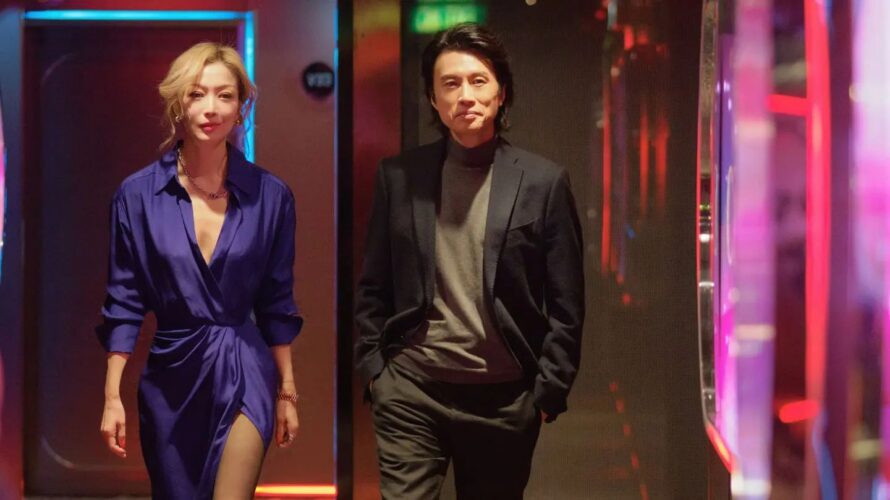
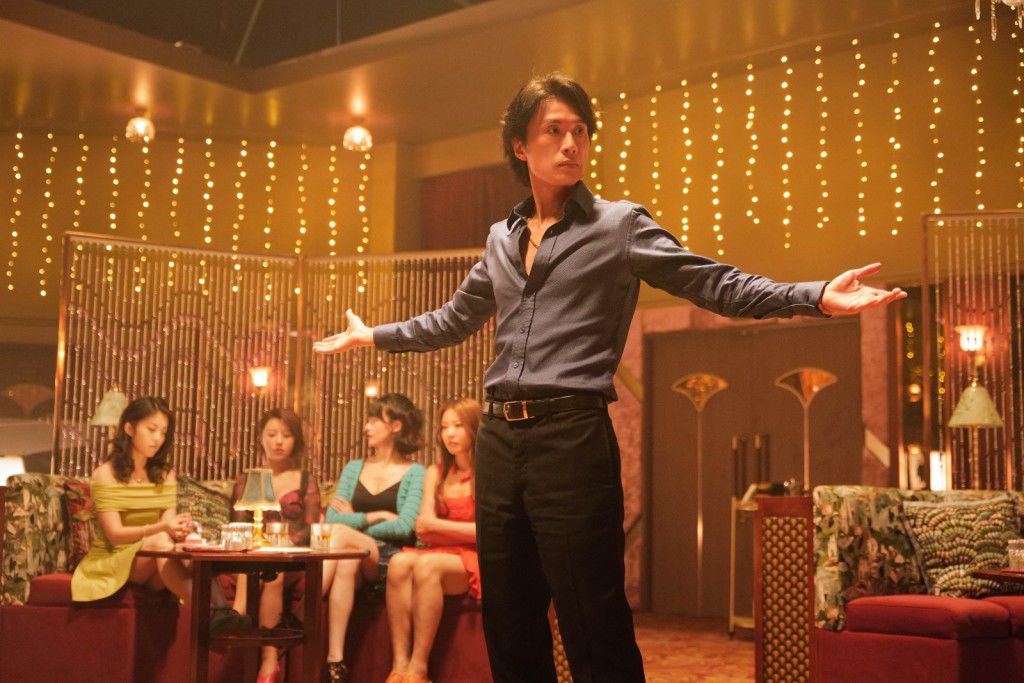
DK: That’s definitely evident in the film. You’ve mentioned the set, and I think it’s fascinating how you employ the backdrop of the 2012 TST East nightlife and make it feel very local and familiar. What was it like to immerse yourself in a constructed period set like the EJ Club?
JN: When I was on that set, I really felt like I missed that era. When we were setting up the lighting—and it took quite some time to set all of that up—I would just sit on that set and think about all the history of nightclubs in Hong Kong and everything that happened there. We only had one month to construct the EJ Club set, and I was a bit worried if we could make a convincing replica in such a short period of time, but luckily, our production design team worked very hard to make it as detailed as possible. Sometimes, I’d just sit there and take inspiration from the setting, collaborating with the cast on potential ideas. This was a very special experience for me, as I have a personal connection with that era.
DK: That certainly translated well to the film — a friend of mine said it felt like being transported to the Hong Kong he knew. I’ve read that initially, Night King was supposed to be a gritty gangster film, perhaps similar to your earlier works like Cold War 2. I’m curious: how much of that original concept remains in the film we got?
JN: Totally different [laughs]. In Hong Kong, there are two major club districts with very different nightlife: Tsim Sha Tsui and Mong Kok. TST East is one that is more business-oriented, while Mong Kok is controlled by the triads. The original idea was that hostesses from TST East had to move to Mong Kok; there was much more violence, and it was generally much heavier. In the end, I didn’t really keep anything from that concept in the film.
DK: Both of your directorial efforts came out over the Chinese New Year period, and both of them are very distinct in how they modernise the framework of a traditional New Year film. In a way, I think this approach mirrors the hopeful finale of Night King: adapting to the times and evolving is the way to success. Do you think that’s the path going forward for Hong Kong cinema?
JN: Let me clarify one thing: I didn’t expect both A Guilty Conscience and Night King to be Lunar New Year titles [laughs].
DK: Oh, so it wasn’t planned from the start to release them over the holiday period?
JN: No, it wasn’t planned at all [laughs]. I’d just finished the shoot and was starting on the edit when [Bill Kong] came in and told me the release would coincide with the Lunar New Year.
DK: That’s interesting, considering traditionally a Lunar New Year film is either an action movie or a comedy. It’s almost always a genre film, and your works are fascinating in that they don’t adhere to the rigid definitions of genre cinema. Would you say that’s exactly what the audience wants to see these days?
JN: As the audience has changed and started accepting a more diverse slate, I feel like we no longer have to strictly make typical Lunar New Year films. I’m actually grateful to see this change, because it means any film with a good story could be shown at any point during the year. Films are no longer confined to traditional timing.
DK: That seems to be the direction we’re headed in. You’ve worked in the film industry for over 25 years now, and much like the characters in Night King, you saw the way entertainment has changed — especially after the pandemic. Do you think cinema audiences these days seek comfort or harsh truths from their films? Maybe the answer lies somewhere in the middle, quite like the mix of humour and drama in your work?
JN: I think it’s not just the Hong Kong audience, but rather the audience worldwide that has become a bit more psychologically fragile. I think that’s largely because of the environment they were raised in: the modern audience grew up in a much more peaceful and comfortable era compared to the previous generation, so naturally, they struggle when confronted with hardships. These days, people have to face many psychological issues, so they seek solace in art that provides comfort. Their lives are harsh already, so they wish to see more uplifting films.
DK: It’s exciting just how successful your films have become — both within the domestic and the global markets. I actually studied A Guilty Conscience as part of my Master’s degree course on modern Hong Kong cinema, and it sparked some truly fascinating discussions. What do you hope foreign audiences take away from your films? What do you want them to see in your vision of modern Hong Kong?
JN: First of all, thank you so much for discussing A Guilty Conscience during your course [laughs].
DK: All credit to my professor! I’ve actually had a very fruitful discussion with him recently about Night King and that period in Hong Kong history: the way everything has changed in such a short period of time, how Night King almost mirrors the modern Hong Kong film industry, and how keeping up with the times is the only way forward. It’s fascinating.
JN: Recently, I think the identity of Hong Kong people has become a bit blurred. We used to give the impression that we are smart, very personable, and hard-working. Yet I feel like in the past 20 years, there has been a change in the perception of Hong Kong people. I want to show that we still have a grip on Hong Kong identity: we are unique, ambitious, hard-working. This is how I want to show the foreign audience that we are still here. The people in our film have the exact qualities of Hong Kongers — we just want to remind you about it.
DK: I really admire that, thank you. Perhaps a bit of a selfish question as a fan of your work, but do you have any plans for upcoming projects?
JN: I don’t really have a story yet, but I’m thinking of making a film about the wuxia spirit… but in the modern setting [laughs].
Night King is in UK cinemas now







-

 Movie Reviews2 weeks ago
Peaky Blinders: The Immortal Man ★★★
-

 Featured Review2 weeks ago
Project Hail Mary ★★★★
-

 Featured Review3 weeks ago
Dolly ★★★
-

 Movie Reviews2 weeks ago
How To Make A Killing ★★
-

 Featured Review2 weeks ago
Glasgow Film Festival 2026 – Couture ★★★
-

 Featured Review4 weeks ago
EPIC: Elvis Presley In Concert ★★★★
-

 Featured Review3 weeks ago
Hoppers ★★★★★
-

 Interviews3 weeks ago
BFI Flare 2026 – Interview with Director Sandulela Asanda (Black Burns Fast)